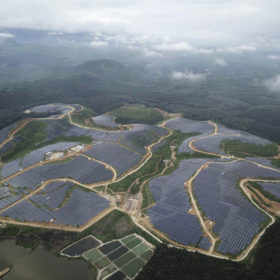
Chinese PV Industry Brief: Huawei launches new unit for renewables and electric vehicles
The technology company and inverter maker has created a new unit to operate in the renewables and e-mobility sectors. Elsewhere, China’s largest e-commerce company, JD.Com, has signed an agreement with the world’s biggest wind company, GoldWind, to establish a renewables joint venture.

Simplifying solar cell deposition
Scientists in Germany have developed a new process for deposition of silicon dioxide layers during cell production. Without the need for high pressure, flammable gases, or vacuum conditions, the process could lead to cost reductions for cell manufacturers, provided it can be developed and applied in a large-scale production setting.

Perovskite solar cell with 19.1% efficiency via CO2 doping
Thanks to a carbon dioxide doping technique, the solar cell interlayers exhibited conductivity around five times higher than that of a perovskite cell based on interlayers doped with oxygen. The device also showed an open-circuit voltage of 1.14 V, a short-circuit current density of 21.2 mA cm2 and a fill factor of 0.79.

Smart sticker for smart solar modules
The sticker is based on a blockchain technology developed by German start-up Authentic Network. Meyer Burger uses the application for the photovoltaic modules it produces in its new factory that opened in Freiberg at the end of May.

Photovoltaics, heat pumps to rescue failed geothermal project in Poland
The Polish government is supporting a hybrid renewable energy project based on a deep-borehole heat exchanger (DBHE) whose heat pumps are powered by photovoltaics. The heat generated by the facility will be used for district heating.
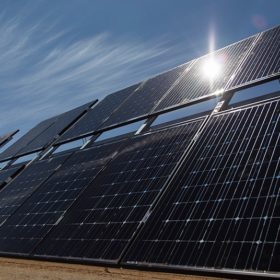
Indian highway to host 250 MW solar plant
The Global Green Growth Institute (GGGI) has helped to secure finance for the development of a 250 MW solar plant on a highway in India. The project will support electric vehicle charging and other energy requirements along the roadway.
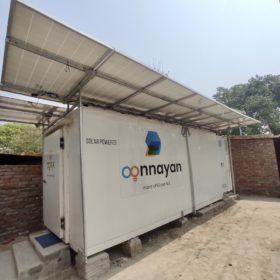
Solar-powered cold storage service
Small farmers in the Indian state of Bihar are making productive use of solar energy to reduce their losses and increase their income, thanks to an innovative pay-per-use cooling service for perishable produce.
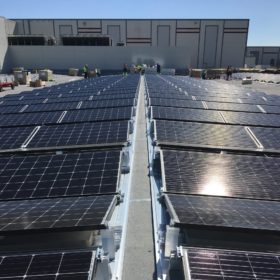
PV modules degrade less in Nordic climates
Norwegian researchers have used a year-on-year approach, considering the combined effect of temperature, humidity, and ultraviolet irradiation, to assess the degradation rate of polycrystalline modules with a temperature coefficient of -0.43%, mounted with an approximately 10-degree tilt, and located in eastern Norway. They found that these modules degrade in the range in the range of 0.1-0.19% per year, which is 0.4% less than panels operating in other climates.

Indian manufacturer orders 1.2 GW solar production line
Gujarat-based solar panel maker Solex Energy will buy the production equipment from China’s Jinchen Machinery. The company also has plans for a cell line.
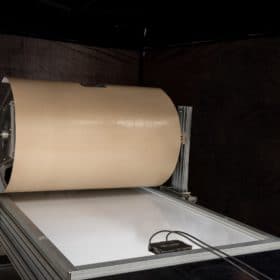
A repair tape for cracked backsheets
Backsheet failures have plagued the industry, causing hefty financial burdens to many asset owners. DuPont has launched a product it says allows for easy repair of modules.
