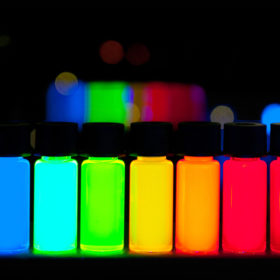
Quantum dot solar cells and the search for stability
In various forms, quantum dot technology has attracted plenty of attention among PV researchers recently. And as efficiencies have crept past the 15% mark, the community is beginning to look at other factors limiting the viability of quantum dot solar cells in a commercial setting. Scientists in Germany examined the degradation mechanisms affecting different quantum dot materials; and suggest a standardization of stability testing to enable comparability of results.
Belgium’s Flanders region unveils compensation scheme for PV systems affected by smart meter disruption
The draft regulation has now been sent to the country’s Council of State for review. If approved, the new rules will grant prosumers the right to ask to postpone the installation of a smart meter until 2025. Furthermore, the Flemish government said it will also compensate PV system owners with a sum that should ensure a reasonable investment return of 5%.

Austria allocates 332 MW of PV under 2020 rebate scheme
The Austrian government had devoted €50 million to the scheme for last year. These funds will enable the deployment of 15,957 PV systems.
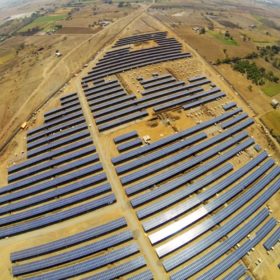
Sterling and Wilson wins $127.5 million order in Egypt
India’s Sterling and Wilson – which has a global solar engineering, procurement and construction portfolio of more than 10.6 GWp – says that its latest contract in Egypt is for one of the country’s largest PV projects.
Israel reveals bidders for 300 MW solar-plus-storage tender in Negev Desert
The Israeli authorities have selected 24 bidders for the tender’s final phase. Construction of the solar-plus-storage facility is planned for late 2021, and completion in 2023.
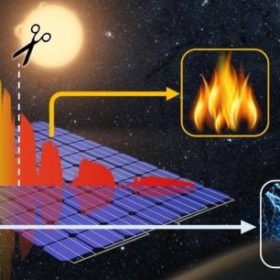
Spectral-splitting filters for more efficient photovoltaic-thermal panels
A British-Chinese research group has created a new framework to assess the performance and efficiency limits of photovoltaic-thermal solar panels. They say that the improvement of spectral-splitting (SS) filters in the devices will be the key to their future commercial success.
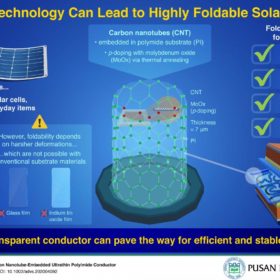
A 15.2%-efficient solar cell that you can fold in half
Scientists in South Korea developed a foldable thin-film device with some promising characteristics. Integrating a perovskite cell material and a carbon nanotube electrode, the group fabricated a device that achieved 15.2% efficiency and could withstand being folded more than 10,000 times at a bending radius of 0.5mm.

Kenyan utility seeks proposals for PV plant at water treatment site
The tender was launched by Nyahururu Water and Sanitation Company (Nyahuwasco), which operates in the Laikipia West sub-county of Laikipia County, in central Kenya.
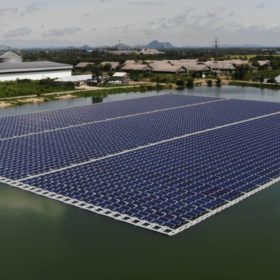
Thailand’s first floating PV project goes online
The 2 MW plant is installed at the historic site of agro-food group SPM, in Thailand. With 2.8 GWh/year of low-carbon electricity, it will cover up to 20% of the site’s annual energy consumption.
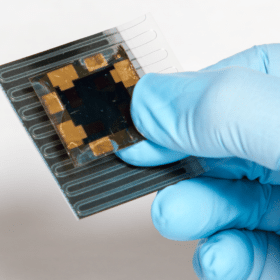
Solliance, MiaSolé hit 26.5% efficiency on tandem CIGS/perovskite solar cell
MiaSolé and Solliance have achieved record performance by optimizing the bandgap and the efficiency of both the rigid semi-transparent perovskite top cell and the flexible CIGS bottom cell.
