
Argentina raises self-consumption limit under net metering to 12 MW
Argentina’s Secretariat of Energy has increased the self-consumption limit under net metering from 2 MW to 12 MW to expand the country’s renewable energy capacity.

US authorities detain solar modules imported from Mexico
Module manufacturer Maxeon says that US Customs and Border Protection officials have detained all of its panel imports from Mexico since July as the federal law enforcement agency investigates their compliance with the Uyghur Forced Labor Prevention Act (UFLPA).
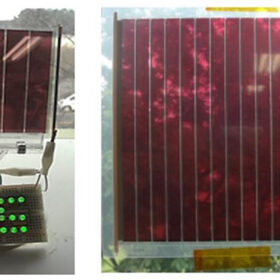
Green light wavelength-selective organic solar tech for greenhouses
Japanese scientists have built organic solar cells and modules by utilizing donors and acceptors that are green light selective. They used a blend of poly(3-hexylthiophene) and fluorinated-naphthobisthiadiazole.
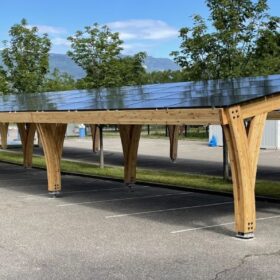
Timber framed solar carports for residential, commercial applications
Sweden-based Innoventum has launched a solar carport line equipped with bifacial modules in a larch wood structure. The solution may include electric vehicle charging, energy storage, LED lighting, and inverter systems.

Dutch hackers report flaws in Enphase IQ Gateway devices
Two “ethical” hackers from the Dutch Institute of Vulnerability Disclosure (DIVD) have identified six vulnerabilities in Enphase IQ Gateway devices. The researchers are now working with the US inverter manufacturer to address the bugs in the next version of the product.
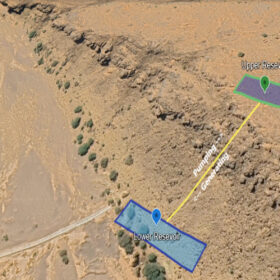
Combining hybrid wind-solar with pumped hydro in rural electrification
Scientists in Morocco have evaluated how hybrid wind solar plants may be combined with pumped hydro storage to power remote rural areas. The proposed system was found to have an LCOE $0.03831/kWh and a 86% use factor.
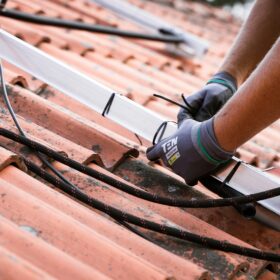
US residential solar installer Lumio files for bankruptcy
Lumio, a residential PV installer in the United States, has filed for bankruptcy. It filed Chapter 11 bankruptcy in order to close the sale of its business.

Japan’s 21th solar auction concludes with lowest bid of $0.035/kWh
Japan has allocated 33.6 MW of PV capacity in its latest procurement exercise. The lowest bid for a 650 kW solar project came in at JPY 5.0 ($0.035)/kWh, while the average final price was JPY 8.08/kWh.
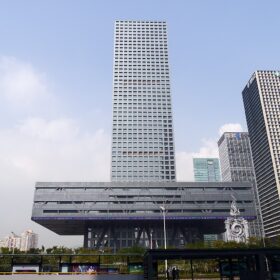
Chinese PV Industry Brief: JinkoSolar, Longi, Trina Solar report H1 results
JinkoSolar says it recorded CNY 47.251 billion ($6.6 billion) of revenue and a CNY 1.2 billion net profit in the first half of 2024, while Longi’s revenue plunged to CNY 38.529 billion in the January-June period, with a net loss of CNY 5.243 billion.

The effects of wind on single-axis PV trackers
Scientists in South Africa have conducted full-scale research on the effect of wind load on PV panel mounting rails for more than 100 days. Compared to standard design codes, they found lower combined wind load coefficients. Maximum loads occurred for an easterly wind direction.
