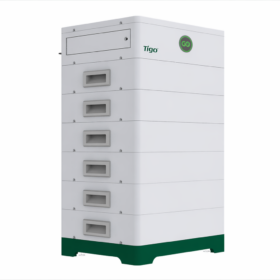
Tigo releases modular battery for residential PV
The US manufacturer has launched a modular residential battery for Europe, scalable from 7.3 kWh to 47.9 kWh with LFP chemistry and IP65 protection. The system offers up to 23.3 kW nominal power, over 6,000 cycles, and a depth of discharge of 90%.

Maxeon files for restructuring in Singapore
Company statements in a filing with the U.S. Securities and Exchange Commission indicate it will seek an arrangement between itself and creditors that may allow it to survive “as a going concern.”

‘Photovoltaics are, first and foremost, about energy security’
In an interview with pv magazine, Carolina Novac, Secretary of State at Moldova’s Ministry of Energy explains how the country raised its solar capacity to 1 GW while advancing wind, storage, and regulatory reforms to strengthen energy security and reach 30% renewables by 2030. The Moldovan government is now focusing on scaling BESS, modernizing the power market, and enhancing cybersecurity through stronger policies and international cooperation.

US solar module prices face upward pressure
Median solar module pricing in the United States reached $0.28 per watt as the market adjusted to intensified trade enforcement and new Foreign Entity of Concern compliance requirements, according to the Q1 2026 Quarterly Pricing & Domestic Content Report from Anza.

How much agrivoltaic shading is enough
Spanish researchers found that semi-transparent silicon PV greenhouses boosted tomato fruit weight by 25% while generating 726.8 kWh over two seasons, outperforming cadmium telluride PV and shaded controls. The PV-Si system balanced sunlight, temperature, and energy, showing strong agrivoltaic potential.
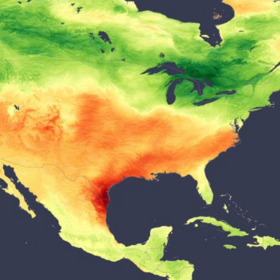
Heat dome and high pressure boost southern US solar as polar vortex clouds the north
In a new weekly update for pv magazine, Solcast, a DNV company, reports that last month North America saw a stark solar divide, with southern regions like northeastern Mexico, southeastern Texas, and much of California experiencing 20–25% above-average irradiance, while Canada, the Great Lakes, and the northeastern U.S. faced persistent cloudiness and below-normal solar conditions. This contrast was driven by high-pressure systems and a southwestern heat dome in the south versus a polar vortex bringing cold air and storms to the north.
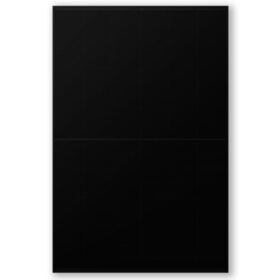
Bauer Solar launches 480 W back-contact solar module
The German manufacturer said its new back-contact solar panel has a power conversion efficiency of up to 23.52%.

New intrusion detection systems boost protection of SCADA systems against cyber threats
An international reserch team developed two deep learning-based IDS models to enhance cybersecurity in SCADA systems. The hybrid approach reportedly improves detection of complex and novel cyber threats with high accuracy, adaptability, and efficiency, outperforming traditional methods across multiple datasets.

Spin-flip emitters could control energy pathways in singlet fission solar cells
Japanese researchers developed a molybdenum-based spin-flip emitter that efficiently harvests triplet excitons from singlet-fission tetracene dimers, producing strong near-infrared emission. This approach could boost solar cell efficiency and enable new quantum technologies by converting otherwise “dark” excitons into usable light.
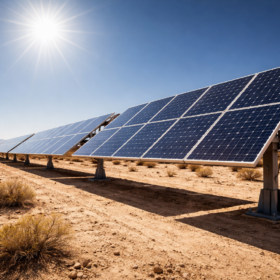
UNSW study finds tracker-based PV systems experience higher UV degradation than fixed-tilt arrays
New research from the University of New South Wales shows that PV module degradation varies widely with system design and location, driven by UV exposure, temperature, humidity, and atmospheric conditions. Tropical and desert regions face the highest stress, highlighting the need for climate-specific testing and system design.
