
Trends in solar modules – Interview with RenewSys CEO
Avinash Hiranandani, global chief executive officer and managing director of RenewSys India, speaks to pv magazine about solar module technology trends and the company’s manufacturing focus.
Even if it is cheap enough, efficiency does matter
A British-German research team claims that organic PV technologies may become mature enough to compete with crystalline silicon and thin-film products not only in BIPV, but also in power generation in the electricity market. In order to get there, however, organic PV products will have to achieve higher efficiencies.

Chile to launch auction for 2.31 TWh of renewables+storage in May
The country’s energy regulator will publish the auction’s final bidding terms in December. Projects awarded contracts under the auction will supply electricity under 15-year power purchase agreements for 2026-2040.
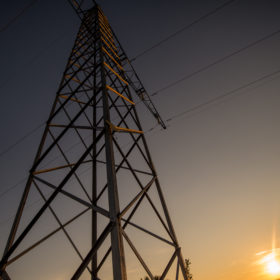
Solar parks in Netherlands to be connected at 70% of their peak capacity
The Netherlands’ renewable energy sector has reached an agreement with the country’s grid operators and power providers for a faster grid connection of solar parks. PV plant operators will be able to connect their projects at 70% of their capacity and, in turn, they will be allowed to connect them without having to wait for more grid availability.
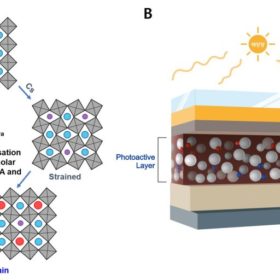
25.17% efficient perovskite solar cell via new photoactive layer
Scientists in South Korea demonstrated a perovskite cell with a certified efficiency of 24.4%. The device is claimed to maintain over 80% of its initial efficiency after 1,300 hours in the dark at 85 degrees Celsius.

Five pro-renewable energy actions to expect from President-Elect Joe Biden
As the U.S. economy continues to recover from its Covid-19-induced recession, it’s likely that Congress and the president will put together a multi-trillion dollar relief package, similar to the one that lifted the economy out of its doldrums following the 2008 economic crisis.

India added 438 MW of solar capacity in Q3 2020
The new solar capacity added during the three months ending September includes 283 MW from large-scale installations and 155 MW rooftop.
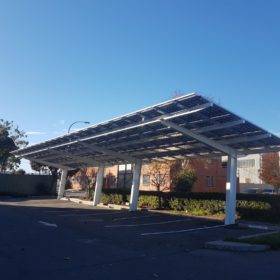
New ‘slide-in’ solar canopy tech from Australia
Australian design and manufacturing company PVDymanics has unveiled a solar canopy technology which can be used with both framed and frameless solar modules. The company believes its system can revolutionize the micro-grid market.

Akuo commissions 50 MW solar plant in Mali
The latest PV installation in West Africa by France’s Akuo features an agricultural and social component on a 5-hectare plot of land next to the project site.
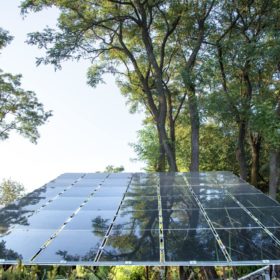
BIPV module with novel encapsulation design
Researchers at the University of Malaga say they have developed a panel for building-integrated photovoltaics that improves light absorption without losing efficiency and durability.
