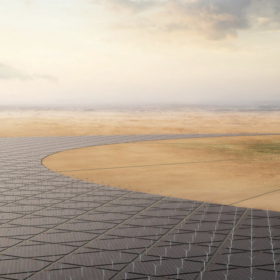
Danish developer plans massive renewables-storage-hydrogen project in Mauritania
GreenGo, a Danish developer, has unveiled plans for the Megaton Moon project in Mauritania. It will purportedly feature 60 GW of visible-from-space wind-solar capacity and 30 GW of green hydrogen capacity.
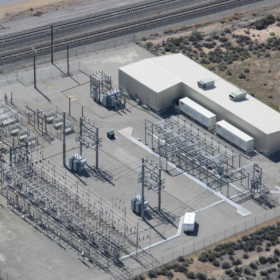
Greece accepts 288 MW of applications in second storage tender
Greece’s energy regulator has published a call for the country’s second energy storage tender to take place in February 2024.

EnerVenue offers pre-assembled nickel-hydrogen battery vessels
The stationary energy storage solution includes nickel-hydrogen batteries, the battery management system and cabling.
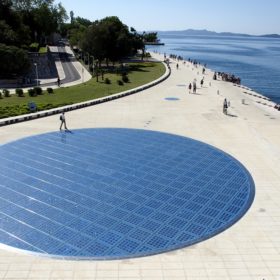
Croatia’s solar streak marred by 4-year finalization waiting times
Zvonimir Meštrović, head of solar business development at Croatian energy company ENCRO, tells pv magazine that sunny days and an ideal political climate set the Balkan country up to harvest large volumes of solar. However, he says bureaucratic red tape is weighing down the industry.
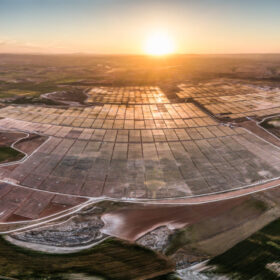
BP to take full control of Lightsource BP
Energy giant BP announced today it would take full ownership of solar and wind energy developer Lightsource BP once a deal – pertaining to the purchase of the remaining renewables company’s shares BP does not own – goes through next year.

Thousands of Irish schools to hit the books for solar
Up to 1,600 schools in Ireland can apply from today to receive 6 kW of solar systems to be installed on their rooftops through a federally funded scheme, the Irish government recently announced.

Photovoltaics for marine wildlife telemetry devices
A US research team has tested mini solar modules in marine data collection devices, using animal hosts for water column profile measurements. The findings suggest that submarine PV can effectively operate in these applications at depths of up to 22 meters.
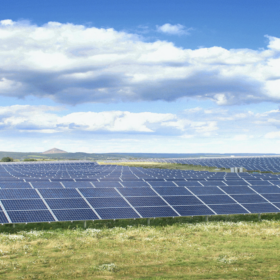
South Africa approves 1 GW solar project
German developer Soventix has secured approval from Eskom for the first phase of a giant 1 GW solar project in the town of De Aar, South Africa. Construction of the first 342 MW is expected to begin in the first quarter of 2024.
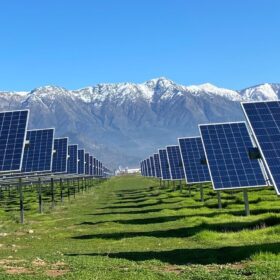
Chile covers 20.7% of October electricity demand with solar
Chile covered 20.7% of its electricity demand in October with solar power. The nation has 9.18 GW of cumulative installed PV capacity, accounting for 26% of its total power generation capacity.

French developer to build 129 MW of solar-aviary capacity
French renewables producer Unite has started building 10 photovoltaic aviaries in France, with 127 MW of total capacity. Completion is expected in two stages in spring 2024 and January 2025.
