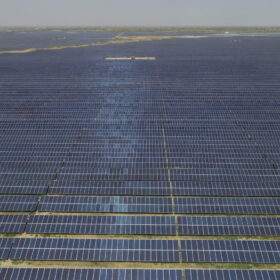
ICRA expects India to add 17 GW of new PV capacity this year
Ratings agency ICRA says India could install 17 GW of new PV capacity this year and another 20 GW in 2025. It maintained a stable outlook for the renewable energy sector in India on the back of strong policy support, healthy demand prospects, and tariff competitiveness.
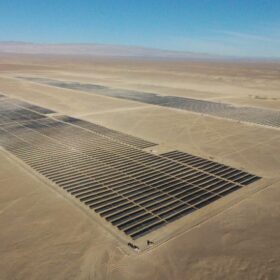
Grenergy secures PPA for 260 MW-1,100 MWh of solar-plus-storage in Chile
Grenergy said its new power purchase agreement (PPA) for 260 MW/1,100 MWh of solar-plus-storage in Chile has a duration of 15 years. The installation is part of the fourth phase of the massive 1 GW/4 GWh Oasis de Atacama solar-plus-storage project.
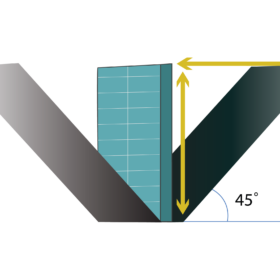
Radiative cooling tech for vertical solar panels
Developed by a US-Saudi research group, the novel technique employs two 45-degree inclined mirrors on the two sides of a PV module. On the back side, a spectral selective reflector enables the thermal radiation to be directed to the sky while preventing the back of a module from heating up by the scattered sunlight.
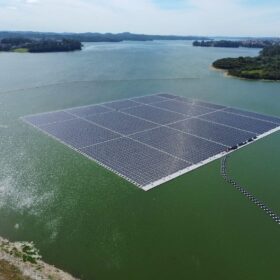
Sao Paulo inaugurates 7 MW floating solar plant
The government of Sao Paulo, Brazil, says that a new 7 MW floating solar project on a reservoir in the megalopolis is the first phase of a 75 MW facility that will be completed in 2025.
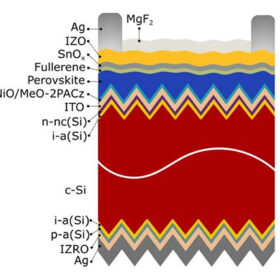
Perovskite-silicon tandem solar cell with sublimed C60 source material achieves 30.9% efficiency
The result was certified by Fraunhofer ISE CalLab. The cell uses a top inverted PV device using an electron transport layer made of thermally evaporated buckminsterfullerene (C60) with minimized parasitic optical absorption.
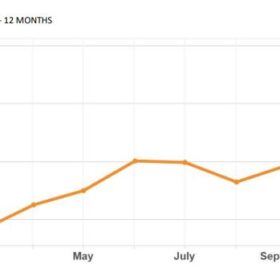
Australian consumers say bigger is better for rooftop solar
Solar panel and system prices are on the decline in Australia, but figures from industry analyst SunWiz show that a growing number of Australian households are opting to forgo savings in search of higher generation capacity.
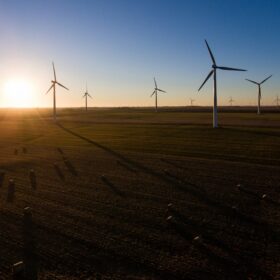
India’s GUVNL allocates 200 MW of wind-solar projects at $0.036/kWh
Juniper Green Energy and KPI Green have emerged as winners in Gujarat Urja Vikas Nigam’s tender for 500 MW of grid-connected wind-solar hybrid projects in India. They respectively secured 150 MW and 50 MW of capacity.
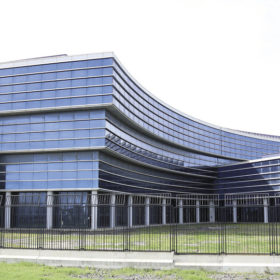
Enel secures €560 million for 3 GW heterojunction panel factory in Italy
Enel has obtained €560 million ($610.2 million) for a solar module factory it is building in Catania, Sicily.
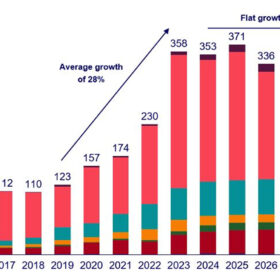
WoodMac predicts strong yet flat global PV growth through to 2032
Wood Mackenzie says the solar industry has reached a new stage in its evolution and is predicting around 350 GW of global solar installations annually for the next eight years. The research firm is also forecasting challenges for the solar manufacturing sector and long-awaited benefits from the Inflation Reduction Act in the United States.
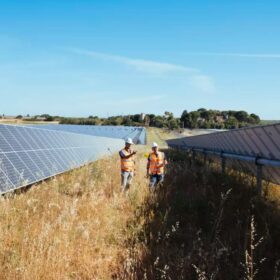
Mitsubishi HC Capital acquires 20% stake in European Energy A/S
Mitsubishi HC Capital, a Japanese investment firm, has become the second-largest shareholder in Danish renewable energy developer European Energy A/S by acquiring the equivalent of 75 million shares. Knud Erik Andersen, the CEO of European Energy, says the transaction more than triples the company’s equity.
