
Brazil hits 14 GW milestone in the distributed generation sector
The Brazilian Association of Distributed Generation (ABGD) has announced that the sector reached the 14 GW milestone. Installed capacity grew from 13 GW to 14 GW in just over a month, “the fastest growth ever recorded,” the association claims.

Space-based solar power for terrestrial energy needs
The Cassiopeia solar project aims to use the sunlight collected by a space satellite for terrestrial energy needs. The electricity generated would be converted to radio frequency microwave radiation transmitted to an antenna on Earth. The initial LCOE would be €48 ($47.8)/MWh, according to a UK study.
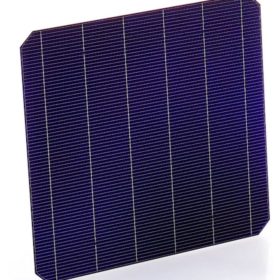
CEA-INES reduces silver consumption in M2 heterojunction solar cell
The French research institute said it was able to reduce the width of the metallization lines of the photovoltaic cells without affecting the efficiency.
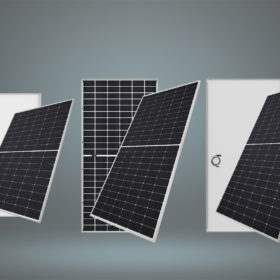
Sharp raises power output of three half-cut solar modules
The IEC/EN61215 and IEC/EN61730-certified panels are all updated versions of existing products. The manufacturer raised the ouput of each by 5 W.

High electricity rates push US homeowners to consider solar
Rising electric rates, grid instability, environmental concerns and decreased solar costs are all reasons for homeowners to go solar, according to a study by Rocket Solar
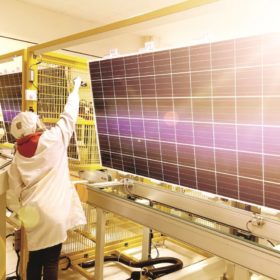
Chinese PV Industry Brief: Canadian Solar starts production of independently developed inverters
The Chinese-Canadian module maker said its new inverters will have a power output ranging from 5 kW to 125 kW. GCL Integration, meanwhile, announced plans to build a 20 GW solar module factory and Longi said it shipped 60 GW of wafers in the first nine months of this year.
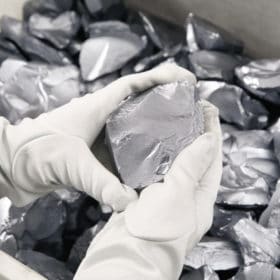
PV InfoLink forecasts polysilicon prices to be halved by end of 2023
The consulting firm expects prices to decline gradually through the first semester of 2023, followed by an accelerated decline in the second half of the year, with prices falling from the current CNY 300 ($36.64)/kg to below CNY 150/kg by the end of 2023. Polysilicon production capacity may increase from 500 GW in 2022 to 975 GW next year.
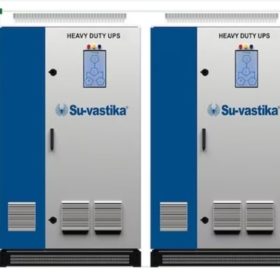
Indian startup launches solar-linkable UPS system for residential, commercial applications
Su-vastika introduced a three-phase uninterruptible power supply (UPS) system with power ratings of 10 kVA to 500 kVA. The backup time provided by the system can be extended by using solar power in conjunction with the battery bank.
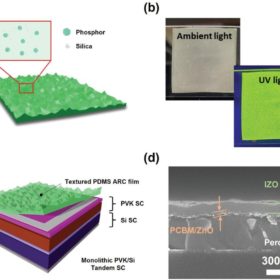
Tandem perovskite-silicon solar cell achieves 23.5% efficiency via novel anti-reflective coating
Korean scientists utilized an anti-reflective coating based on silicon dioxide (SiO2) nanoparticles and large phosphor particles to increase diffuse light transmittance in a tandem perovskite-silicon PV device. The device’s efficiency improved from 22.48% to 23.50%.

Netherlands may add 3.3 GW of new solar this year
According to state-run agency RVO, solar may reach 17.6 GW of installed capacity by year-end, thus becoming able to cover more than 12% of the country’s electricity demand.
