
Isle of Man tenders for 20 MW of solar and wind
The call is part of a government action plan for achieving net zero emissions by 2050.
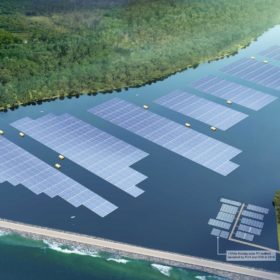
Construction begins on 60 MW floating solar plant in Singapore
The project, on the Tengeh reservoir, will sell power to the city state’s Public Utilities Board under a 25-year power purchase agreement.
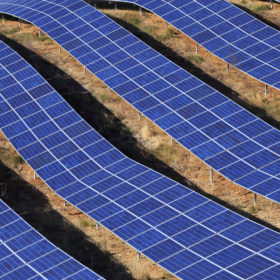
Brazil imported 2.5 GW of PV panels in first half of 2020
According to a recent report from Brazilian consultancy Greener, the country imported 1.61 GW of panels in the first quarter and 877 MW in the second. Domestic PV module makers had a 4.4% market share with around 100 MW in shipped modules in the first half of the year. The analysts claim these figures show the Brazilian PV market has not been affected by the Covid-19 crisis.
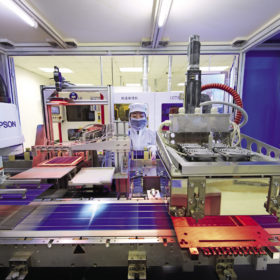
Chinese PV Industry Brief: Production expansion plans for Trina, JA Solar, ZNshine
Trina Solar said this week that it plans to expand cell production output by 10 GW at its factory in Jiangsu province, while JA Solar revealed plans to ramp up wafer production by 20 GW. ZNshine Solar, meanwhile, is aiming for 10 GW of new PV module capacity.

India’s PV capacity tops 37 GW
Newly installed PV capacity for the second quarter was just 205 MW. This compares to around 1.5 GW a year earlier.
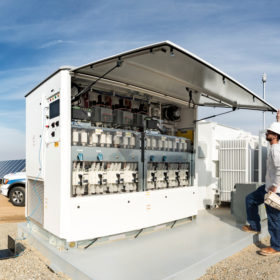
SMA reports 42% increase in turnover, Meyer Burger swings to a loss
German inverter manufacturer SMA Solar Technology reported solid financial results for the first half of 2020 despite the Covid-19 crisis. Meyer Burger, however, saw sales and profits decline.
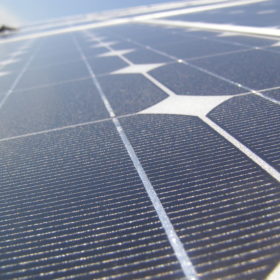
Netherlands’ largest power provider wants to connect new solar parks to 75% of their peak capacity
Liander said its new plan may result in savings ranging from €1.4 billion to €1.8 billion. Possible losses for PV power producers are estimated at a maximum of 3% of their electricity production per year. If implemented, this new measure would push PV project developers to rely on underdimensioned inverters.

The PV world 10 years ago – Summer Series Part VII
pv magazine editor Pilar Sánchez Molina takes a look at PV sector news from 10 years ago as part of an ongoing series. These insights bring back memories of an exciting, challenging period, while pointing to where we might be in 2030.
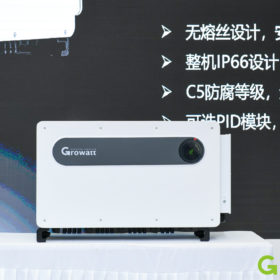
New 1,500 V string inverter from Growatt
The new device is available in four different versions with nominal power ranging from 185 to 253 kW. The inverter has a reported efficiency of 99.0% and a European efficiency between 98.5% and 98.7% depending on the size.

Russia’s first floating PV plant comes online
The facility was built with 140 heterojunction solar panels mounted on pontoon-type floats. The project is located at the site of the 320 MW Nizhne-Bureyskaya hydropower plant, owned and operated by Rushydro in the Russian Far East’s Amur region.
