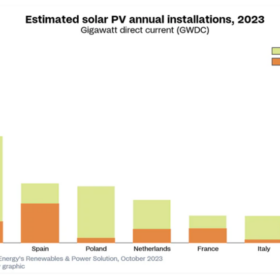
Europe to add 58 GW of solar in 2023
Europe’s solar installation levels are exceeding expectations and are on track to grow 30% this year from 2022, according to Rystad Energy.
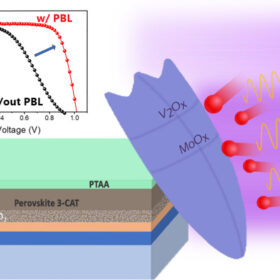
Perovskite solar dell with TMO Buffer Layers hits 15.7% efficiency
Researchers in Italy have used protective buffer layers in perovskite solar cells to mitigate damage during the sputtering of indium tin oxide in the production process. They claim the buffer layers were able to fulfill this mission without impairing the cell’s average visible transmittance.
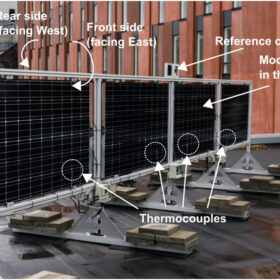
Novel approach to assess performance loss rate of vertical bifacial PV systems
Scientists in Finland have developed a new method of assessing the long-term performance of vertical bifacial PV systems in Nordic conditions. The experimental setup consisted of a east-west oriented vertical array equipped with power, temperature, and plane-of-array irradiance sensors, wind speed and global horizontal irradiance sensors, and a weather station.

Masdar to roll out 1 GW of PV, wind in Azerbaijan
Masdar, the Abu Dhabi-based utility-scale PV project developer, has signed contracts to develop three solar and onshore wind projects in Azerbaijan, with a total capacity of 1 GW.
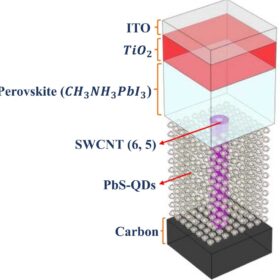
Perovskite PV cell hits 19.9% efficiency with single-walled carbon nanotube
Iranian researchers have improved perovskite solar cell efficiency by using a single-walled carbon nanotube as a hole transport layer surrounded by lead sulfide colloidal quantum dots.
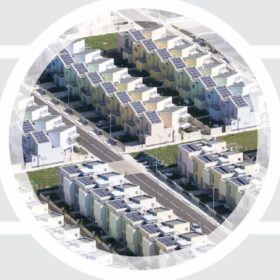
Strategies to develop ‘solar neighborhoods’
A group of scientists across the world have created a list of recommendations that can help create solar neighborhoods. In a recently published study they highlight the importance of legislative frameworks and advanced computing.
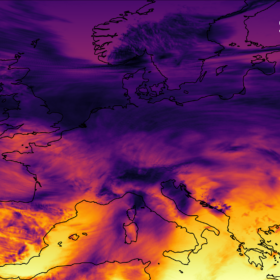
Storm Babet costs UK, Germany, Netherlands over 422.93GWh
In a new weekly update for pv magazine, Solcast, a DNV company, explores the impact of the now-lapsed Storm Babet as it traveled across the UK, Germany, Netherlands and Lithuania. The solar company urges that as large weather events like Storm Babet make landfall in the future, grid operators need to proactively prepare.
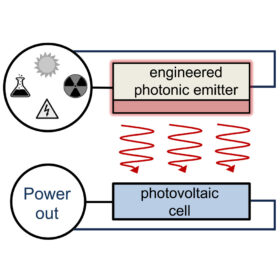
New method for high-temperature thermophotovoltaic development
A US research group has developed stable emitters for high-temperature applications above 1,800 C, which could improve the efficiency of lab-scale thermophovoltaic systems. The framework showcases the potential to design application-specific metamaterials in high-temperature photonics using optimization and machine learning.
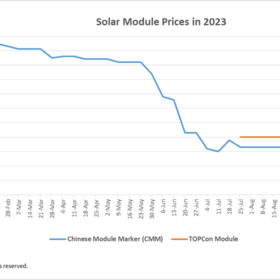
Solar module prices dive to record low
In a new weekly update for pv magazine, OPIS, a Dow Jones company, offers bite-sized analysis on solar PV module supply and price trends.

EU solar lobby urges ban on forced labor in solar products
The European Solar Manufacturing Council says that the European Commission should ban all products made with forced labor to ensure the future of the European PV manufacturing sector.
