
Going beyond renewable/non-renewable dichotomy
Scientists in India have proposed a new classification of energy sources that is intended for the adoption and definition of emerging technologies, which they said conventional taxonomies fail to achieve.
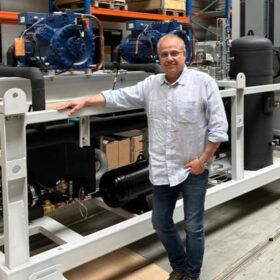
Industrial renewable heating system based on 780 kW heat pump
Israeli developer Tigi Solar is deploying an industrial heat pump to support the heating system at the facility of a food industry enterprise in Israel. The heat pump has an output of 780 kW and a coefficient of performance (COP) of 4.6. It uses existing ammonia chiller waste heat as the heat source and can reportedly provide a hot water temperature of 65 C.

Malaysia increases green energy tariff for residential, industrial consumers
Malaysia has increased the green energy tariff for residential and industrial consumers through the Green Electricity Tariff (GET) program. The government is offering 4,500 GWh of power to residential and industrial customers each year. These customers will be charged an additional MYR 0.281 ($0.062) for each kilowatt-hour of renewable energy that is purchased.
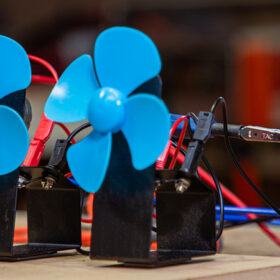
New proton batteries for megawatt-scale renewables storage
Engineers at Melbourne’s RMIT University have developed a rechargeable “proton battery” that has the potential to store more energy than currently available lithium-ion batteries.

Scotland greenlights 600 MW pumped hydro project
Drax Group said it will expand the pumped hydro storage capacity of the Cruachan Power Station by another 600 MW to 1,044 MW. However, the project will require greater policy support.

Replacing coal plant with largest energy storage project in Indiana
AES Indiana filed for a 200 MW/800 MWh battery project, which is slated to be the largest in the US state of Indiana. It will be located at the site of a partially decommissioned multi-unit coal plant that is now transitioning to gas.
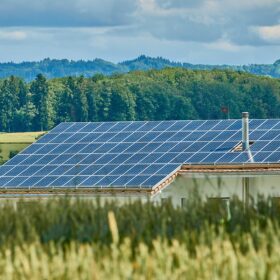
France unveils new FIT rates for PV systems up to 500 kW
France’s new feed-in tariffs (FITs) for the second quarter range from €0.2395 ($0.2653)/kWh for installations below 3 kW in size to €0.1268/kWh for arrays ranging in capacity from 100 kW to 500 kW.

Botswana launches tender for solar plants
Botswana Power Corp. has launched a tender for the development, financing, construction, operation and maintenance of three solar power projects in Maun, Lobatse and Ghanzi.
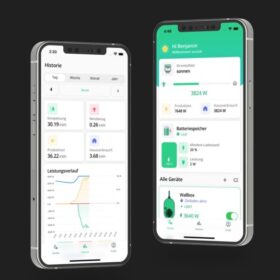
German startup offers app to maximize use of solar power surplus in homes
Clever-PV has developed a manufacturer-independent energy management solution for homes. The app is free to download from app stores and can be connected to PV systems, wall boxes, heat pumps, and other smart devices. This allows users to optimize the use of self-generated solar power.
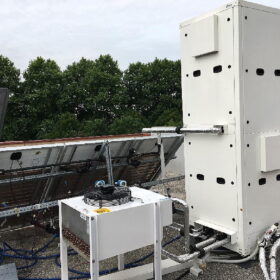
Residential heat pump based on finned coil evaporator, PVT collectors
Scientists in Italy have developed a 5 kW direct-expansion solar-assisted heat pump that uses alternatively two different evaporator technologies. The cooling of the PV module unit by CO2 evaporation increases power production by 8%.
