
Netherlands may reach 132 GW of solar by 2050
A new report from the Netherlands Organisation for Applied Scientific Research (TNO) shows the strong potential of photovoltaics in all scenarios for the country’s future energy mix. According to the Dutch experts, solar may reach between 55 GW and 132 GW by 2050.

Inverted perovskite solar cell with 25% efficiency
The cell is based on ferrocene and is claimed to retain more than 98% of its initial efficiency after continuously operating at the maximum power point for 1,500 hours under standard illumination conditions.
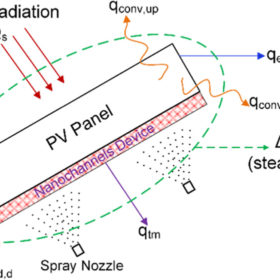
New solar module cooling tech based on porous nanochannels
US scientists have utilized a nanochannels device to cool down the operating temperature of a commercial PV module and have found that the proposed technique is able to improve power yield by up to 32.8%. Spray droplets are dispersed over the nanochannels device in order to eliminate the need for a continuous supply of a coolant.

First milestone for solar carport at Disneyland Paris
A third of the 17 MW solar array is now completed. The installation is expected to cover around 17% of the theme park’s electricity needs. Final completion is scheduled for 2023.
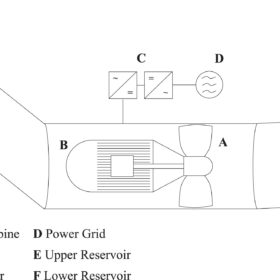
Pushing the boundaries of low-head pumped hydro storage
Two different studies have highlighted the potential and challenges of low-head pumped hydro storage (PHS), which has so far never been implemented in real projects. Different main areas were identified for future research and an interesting levelized cost of storage was indicated for certain project configurations.
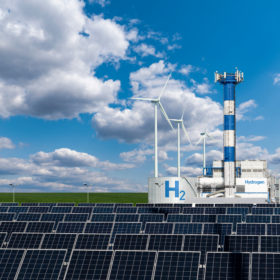
Dutch energy provider Essent uses photovoltaics to produce hydrogen
The hydrogen generation facility will be initially powered by a photovoltaic plant, but Essent may also add wind power for periods when the sun is not shining. The energy company also plans to deploy some battery storage capacity at the plant for the temporary storage of the surplus of solar power that cannot be immediately converted into hydrogen or supplied back to the grid.
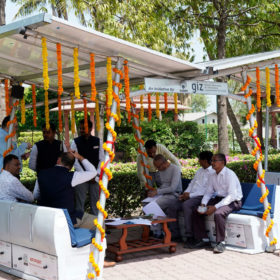
India’s Akshardham temple gets 10 portable solar rooftop systems
Servotech Power Systems, with the support of German development agency GIZ, has installed 10 portable solar rooftop systems at the Swaminarayan Akshardham temple complex in the Gandhinagar district of Gujarat.

Canadian university to be equipped with a stealthy solar façade/microgrid
Building-integrated photovoltaics provider Mitrex said its system will provide St. Mary’s University student residence with a power-producing microgrid.
Portugal streamlines permits for renewables
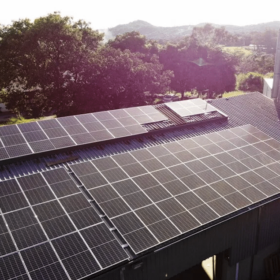
The Portuguese government has approved exceptional measures to simplify renewable energy production. The new provisions include the exemption of operating licenses and operating certificates for renewable energy facilities, battery storage, and projects for self-consumption.
Maxeon, Canadian Solar settle patent infringement lawsuit in Japan
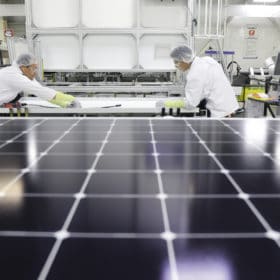
In the lawsuit, Maxeon claimed that Canadian Solar infringed its Japan Patent No. JP6642841B2 for shingled solar modules.
