
Australian polysilicon project shifts focus to silica feedstock
Quinbrook Infrastructure Partners’ plan to build a “state-of-the-art” polysilicon manufacturing plant in Australia has taken a step forward, with Australian Silica Quartz starting a drilling program at a planned mine site that could provide feedstock for the proposed facility.

German startup offers self-adhesive film for glare-free PV modules
Germany-based Phytonics has developed a self-adhesive film with microstructures to reduce glare on PV modules. It is available in sheets and rolls for new and existing PV systems.
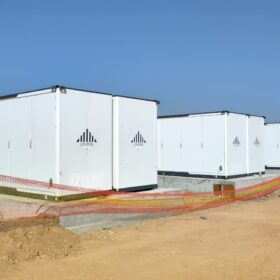
Romania aims to roll out 5 GW of energy storage by end 2026
Romania is aiming to have at least 2.5 GW of energy storage installed by the end of next year and to exeed 5 GW only a year later.
SunPower stock crashes 70%
The company’s share price fell below $1 as it announced it is halting some operations and ending its lease and power purchase agreement offerings, among other actions.

Chinese PV Industry Brief: ZNShine Solar plans Hong Kong listing
ZNShine Solar says it has applied to list H-shares on the Hong Kong Stock Exchange (HKEX). The company runs three factories in China with a total capacity of about 10 GW.

Germany’s balcony PV installations hit 200 MW in H1
Germany’s Federal Network Agency (Bundesnetzagentur) says 220,000 balcony PV systems were installed in the country in the first half of the year, reaching 200 MW.
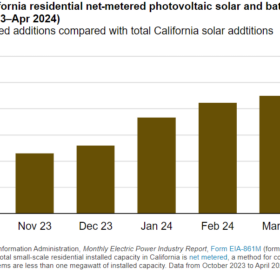
More than half of California solar customers to include battery storage
Falling battery costs, shifting regulations and interest in energy independence are driving increased battery attachment rates on residential solar projects in California.

Empowering female entrepreneurs is essential for attracting more women to executive positions
This week, Women in Solar Europe (WiSEu) gives voice to Camille Zimmermann, Investment Director at France-based equity firm Omnes. She says that, when there are women at the helm of companies, it seems there is no problem in finding other talented women to join the ranks of their organizations.
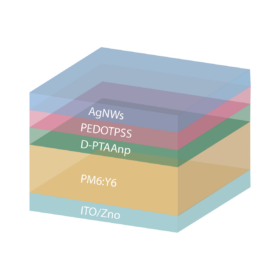
Organic solar cell based on PEDOT:PSS hole transport layer achieves 17.1% efficiency
A team of researchers in Germany has fabricated a non-fullerene acceptor-based organic photovoltaic cell featuring a bilayer solution-processed hole transporting layer. It recorded a power conversion efficiency of 17.1% and maintained 93% of its initial efficiency after 1,800 hours under continuous solar cell operation at 60 C.

Jet stream shift brings winter sunshine to Brazil, cloud to Argentina
In a new weekly update for pv magazine, Solcast, a DNV company, reports that Rio de Janeiro recorded the sunniest June in over 18 years, with solar irradiance 15% above the long-term average. This was part of a band of higher than average sunshine extending through Bolivia, Paraguay, and parts of Brazil. Conversely, southern Argentina saw an irradiance drop of up to 30% below the long-term average as it experienced its cloudiest June in the same period.
