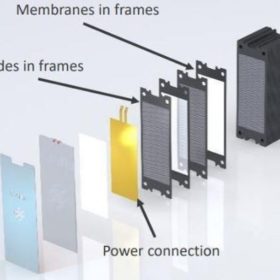
Port-based energy storage relying on organic flow battery tech
A UK consortium is developing an organic flow battery technology that could be used in ports to supply power to visiting vessels and in-port assets such as cranes and port vehicles. The electro-chemistry for the batteries is being supplied by German battery manufacturer CMBlu, which developed a flow battery relying on high-performance energy storage molecules that are entirely organic.
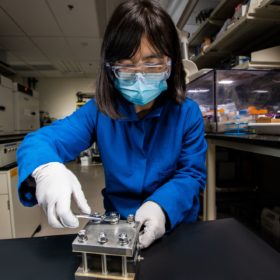
New US license to bring vanadium redox flow batteries to market
The US Department of Energy’s Pacific Northwest National Laboratory has made a third semi-exclusive commercial license for vanadium redox flow battery technologies, in order to help bring the technology to market.
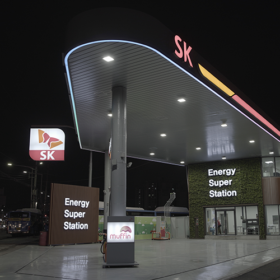
PV-powered filling/recharging station for all kind of vehicles, including EVs and fuel cell cars
Built by Korean oil provider SK Energy and the Seoul Metropolitan Government, the “Energy Super Station” is equipped with 20kW of solar panels and 300kW of fuel cell stacks. It can refuel conventional combustion vehicles as well as electric vehicles and fuel cell cars.
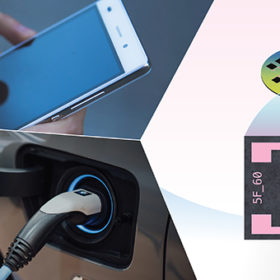
New, powerful way to make micro supercapacitors
Swedish researchers have developed a novel way to manufacture micro supercapacitors, also known as system-on-a-chip, so they are compatible with other components in system circuits and can be easily tailored for different uses.

Full organic battery with 2.8V ouput voltage
The realization of biodegradable batteries is a step closer thanks to research from South Australia’s Flinders University, which has developed a 2.8V organic polymer battery. While this battery was made from synthetic polymers, research lead Zhongfan Jia told pv magazine Australia the team’s future iterations will source “materials directly from nature” saying this promises to reduce waste and reliance on mined materials and could have novel applications in fields like biotech.
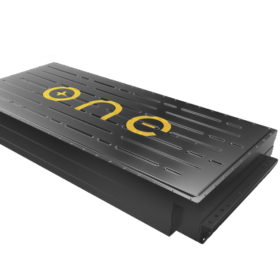
US EV battery manufacturer demonstrates 750+ mile range, raises $65 million
Michigan’s Our Next Energy (ONE) said it will use the funding led by BMW to accelerate R&D and build a US manufacturing facility.
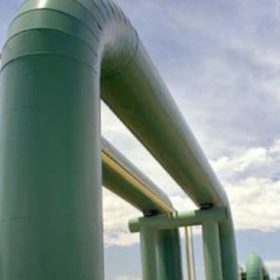
The Hydrogen Stream: World’s largest electrolyzer fab breaks ground in Australia
Fortescue Future Industries says the first electrolyzers to be manufactured at the facility, early next year, are earmarked for use in Queensland at FFI’s planned green-hydrogen-to-ammonia project on Gibson Island.
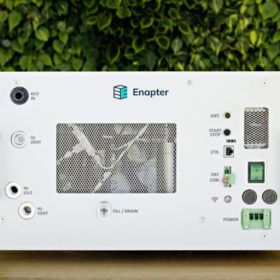
Plug & play electrolyzer for green hydrogen production from Germany
Developed by Germany-based hydrogen specialist Enapter, the EL 4.0 electrolyzer is based on a patented anion exchange membrane (AEM) technology. Commercial production is currently being prepared at the company’s Italian plant and the first shipments should be made in the summer.

‘This is wartime and wartime requires war economy measures’
In a chat with pv magazine, Christian Breyer – Professor of Solar Economy at Finland’s Lappeenranta University of Technology – explains which consequences the war in Ukraine may have on Europe’s energy landscape. According to him, only an unprecedented development of renewable energies, heat pumps and storage may help address the current energy crisis.

Hydrogen-powered boat to sail in Australian waters within 18 months
Australia’s Poseidon Marine H2 says it expects to have a hydrogen-powered boat in Australian waters within the next 18 months, after bringing on board the principal engineers from Dynamic Efficiency.
