
Leapton Energy launches 20.48 kWh residential battery
Japan’s Leapton Energy has developed EH-A05, a 20.48 kWh residential battery featuring storage capacities starting at 5.12 kWh, with lithium iron phosphate (LFP) batteries.

US startup debuts wall-mountable residential heat pump
US-based Quilt has unveiled a residential heat pump with a coefficient of performance (COP) of up to 4 and noise levels of 27 dBA to 47 dBA. The startup recently raised $33 million (€30 million) from a group of investors.
Origin Energy unveils plans for 2 GWh battery in Australia
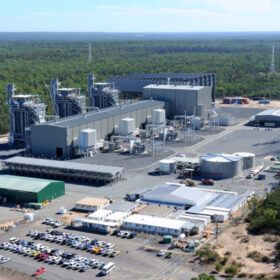
Australian energy giant Origin Energy has revealed plans to build what could be the biggest battery energy storage system (BESS) in the state of Queensland, as it continues the expansion of its renewable energy generation and storage portfolio.
Atess Power releases new series of BESS containers
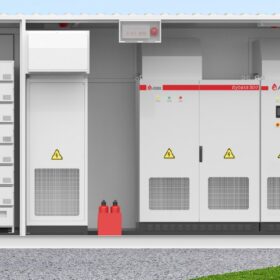
Atess Power has developed a new series of battery energy storage system (BESS) containers. The Chinese manufacturer is offering 20 HC and 40 HC containers, as well as battery-only containers with storage capacities up to 3,440 kWh.
World’s largest compressed air energy storage project comes online in China
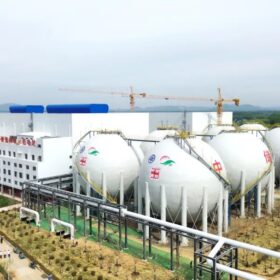
Zhongchu Guoneng Technology Co., Ltd. (ZCGN) has switched on the world’s largest compressed air energy storage project in China. The $207.8 million energy storage power station has a capacity of 300 MW/1,800 MWh and uses an underground salt cave.
China switches on first large-scale sodium-ion battery
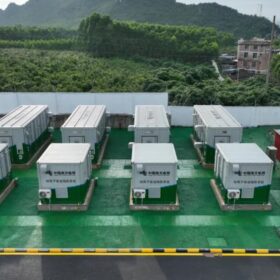
China Southern Power Grid has deployed a 10 MWh sodium-ion battery in China’s Guangxi Zhuang region. It is the first phase of a 100 MWh project.
Faulty installations often to blame for battery fires
The Electric Power Research Institute (EPRI), the US Department of Energy’s Pacific Northwest National Laboratory (PNNL), and German battery analysis specialist Twaice have jointly evaluated 26 battery fires between 2018 and 2023. They say that the diversity of components plays a critical role in igniting fires.
Coal share falls below 50% in India’s installed power capacity
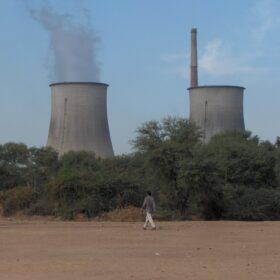
The share of coal in India’s total installed power capacity fell below 50% in the first quarter of 2024. This is well ahead of the government’s target to establish 50% cumulative power generation capacity from non-fossil sources by 2030.
Improving LCOE of PV-driven hydrogen via reciprocating engines
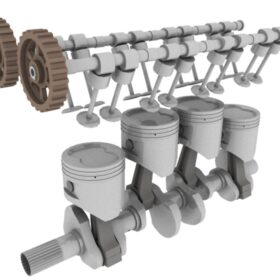
UNSW scientists have suggested to use dual-fuel reciprocating engines for adding gas-to-power operations in large scale production of hydrogen based on PV power. The preliminary findings of their research show that the proposed system is still achieving a too high LCOE for commercial maturity. Decreasing electrolyzer costs, policy interventions and changing energy market dynamics, however, may more than halve the LCOE values in the future.

Techno-economic feasibility of hydrogen storage in hydro-dominated countries
Scientists have investigated different techno-economic scenarios for using hydrogen storage in combination with hydropower and pumped hydro storage in Switzerland. They have found that hydrogen storage plays no major role under most conditions.
