
Hoymiles releases all-in-one residential inverter and modular battery
The Chinese company said its modular system supports up to 64 kWh of storage, multiple PV inputs, and 0 ms backup switching for uninterrupted operation.

South Korea’s Won Kwang S&T launches mobile solar panel recycling solution
Won Kwang S&T has developed a mobile, on-site solar module recycling system for utility-scale PV plants. The SolreBorn unit can reportedly process up to 2.5 tonnes of modules per day and improve the economics of solar panel recycling through on-site dismantling and material recovery.
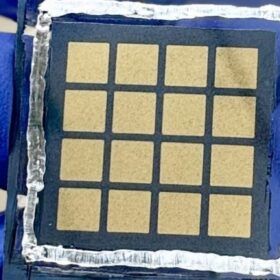
Global cadmium telluride solar module manufacturing capacity could reach 100 GW by 2030
In a perspective paper in Joule, a group of U.S. researchers described technology and supply chain efforts required to reach worldwide annual cadmium telluride (CdTe) solar PV capacity of 100 GW by 2030.
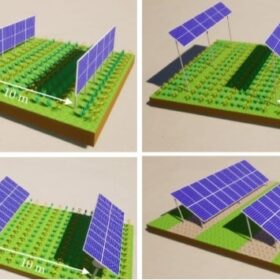
All agrivoltaic cropping systems at a glance
An international research team reviewed agrivoltaic systems, highlighting challenges in design, crop performance, and PV efficiency, while mapping their global potential. They call for innovative layouts, targeted crop selection, and improved modeling to maximize energy yield and land-use efficiency.

Deye releases new off-grid inverter series
The Chinese manufacturer said its new OG02 series includes IP-65-rated inverters with an AC output power of 3 kW to 6 kW. The new products also feature a maximum efficiency of 97.6% and a European efficiency of 96.5%.
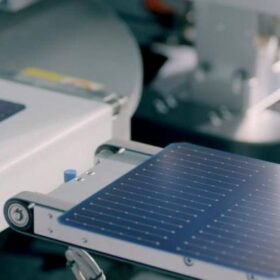
DAS Solar unveils new method to identify hot-spots in TOPCon back-contact solar modules
The Chinese manufacturer said it developed a new circuit-model–based method to accurately detect hot-spot risks in TOPCon back-contact modules, overcoming limitations of the IEC 61215 approach caused by low shunt resistance. Validated through indoor and outdoor tests, the method predicts temperature rise under shading and reportedly enables faster, more accurate hot-spot risk assessment.

The impact of agrivoltaics on potato farming
New research from Italy has shown that agrivoltaic systems can reduce potato yield by up to 15% compared to full-light cropping. However, moderate early-season shading was found to delay soil-moisture depletion, extending biomass accumulation and improving water-use efficiency.
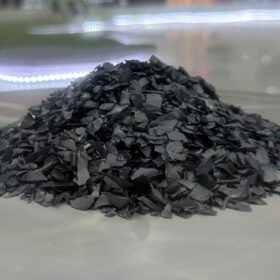
United Solar begins production at Omani polysilicon factory
The factory is located in Oman’s Sohar Freezone and will be capable of supporting the production of up to 40 GW of solar modules annually once at full capacity.

NextPower leads Wood Mackenzie tracker rankings as US, China dominate
Wood Mackenzie ranked NextPower as the world’s top PV tracker manufacturer in the first half of 2025, with companies headquartered in the United States, China and Spain occupying all top 10 positions.

‘Today, women leaders are no longer a quota: they are a competitive advantage’
This week Women in Solar+ Europe gives voice to Yolanda Hoyos, Chief Technical Officer at Spain’s Blacksalt. She says that inclusion, mentorship, and authentic leadership unlock talent, dismantle bias, and are critical to shaping the future of the energy transition. “When organizations respect individual circumstances, commitment and growth follow naturally,” she states.
