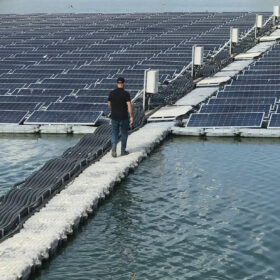
Kenya seeking consultants for 40 MW floating solar tender
State-owned Kenyan Electricity Generating Company PLC (KenGen) is accepting feasibility study applications for the development of a 40 MW floating PV array, backed by German funding.
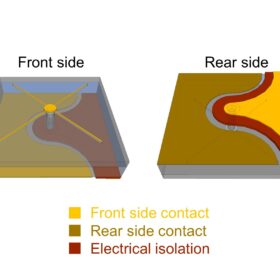
First attempt to build back-contact micrometric III-V photovoltaic cells
An international research group has utilized through-substrate-vias to create 3D interconnections in III-V solar cells with a triple-junction architecture. The novel cell design was found to have a low shading factor of below 3% and a 6-fold increase in wafer area use compared to cells based on 2D interconnects.
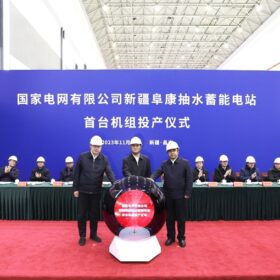
China’s State Grid commissions 1.2 GW pumped hydro project
State Grid Corp. of China has commissioned a 1.2 GW pumped hydro project, featuring three 300 MW turbines.
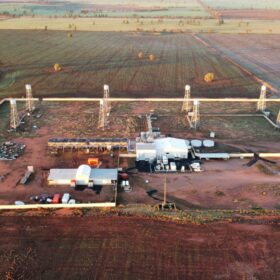
Australian startup begins work on agrivoltaic project with thermal storage
Graphite Energy, a thermal storage company, is building a facility in Australia to demonstrate how renewable energy and agriculture can co-exist through agrivoltaic and greenhouse systems.
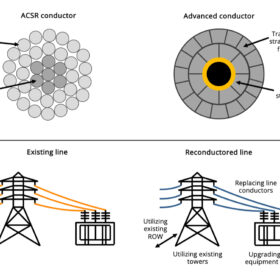
Reconductor existing transmission to ‘unlock’ renewables, says UC Berkeley study
Large-scale reconductoring of existing transmission lines could cost-effectively double transmission capacity within existing rights-of-way, a study says. Renewable energy projects near reconductored transmission lines could more easily interconnect.
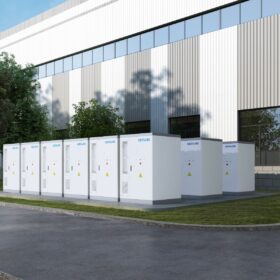
Weiheng Ecactus releases 233 kWh all-in-one battery system
Weiheng Ecactus has unveiled its new Tianwu battery system, with 233 kWh of capacity and 100 kW of output, giving users the flexibility to connect up to 10 units in parallel.

War in Ukraine triggered unique phase in renewables history
Human Geographer Thilo Wiertz speaks to pv magazine on the particular features that characterized the trajectory of renewable energies after the outbreak of the war in Ukraine. He emphasized how the geopolitical tensions arising from this conflict have reshaped the political debate about the energy transition, with the energy security perspective gaining in importance.
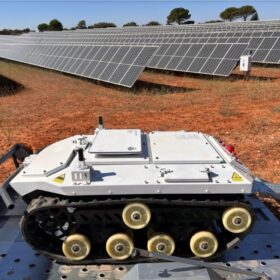
New robots for PV plant inspections
The Antecursor II robot autonomously inspects upper and lower solar panel structures for thermal anomalies, with more than 30 hours of autonomy.
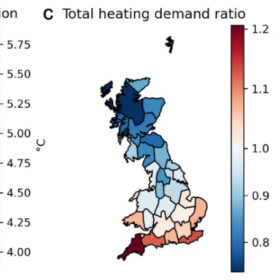
High-resolution model to identify hourly usage patterns of residential heat pumps
Developed by scientists from the UK and Spain, the new model uses high spatiotemporal resolution weather data and data from heat pump field trials. It finds “significant regional differences” compared to a British nation-wide estimation.
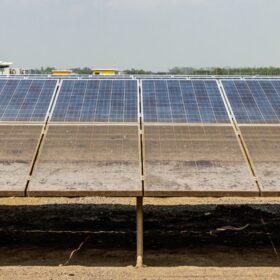
Solutions needed to future-proof big solar amid weather-related risks
Extreme weather is a growing risk to solar farms. Future-proofing through advanced technologies, leveraging data from novel sources, and accepting risk is vital, but rarely achieved today for a number of reasons. Insurers, lenders, developers, contractors and manufacturers recently came together in Melbourne, Australia, to discuss solutions to the intractable problem of weather risk.
