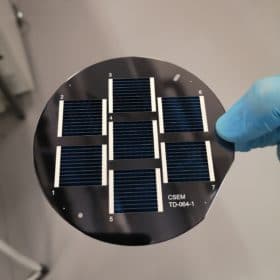
A 26.5% efficient perovskite-silicon tandem cell
Scientists in Switzerland achieved 26.5% efficiency on a perovskite-silicon tandem cell measuring 4cm² and relying on industry-standard screen-printed metallization, further demonstrating the technology’s potential for large-scale production and low-cost electricity generation.

QuantumScape records breakthrough performance for solid-state batteries
QuantumScape reported performance results this week for its solid-state batteries and their potential impact on the electric vehicle industry.
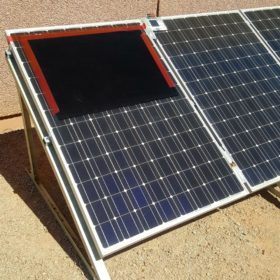
US scientists apply Suns-VoC method to outdoor PV tests
Researchers in Arizona have used the Suns-VoC characterization method for indoor solar cell testing to monitor PV installations. The method can also be used with outdoor distributed-generation and large-scale solar arrays.

Solar greenhouse for crops
Scientists in Canada have created a greenhouse that is exclusively heated by solar panels. The rooftop PV system is not connected to the grid, but is linked to four batteries with a total capacity of 5.56 kWh.
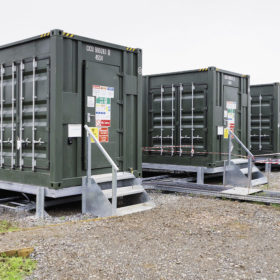
How to grasp the monetary value of storage
Researchers in Saudi Arabia have conducted a review of all current techniques used to calculate the monetary value of storage. They found that batteries secure the most value in providing ancillary services.

Low-cost organic pigment coating for 21.1%-efficient perovskite solar cell
Scientists in the United States have conceived a new process to apply a low-cost organic pigment to perovskite solar cells. The new technique is claimed to increase the efficiency of the devices by around 1.2% and also to improve the cells’ stability.
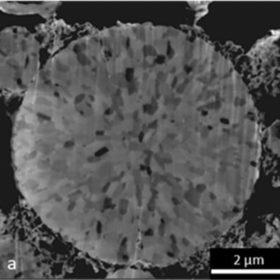
Investigating moisture in nickel-rich batteries
Scientists in the UK looked into the effects of exposure to ambient atmosphere could have on nickel-manganese-cobalt cathodes for lithium-ion batteries. While many cathode designs are moisture sensitive, the group found that the nickel-rich cathodes currently gaining market share are especially vulnerable, and can suffer irreversible power loss upon exposure to moisture in the air.
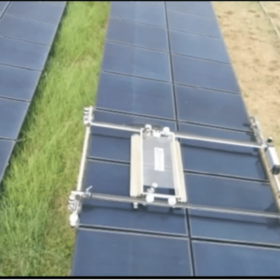
Indian startup unveils modular panel-cleaning bot
Indian startup Solavio Labs has designed a modular, autonomous bot to clean solar panels. The system is purportedly compatible with most structures, mounting areas, and climate conditions.
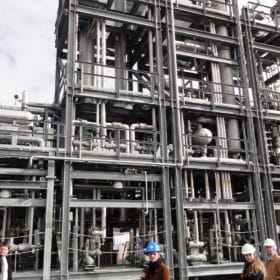
What must be done to use solar and wind in power-to-methanol
According to a research team from Oxford University, solar and wind may be applied in power-to-methanol projects only if the methanol industry will switch from conventional chemical processes, that require a constant energy supply, to more flexible processes that need demand-side management.

Solar+storage vs. Dutch nitrogen crisis
EU environmental laws are driving the implementation of zero-emission solutions in the Netherlands.
