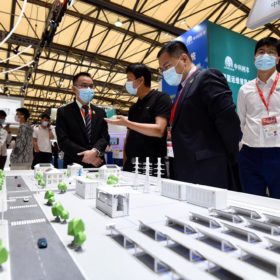
Huawei and Yingli announce smart collaboration
The two brands announced a strategic project at the SNEC solar conference and trade show which will see the establishment of trading and big data centers to help roll-out PV in China.

New PV products, strategic agreements unveiled on day 1 of SNEC
The first day of the world’s biggest solar trade show and conference saw new PV products and strategic agreements unveiled by some of the biggest names in the industry. pv magazine China reporter Vincent Shaw and photographer Dave Tacon were on the ground to catch up with the companies and bring you the latest solar news from Shanghai, China.
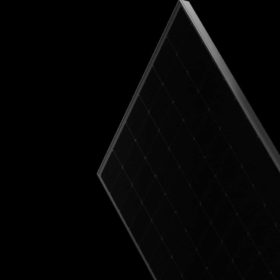
Longi unveils n-type, TOPCon bifacial module with 22.3% efficiency
The 144-cell module is available in six versions with power ratings ranging from 545 W to 570 W and efficiency between 21.3% and 22.3%. The product measures 2,256×1,133x35mm and weighs in at 32.3kg.
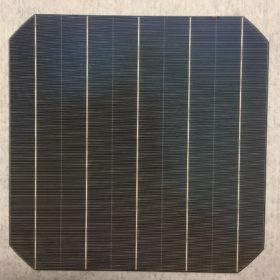
Bifacial n-type TOPCon cell with 22.6% efficiency
The device also showed an open-circuit voltage of 702 mV, a short-circuit current of 40 mA/cm2, and a fill factor of 79.7%. It has a large area of 239 cm².
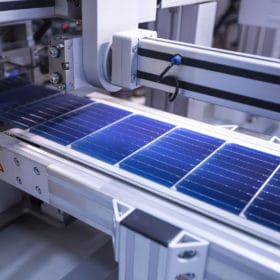
Longi achieves 25.21% efficiency for TOPCon solar cell
The Chinese module manufacturer said the result was confirmed by the Institute for Solar Energy Research in Hamelin, Germany.
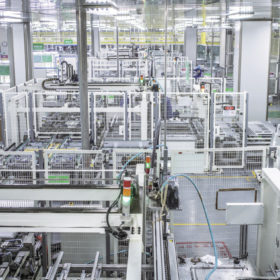
JinkoSolar improves efficiency of n-type monocrystalline TOPCon solar cell by 0.35%
The Chinese module manufacturer said the record efficiency of 25.25% was obtained through material upgrades integrated into the cell process and fabrication. The result was confirmed by China’s National Institute of Metrology.
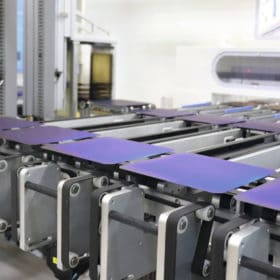
Jolywood signs mega-deal to supply 7 GW of household solar
Based on the price agreed for the first year of the five-year contract, the total deal would be worth almost $4 billion to the $1 billion company. However, with input costs rising and the state-owned sponsor likely to expect to pay lower fees for subsequent years, the TOPCon manufacturer’s margins may not remain so fat.
ITRPV: Large formats are here to stay
The 2021 edition of the International Technology Roadmap for Photovoltaics (ITRPV) was published today by German engineering association VDMA. The report, which forecasts technology trends across the solar industry, expects PERC to maintain its position as the dominant cell technology and notes that large wafer formats are here to stay.
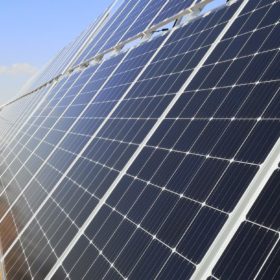
Jolywood plans new Indonesian fab
The n-type TOPCon solar module manufacturer is preparing to invest in a joint venture with state-controlled local partner PT Len Agra Energy to set up 1 GW of annual cell and panel capacity.
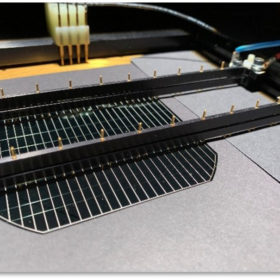
Evaluating tandem cells, from the bottom up
Scientists in Germany evaluated multiple silicon cell concepts based on both cost and efficiency in serving as the bottom layer in a perovskite-silicon tandem cell. The study, based on both simulation and experimental work, outlines advantages to various approaches with the silicon cell and concludes that in almost every case, perovskite-silicon tandem cells have the potential to bring solar costs down below what could be achieved with silicon alone.
