Low-cost organic pigment coating for 21.1%-efficient perovskite solar cell
Scientists in the United States have conceived a new process to apply a low-cost organic pigment to perovskite solar cells. The new technique is claimed to increase the efficiency of the devices by around 1.2% and also to improve the cells’ stability.
Australia to host 200 MW solar farm, big battery project
The New South Wales state government’s push toward renewable energy continues to gather momentum, as the Independent Planning Commission has approved a multimillion-dollar, 500 MW solar project.
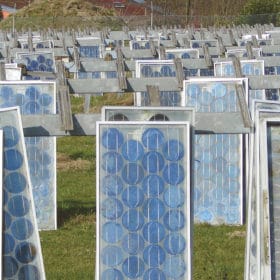
PV module recycling could harm US solar industry
The PV industry can’t claim to be a clean energy source if it leaves a trail of hazardous waste.
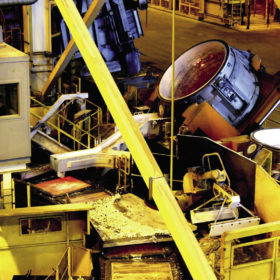
The weekend read: Solar needs aluminum, but it has a carbon problem
Few doubt that aluminum frames will be a part of the solar module for some time to come. And with PV manufacturing continuing to scale, the carbon footprint of this versatile metal may prove a sustainability challenge.

Chinese PV Industry Brief: Carmaker BYD unit sales down 20%, Xinyi Glass makes offer for China Glass
BYD more than doubled November vehicle sales but posted a drop in January-to-November business. Xinyi Glass is looking to grow its assets, while GCL-Poly is raising capital.
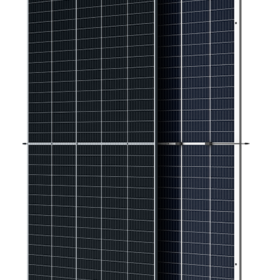
Largest wafer offers lowest LCOE, finds DNV GL
Looking to answer one of the year’s big questions concerning solar technology, energy consultancy DNV GL was invited by Trina Solar to compare the performance of its modules based on the 210mm wafer with the 166mm and 182mm dimensions also introduced recently. The analysis revealed an advantage for modules incorporating the largest wafer, based on simulation of bifacial systems at two locations in Spain and the United States.

Germany hits 2 million PV system installations
By the end of October, about 2 million PV systems were operational throughout Germany, according to the German Solar Industry Association (BSW-Solar).

Meyer Burger and SMA call for an industrial strategy for PV production in Germany
The two PV companies have outlined how competitive value creation in Germany and Europe can succeed. This would also be important in order to preserve technologies and innovations in this country. Meyer Burger and SMA make four specific proposals in which they have an eye on both the generation of solar power and the manufacture of the photovoltaic products required for this.
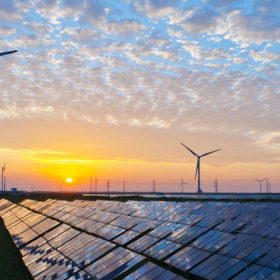
McKinsey: EU slated for 44 GW annual PV additions in cost-neutral path to net-zero
Business analysts at McKinsey & Company have worked the numbers and found that investments into new infrastructure and technologies necessary to achieve the net-zero target will likely be offset by savings in other sectors. Europe’s PV sector could grow to about three times its current size over the next decade.
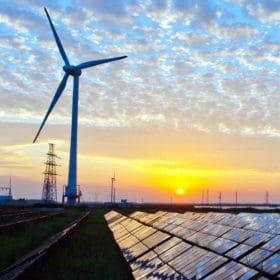
IEX launches new contracts to enable renewable energy trade on the same day and up to 11 days ahead
The two newly introduced green contracts, daily and weekly, are in addition to already operational intra-day and day-ahead contingency contracts in the green market.
