
Coupling balcony solar panels with residential storage
South Korean researchers have tested four operational modes to combine residential batteries with balcony PV modules and have found that the best configuration is when solar is supplied to the load after the battery is fully charged. Charging the battery with the grid prevents the risk of full discharge in the absence of PV power, they said.
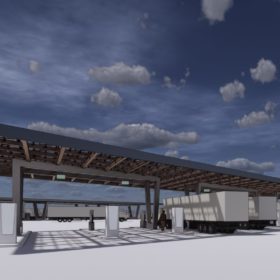
Megawatt-scale, solar-powered EV truck charging
WattEV will build 1 MW solar-powered chargers to deliver 320 miles (515 km) of range to Class 8, 80,000-pound trucks in 30 minutes.
SDN opens heterojunction module factory in South Korea
Planned to be located in Gwangju, in southwestern Korea, the new factory is expected to reach a capacity of 385 MW and to produce 550 W panels.

Ecuador announces renewables auctions, plans to allocate 1 GW
Ecuador plans to launch a 500 MW procurement exercise in November.
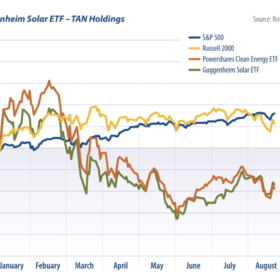
Guggenheim Solar Index: PV supply chain shake-up
Solar stocks have underperformed in the broader market in August, writes Jesse Pichel of ROTH Capital Partners. Project delays could be on the horizon as more module imports are held up at customs, and the supply chain will start to see impacts as suppliers look for options to source polysilicon outside of China.
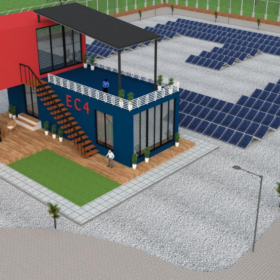
Off-grid data center powered exclusively by PV in Australia
Edge Centres – a data center operator based in Queensland, Australia – has announced its first off-grid, 100% solar-powered facility in the state of Victoria.

Indian PV manufacturer expands panel capacity with new 700 MW factory
Insolation Energy Director Vikas Jain recently spoke to pv magazine about the company’s plans to expand its solar panel manufacturing capacity to 700 MW with the addition of a 500 MW facility. The new factory will be equipped to produce poly, mono, mono PERC, and bifacial panels, with individual outputs of up to 600 Wp.

Price increases hit US solar as trade uncertainties with China cloud growth goals
Price increases, supply chain disruptions, and a series of trade risks are threatening the U.S.’s ability to decarbonize the grid, warned SEIA president and CEO Abigail Ross Hopper.
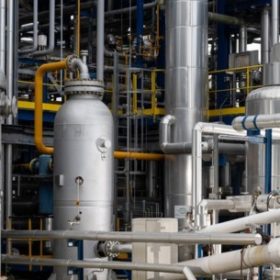
The Hydrogen Stream: work begins on Chile’s first green hydrogen project and French energy giants target decarbonized hydrogen
TotalEnergies wants to decarbonize hydrogen production in Normandy with the support of Air Liquide and, in Chile, an international consortium has begun construction of the country’s first green hydrogen facility. Elsewhere, the Indian government has invited U.S. companies to bid for green hydrogen and electrolyzer contracts.
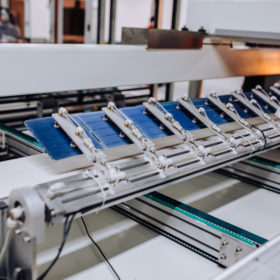
Is it time for the world to start thinking about 1.7C?
A note issued by Norwegian analyst Rystad has hinted it may be time to consider abandoning the 1.5-degree average global temperature rise ceiling agreed upon in Paris six years ago, because the world will never be able to pump out enough solar panels in time.
