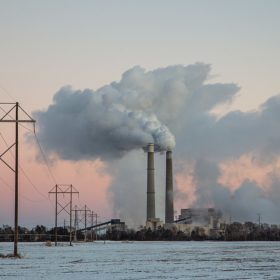
US utility seeks proposal to build 500 MW of solar at a retiring coal plant
Xcel Energy wants to build solar projects of at least 75 MW that interconnect to the existing infrastructure at its Sherco plant in Minnesota.

World Bank lends $200m for South African renewables
The private sector arm of the multilateral development bank has offered a $200 million credit line to Nedbank, the first commercial bank in South Africa to offer a green bond, which it did on the Johannesburg Stock Exchange in 2019.
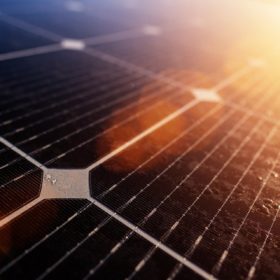
Chinese PV Industry Brief: more manufacturing capacity from Trina, GCL Integration and Eging PV
Plans to set up new cell and module capacities have been announced by the three manufacturers. Trina intends to add 10 GW of cell capacity to its manufacturing site in the Sichuan province, while GCL Integration wants to build an 8.5 GW monocrystalline solar cell factory in the Jiangsu province.
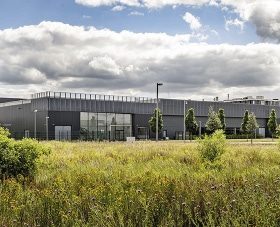
Meyer Burger gets €22.5 million in public subsidies for heterojunction cell factory
The funds come, on the one hand, from the regional government of Saxony-Anhalt and on the other, from the German central government.

Tracking rooftop solar trends in India
Simarpreet Singh, director at EPC firm Hartek Group, speaks to pv magazine about the impact of the Covid pandemic on India’s rooftop solar sector, technology trends shaping the market, and the outlook for 2021.

The geopolitical impact of hydrogen
In an interview with pv magazine, Indra Overland, head of the Center for Energy Research at the Norwegian Institute for International Affairs, explains how international hydrogen strategies may play out in the upcoming decades. Plans and roadmaps will not be enough to turn a hydrogen economy into reality and its success will depend on becoming cost-competitive vis-à-vis other solutions in several areas, he says.

Stanford scientists gain insight on polaron distortion in perovskite solar cells
Polaron formation in perovskite solar cells has been indicated in scientific research as a possible factor for making this kind of cell particularly efficient, although the mechanism behind polarons’ action is completely unknown. A U.S. research group has now observed how polaron distortions form and grow.

GCL concern over senior notes due January 30
Investors sitting on three-year notes worth $500 million have been asked to postpone settlement for another three years and to sign away their rights to oppose the debt restructure plan which would be needed if the company defaults on the commitment, triggering a cross default.

Sustainable pumped-hydro across 616,818 sites
Australian researchers have identified more than 600,000 sites suitable for closed-loop pumped-hydro energy storage projects across the globe. “Off-river” pumped-hydro is not only able to overcome the typical topographical issues of conventional pumped-hydro but is also cheaper.

Agrivoltaics prevail in France’s tender for innovative PV technologies
The French energy regulator has allocated 146.2 MW in the procurement exercise. The final average price was €0.0815/kWh.
