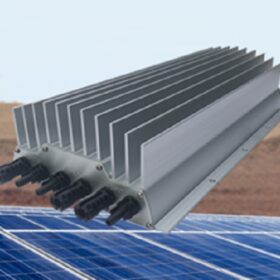
Ampt introduces 70 kW output solar string optimizer
The i50 optimizer supports the largest utility-scale solar projects.
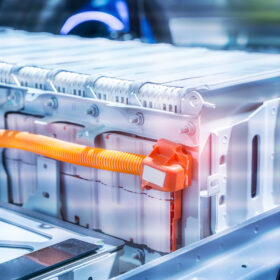
The Battery Cycle: NMC, LFP, LTO – What’s the difference?
With battery storage such a crucial aspect of the energy transition, lithium-ion (li-ion) batteries are frequently referenced but what is the difference between NMC (nickel-manganese-cobalt), LFP (lithium ferro-phosphate), and LTO (lithium-titanium-oxide) devices and their underlying chemistry?
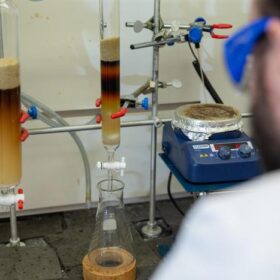
High-energy, membrane-free organic redox flow battery
US researchers have developed a new high-voltage, membrane-free, nonaqueous lithium-based organic redox flow battery. They say that the elimination of the membrane decreases the upfront costs of the battery by as much as 30%.
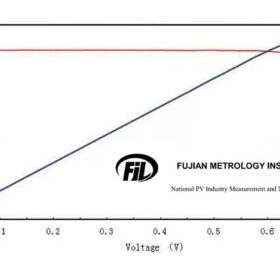
Das Solar claims 26.33% efficiency for n-type TOPCon solar cell
The cell has an area of 333.4 cm2 and is based on passivating contacts based on polysilicon and silicon monoxide (SiOx). The Fujian Metrology Institute in China has confirmed the result.

Accelerated testing procedures for perovskite solar cells
Scientists in the US developed a series of accelerated testing procedures designed to predict how perovskite solar cells will perform when installed outdoors for a long period of time. The study finds that combined, simultaneous exposure to light and heat gives the most accurate of how a perovskite solar cell will perform in the field.
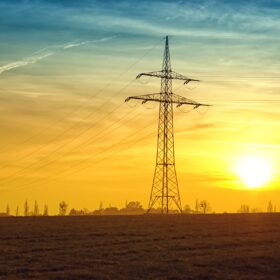
Declining populations free up agricultural land for large amounts of solar in densely populated countries
In a new monthly column for pv magazine, the International Solar Energy Society (ISES) explains how much solar PV energy could be harvested from freed-up agricultural land in densely-populated countries with declining populations.
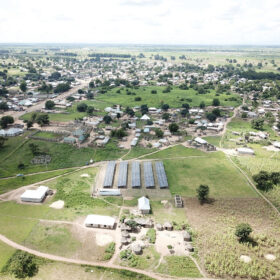
The importance of solar mini-grids in universalizing energy access
In its latest monthly column for pv magazine, the International Solar Alliance (ISA) explains how to expand the deployment of mini-grids for electricity access, especially in less developed countries.

Agrivoltaic facilities with single-axis trackers have lower LCOE than those with fixed structures
New research from Belgium shows agrivoltaic facilities with trackers perform significantly better than projects with fixed structures. The scientists found projects with tracking achieved an LCOE of €0.077 ($0.082)/kWh, while facilities with fixed structures were found to have an LCOE of €0.10/kWh.
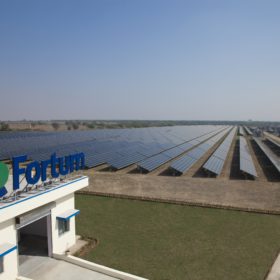
Indian state of Karnataka plans 500 MW solar plant
Karnataka Renewable Energy Development Ltd. (KREDL) is seeking a consultant to assess the feasibility of a planned 500 MW solar park in the Indian state of Karnataka.
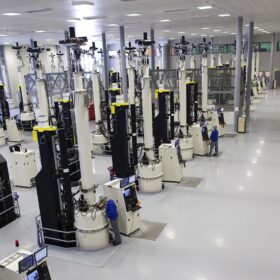
Silfab Solar signs deal with NorSun for US-made wafers
NorSun recently raised $8.5 million of new equity to further develop clean energy manufacturing projects in the United States, including a 5 GW ingot and wafer factory.
