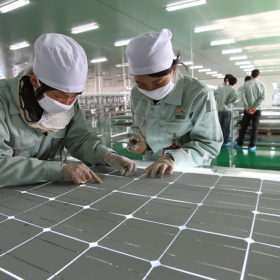
Chinese PV Industry Brief: Solar module production hit 74.1 GW in Q1
The China Photovoltaic Industry Association reports robust production growth among Chinese solar manufacturers, while the China Nonferrous Metals Industry Association confirms an ongoing decline in polysilicon and cell prices. Canadian Solar, meanwhile, has commenced share trading on the Shanghai Stock Exchange.
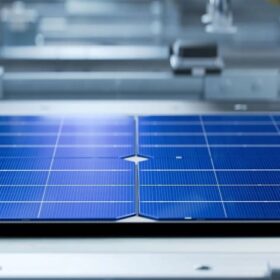
Reusing silicon from end-of-life solar panels in EV batteries
Scientists in Belgium are exploring the potential of recycled silicon in solar modules at the end of their life cycle for reuse in low-cost, higher-energy-density storage technologies. They claim EV batteries using this silicon may allow faster recharging and travel longer distances on a single charge.
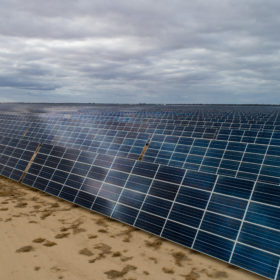
RWE secures PPAs for solar plants in Greece
Germany’s RWE and Greek state-owned utility PPC have signed power purchase agreements (PPAs) for three of five solar projects to be built in a former coal mining region in Greece. They will sell the electricity to local utility Heron.
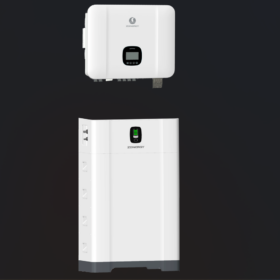
New residential battery inverter solution from China
Zonergy has developed a 2.5 kWh lithium iron phosphate (LFP) battery system featuring an inverter with an output ranging from 8 kW to 15 kW. It says four to 16 modules can be combined for between 10 kWh and 40 kWh of energy storage capacity.
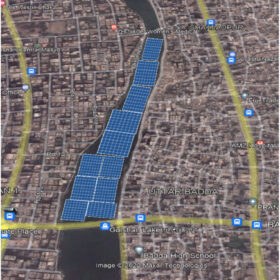
Floating solar may reach LCOE of $0.0341/kWh in Bangladesh
New research shows that floating PV plants may have superior generating capabilities compared with ground-mounted PV plants in several areas of Bangladesh. Furthermore, the study indicates that floating arrays in the country may reach a levelized cost of energy ranging from $0.0341/kWh to $0.0486/kWh depending on the location.
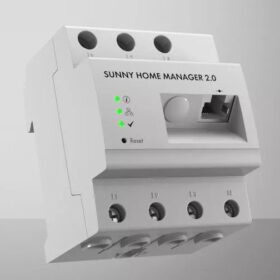
SMA, Samsung to integrate heat pumps with residential PV
Samsung and SMA are using a new cloud-to-cloud system that allows PV systems with SMA inverters to be integrated with Samsung heat pumps.
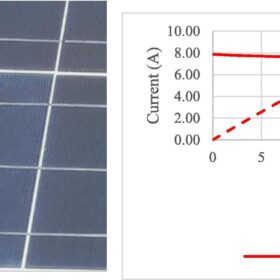
Research shows polycrystalline panels from 11 different producers degrade more than warranty rate
A research group in Ghana has conducted a series of tests to assess the performance of polycrystalline solar modules in PV systems operating in their home country for at least 5 years. They found that the vast majority of the panels may ‘fail’ before 20 years in operation under outdoor conditions.
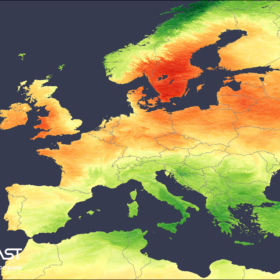
Northern Europe outshines the south during May
In a new weekly update for pv magazine, Solcast, a DNV company, presents the solar irradiance data it collected for Europe in May. Below-average cloud cover meant above normal irradiation for much of the UK, France, Germany, the Baltics and Scandinavia, with anomalies as high as 30% and 40% above climatological means. Solar assets across Northern Europe will have overperformed on expectations for May.
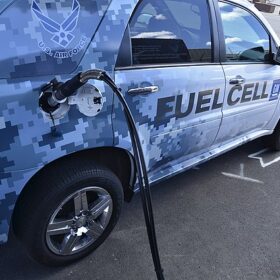
The Hydrogen Stream: US unveils green hydrogen strategy
The US government has identified the hydrogen sector as a key energy opportunity, while Hystar has signed its first PEM electrolyzer deal and Plug Power has agreed to supply fuel cells for long-term storage during emergencies in California.

Unsubsidized solar installations rise by 68% in India in Q1
India added 518 MW of new open-access solar capacity in the January-March period, from 308 MW installed in the previous three months.
