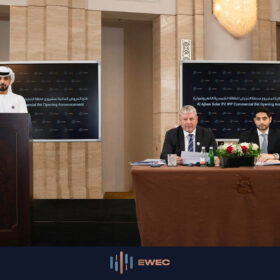
UAE utility announces selected bidders for 1.5 GW solar tender
Emirates Water and Electricity Co. (EWEC ) has announced the bidders for a tender to develop the 1.5 GW Al-Ajban solar project.
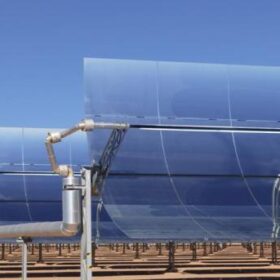
Morocco unveils selected bidders for 400 MW solar tender
The Moroccan authorities are tendering a solar complex that combines 400 MWp of PV and two hours of storage.
The Hydrogen Stream: Scientists use perovskite compound to store ammonia
Japanese scientists have developed an organic-inorganic halide perovskite compound for the chemical storage of ammonia (NH3), while Bosch is preparing to exhibit new products in the hydrogen value chain.

Chinese PV Industry Brief: Tongwei plans 16 GW PV cell factory
Tongwei says it will build a new 16 GW solar cell factory in Meishan City, China’s Sichuan province.
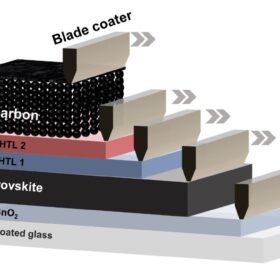
Fully printed carbon electrode perovskite solar cell achieves 19.2% efficiency
German scientists have fabricated a carbon electrode perovskite solar cell with a hole-transporting bilayer made of organic semiconductors instead of a conventional hole transport layer. They claim this approach improves the device’s fill factor and open-circuit voltage.
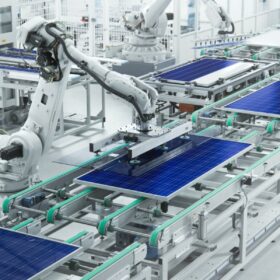
All ETIP PV’s activities at a glance
In its latest monthly column for pv magazine, the European Technology and Innovation Platform for Photovoltaics (ETIP PV) presents its structures and recent activities. The next outreach activities of the ETIP PV are planned for the EU-PVSEC conference from the 18th to the 22nd of September in Lisbon, covering hot topics like digital PV or updates on levelized cost of PV electricity.

Unify data to reduce complexity
The volume and complexity of data generated by renewables sites is growing, as are the regulatory requirements regarding its collection and delivery. Here’s how modern asset management systems can deliver better functionality and management to project operators and owners.
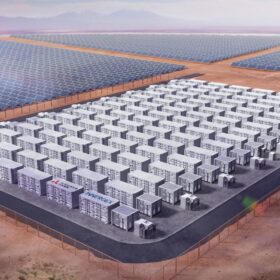
Chile releases bidding terms for 5,400 GWh renewables, storage auction
The Chilean authorities want to contract 5,400 GWh of power from renewable energy, while also including battery storage. The selected developers will secure 20-year power purchase agreements (PPAs).

New soda ash factory in China to reduce solar glass prices
Inner Mongolia Berun Group recently inaugurated a new soda ash factory in China. pv magazine spoke about the impact of the new facility on solar glass prices with Marguerite Morrin, research director for OPIS’ Chemical Market Analytics. She said the facility will produce natural soda ash, which is cheaper than synthetic soda ash.
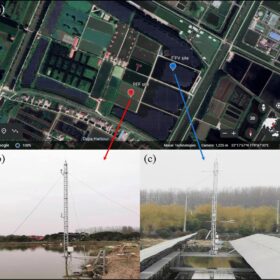
Effects of floating photovoltaics on radiation, energy flux on lakes
A group of researchers from China assessed the impact of floating PV systems on the radiation, energy flux, and driving forces on lakes under varying meteorological conditions. It found that the impact of a PV array on the sensible heat flux of a lake is 1.5 times that of a natural lake.
