
Europe’s largest CSP plant for self-consumption goes online in Spain
Heineken España and Engie España have commissioned a 30 MW concentrated solar power (CSP) plant in Seville, Spain, with 68 MWh of storage capacity, marking the inauguration of Europe’s largest concentrated solar power plant.

The race for 100% solar
With utility scale solar installations accelerating, Philip Wolfe, founder of PV data consultancy Wiki-Solar, drills into the data to highlight some interesting variations in relative progress around the world.

Agrivoltaic system design for olive cultivation
A research team in Spain has developed a PV system layout for super-intensive olive groves. The scientists said the system must ensure high levels of transparency in order to avoid a negative impact on the olive yield.
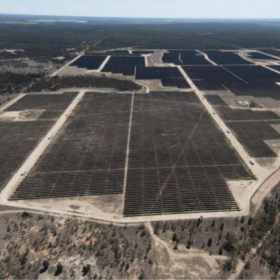
Japanese companies switch on 204 MW of solar in Australia
Japan’s largest oil refiner, Eneos, and Tokyo-based trading firm Sojitz have jointly opened the 204 MW Edenvale Solar Park in Queensland, Australia.

New model for day-ahead solar forecasting in areas with limited data
South Korean researchers have developed a long-term solar irradiance prediction method based on a reinforcement learning algorithm. They claim that the new model is able to forecast solar radiation for more than a year using just two weeks of solar radiation learning.
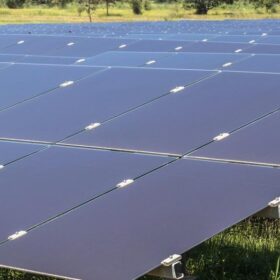
Toledo Solar, First Solar reach agreement in lawsuit
Toledo Solar and First Solar have reached an agreement in their lawsuit, but details of the settlement remain confidential. Toledo Solar has also revealed the formation of a new investor-led independent board of directors and leadership team.
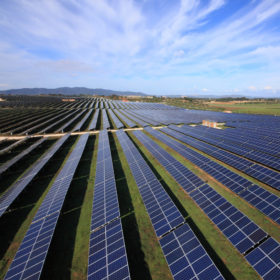
Italy allocates 48 MW of solar in latest renewables auction
The Italian authorities have allocated 58 MW of renewables capacity in the nation’s latest procurement exercise for clean energy. Developers have offered a maximum discount ranging between 2% and 2.1% from the auction ceiling price of €0.065 ($0.068)/kWh.
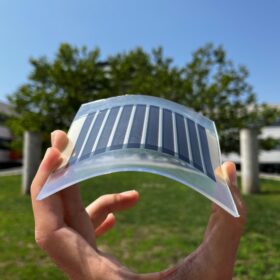
European research group creates injection molding plastic solar cells
A French-Spanish research team developed organic photovoltaic modules embedded into plastic parts through high throughput injection molding. The researchers injected thermoplastic polyurethane in the modules and found it enhances their mechanical stability while keeping a high flexibility.

Bangladesh approves tariffs for 370 MW of solar
Bangladesh has approved tariffs of $0.10/kWh for 370 MW of solar at three sites, ranging in size from 70 MW to 200 MW, as the government seeks to expand its generating capacity. The country also has a 1.2 GW pipeline of solar projects under construction.
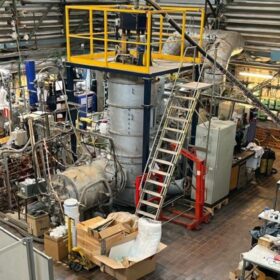
Swedish startup to use green hydrogen plasma in pilot reactor for solar grade silicon
Encouraged by lab results and a feasibility study, Swedish startup, Green14, in collaboration with Sweden’s Royal Institute of Technology (KTH) plans to build a pilot-scale reactor to make solar grade silicon with a hydrogen plasma process. The company sees the pilot as a step towards using a more sustainable method to produce solar grade silicon for the PV industry at its own gigawatt-scale plant.
