
Bringing clean African electrons to Europe
A raft of ambitious interconnection projects has been announced to bring African electrons to European shores. While there are financial and supply chain challenges to overcome, the renewables potential on offer across North Africa is exciting investors.

The Hydrogen Stream: US government, ABI Research predict lower H2 costs
The US government says electrolysis could reduce clean-hydrogen production costs to $1/kg by 2031, while ABI Research claims the global levelized cost of hydrogen (LCOH) will become cost-competitive by the end of this decade, dropping to $2.50/kg.
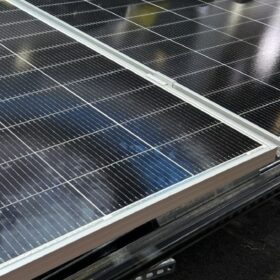
Chinese PV Industry Brief: Yonz Technology to build 100 GW factory
Yonz Technology says its Yonz Industrial Technology (Baotou) subsidiary will build a 100 GW aluminum PV frame factory for CNY 3.5 billion ($481.8 million) in Baotou, Inner Mongolia.

Taiwan launches $126 million rebate program for small rooftop PV
Taiwan’s Ministry of Economic Affairs (MoEA) says it will offer up to TWD 300,000 ($9,260) per project through a $126 million rebate program for small rooftop PV systems, with eligibility limited to systems not exceeding 3 kW.
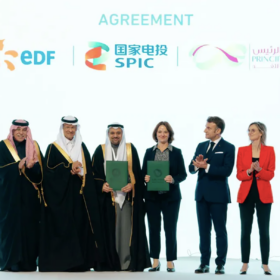
EDF Renewables, SPIC win 1.4 GW of solar projects in Saudi Arabia
A consortium of France’s EDF Renewables and China’s SPIC Huanghe Hydropower Development Co. (HHDC) has successfully bid for two solar projects in Saudi Arabia’s fifth renewable energy tender. The partners have signed two 25-year power purchase agreements with Saudi Power Procurement Co. for the energy.
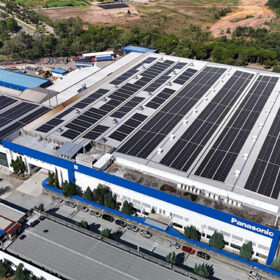
Panasonic’s largest solar array installed in Malaysia
Panasonic has installed a 5.2 MW solar array at the facilities of one of its subsidiaries, Panasonic Appliances Air-Conditioning Malaysia Sdn. Bhd (Papamy). The system is the largest within the Panasonic group.
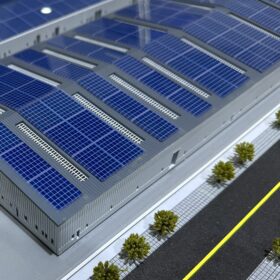
China issues new rules to support peer-to-peer energy trading
China’s National Energy Administration (NEA) has introduced a new set of measures to support peer-to-peer energy trading. The new initiatives are expected to remove barriers for the further development of distributed PV projects.
Germany’s Solarmax facing bankruptcy
Residential PV storage systems and inverters provider Solarmax is provisionally filing for bankruptcy in Germany but will continue to operate.
Exploring the role of hybrid energy hubs: introducing IEA PVPS Task 20
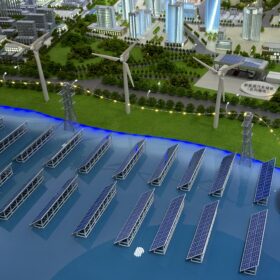
The International Energy Agency Photovoltaic Power Systems Programme (IEA PVPS) is starting a new Task 20: Energy Hubs for Green Hydrogen. This joint effort with the IEA Wind and Hydrogen Technology Collaboration Programmes (TCPs) seeks to advance the integration of wind, solar, and hydrogen technologies into hybrid energy systems that produce green hydrogen efficiently and sustainably. Running from 2025 to 2028, Task 20 will address the practical, technical, environmental, and societal challenges associated with hybrid energy hubs, providing actionable insights for their implementation on a global scale.
From policy to practice: aligning governments, industry, professional networks to champion DEI
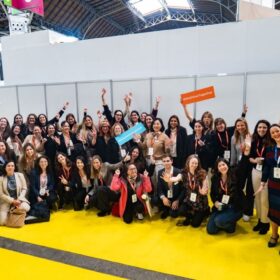
In a new article for pv magazine, Women in Solar Europe (WiSEu) explains why the renewable energy industry should finally embrace equity, diversity, and inclusion (DEI). “At a micro level, networks like Women in Solar Europe are critical to creating the environments of belonging, psychological safety, and support that individuals need to thrive and contribute to the energy transition,” says Carmen Madrid, founder of the WiSEu Network.
