
‘Beyond keeping the lights on, solar builds community resilience’
This week, Women in Solar Europe (WiSEu) gives voice to Nataliia Cherepovska, communication manager at Poland’s Menlo Electric. She says that especially in Ukraine, where she comes from, solar is more than a green initiative – it’s a lifeline. “Solar-powered crucial facilities keep running even when the grid falters, ensuring critical services,” she states. “Solar energy doesn’t just power buildings – it powers hope, security, and progress.”
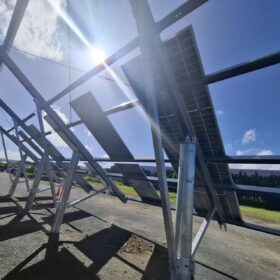
JinkoSolar, Trina say TOPCon modules outperform p-type back-contact panels
JinkoSolar and Trina Solar have separately reported that on-field testing shows tunnel oxide passivated contact (TOPCon) solar modules outperform p-type back-contact PV modules in monthly power generation.
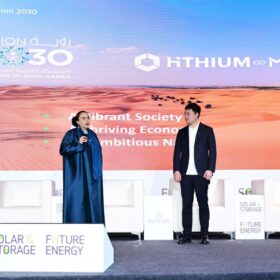
Hithium plans manufacturing capacity in Saudi Arabia, unveils desert-tailored battery storage solution
China’s Hithium has joined hands with a local partner to establish a 5 GWh production facility in Saudi Arabia. It has also unveiled its specialized energy storage solutions tailored for desert applications.

Nepal’s 800 MW grid-tied solar tender oversubscribed
The Nepal Electricity Authority (NEA) has received proposals from 134 companies for a total of 3.6 GW. It says that 259 projects from 127 developers passed the technical bid evaluation and will be considered when financial proposals are opened on Oct. 22.

Western Europe sees September solar slump
In a new weekly update for pv magazine, Solcast, a DNV company, reports that low-pressure systems caused cloudier skies and reduced irradiance in Southern and Western regions in September, while areas further north and east enjoyed sunnier weather. A series of low-pressure systems centered over France led to the biggest drop in irradiance by up to 25%.
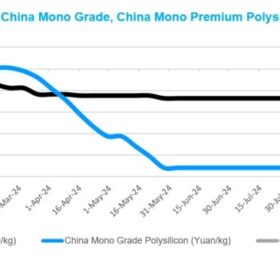
Polysilicon prices remain stable ahead of U.S. Department of Commerce’s anti-dumping ruling
In a new weekly update for pv magazine, OPIS, a Dow Jones company, provides a quick look at the main price trends in the global PV industry.
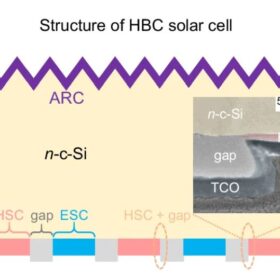
Longi reveals details of 27.09%-efficient heterojunction back contact solar cell
In a new paper published in nature communications, the Chinese solar manufacturer explained that the heterojunction back contact cell it unveiled in late 2023 achieved one of the highest open-circuit voltage ever reported for this cell technology, as well as smaller than usual short-circuit current losses. The results were confirmed by Germany’s Institute for Solar Energy Research (ISFH).

Off-grid solar appliance repair training a must for remote communities
An Australian Research Council funded report co-authored by Sydney-based University of New South Wales and UK-based charity SolarAid says the off-grid solar sector should do more to enhance its product repair initiatives.

Powering restaurants with rooftop PV, reversible fuel cells
Researchers have simulated the operation of bifacial PV and proton exchange membrane reversible fuel cells across restaurants in five different US states. Taking into account varying rates of bifacial PV’s rearside gains, they found that LCOE was as low as $0.029 per kWh.
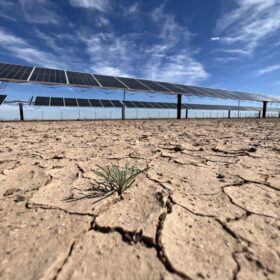
California farmers developing 20 GW solar-plus-storage plan
The Golden State recently signed AB 2661, granting the Westland Water District authority to develop transmission lines that will enable solar energy and storage projects on 130,000 acres of drainage-impaired farmland.
