
The Hydrogen Stream: NEOM starts recruitment campaign for ‘world’s largest’ green hydrogen plant construction
The green hydrogen plant, which is an equal joint venture between ACWA Power, Air Products and NEOM, will produce up to 600 tonnes of carbon-free fuel daily when fully operational at the end of 2026.
Chinese PV Industry Brief: Nation’s January-July PV capacity hits 123.53 GW
China’s National Energy Administration (NEA) says the country installed 21.05 GW of solar capacity in July 2024, bringing the year’s total to 123.53 GW, while China Huadian Group has launched a 16.03 GW PV module procurement tender.

The critical role of industry mentoring to shape leaders
In this week’s column, Women in Solar Europe (WiSEu) explains why mentoring can represent a powerful tool to combat modern-day issues like the gender pay gap, leadership inequality, and pervasive gender biases, both conscious and unconscious.

Researchers identify barriers to solar development in Poland
A research team from Poznań’s University of Economics & Business and SMA Solar Technology AG spoke to installers, designers, distributors and manufacturers in Poland’s solar industry to identify key barriers to PV development. They highlighted a lack of connection capacity and prices of non-renewable energy sources as the main issues.
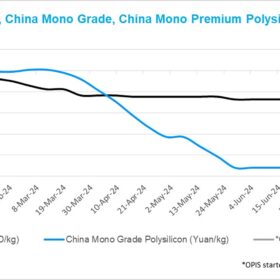
Global polysilicon prices stable amid steady fundamentals
In a new weekly update for pv magazine, OPIS, a Dow Jones company, provides a quick look at the main price trends in the global PV industry.

Sunny end to summer delivers European solar records
In a new weekly update for pv magazine, Solcast, a DNV company, reports that a surge in sunshine has resulted in record-breaking solar generation across several European countries this August, with the trend set to continue for the remainder of the month.

Novel blockchain-based virtual utility for P2P PV trading
Researchers from Canada’s Western University have developed an open-source, blockchain-based virtual utility for peer-to-peer (P2P) solar trading, using smart contracts to save up to $1,600 (US dollars) for 10 homes in simulated scenarios.
Redflow enters voluntary administration after failing to secure funds
Australian battery manufacturer Redflow has entered voluntary administration after failing to secure capital to upscale its X10 battery for larger projects.

How much shade is enough?
Researchers have covered part of a rooftop solar plant with a different numbers of shading cloth layers to measure their power, current, and voltage. They have been able to identify a point after which the value of system current and maximum power is no longer sensitive to shading heaviness.
Monitoring system for vehicle-integrated photovoltaics
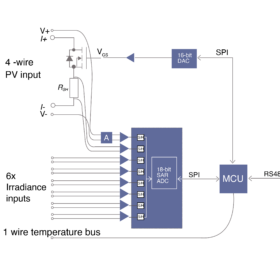
Researchers in Slovenia have built a monitoring system for vehicle-integrated photovoltaics consisting of an IV curve scanner that uses a MOSFET as a voltage-controlled electronic load. The system also utilizes an 18-bit analog-to-digital converter and a microchip microcontroller.
