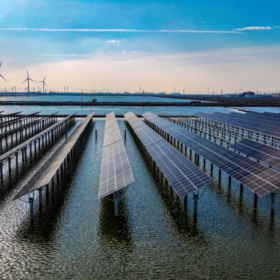
Chinese PV Industry Brief: China adds 160 GW in January-September period
China’s National Energy Administration (NEA) says solar installations reached 160 GW between January and September 2024, with cumulative capacity hitting 770 GW by August.
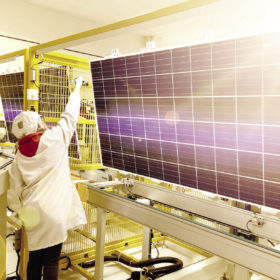
Trina Solar sues Canadian Solar for alleged TOPCon patent infringement
Trina Solar has filed a lawsuit against Canadian Solar in a US court, claiming patent infringement on an unspecified tunnel oxide passivated contact (TOPCon) solar cell technology.

Belgian grid operator accelerates smart meter deployment for PV system owners
Belgian grid operator Fluvius plans to install around 403,000 smart meters in solar-powered homes by 2025, when their use becomes mandatory. So far, the company has installed 553,500 smart meters in Flemish homes with PV systems.

India surpasses 90 GW of installed solar capacity
India’s installed renewable energy capacity reached 201.46 GW at the end of September 2024, with 90.76 GW coming from solar projects, according to the Ministry of New and Renewable Energy (MNRE).
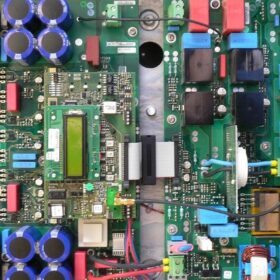
Fraunhofer IMWS develops methodology for better lifetime predictions of inverters
The Fraunhofer Institute for Microstructure of Materials and Systems (Fraunhofer IMWS) has developed a methodology to improve lifetime predictions of inverters, to help manufacturers reduce material use and testing efforts while lowering production costs without compromising device lifespan.
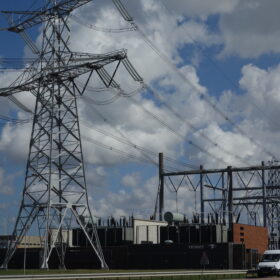
Dutch grid operators propose limitation contracts to free up 880 MW of capacity
Dutch grid operators TenneT, Enexis, Liander, and Stedin say that expanded use of “capacity limitation contracts” among renewable energy operators could free up about 880 MW of additional grid capacity. The contracts are granted by congestion service providers (CSPs), which act as intermediaries in the Netherlands.
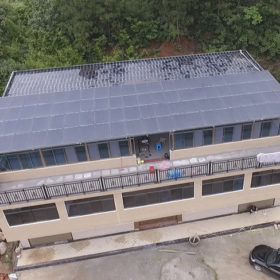
China’s NEA unveils new draft rules to reshape distributed solar market
China’s National Energy Administration (NEA) has released new draft rules to reshape the distributed-generation solar market.
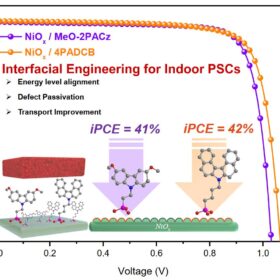
Indoor perovskite solar cell based on self-assembled monolayers achieves 42% efficiency
Researchers in Taiwan have developed an efficient carrier transport and defect passivation approach at the nickel oxide/perovskite interface in perovskite solar cells, enabling devices with 42% efficiency under indoor lighting conditions, and over 20% in simulated sunlight.

New hot-dip galvanized screw for ground-mounted solar projects
Spain-based Elementos de Sujeción Galvanizados (ESG) has developed a new hot-dip galvanized ground screw for PV systems, designed to be driven directly into the ground and withstand heavy loads.

With or without PV, air-source heat pumps are among cheapest residential heating sources
New research from Germany shows that identifying the cheapest residential heating source remains challenging, as the final results depend on the assumptions made and energy prices. The scientists, however, demonstrated that air-water heat pumps and gas heating systems are currently the most cost-effective solutions.
