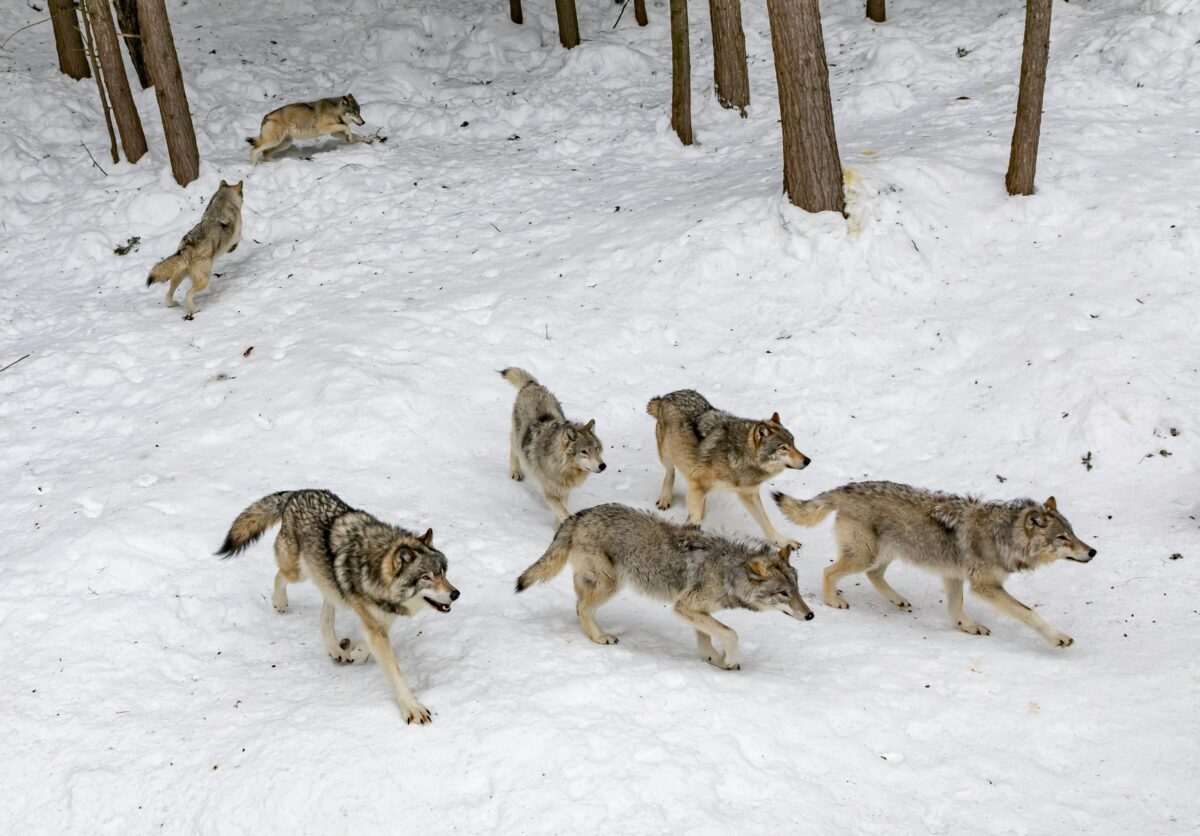





A team of scientists led by researchers from Pakistan’s Abdul Latif University has developed a maximum power point tracking (MPPT) algorithm that uses a grey wolf optimizer (GWO) under realistic shading conditions. The GWO is a bio-inspired algorithm that utilizes the social hierarchy and hunting strategy of grey wolves.
Corresponding author Syed Hadi Hussain Shah told pv magazine the work shows that a simple GWO, implemented directly on the duty cycle with very low computational demand, can reliably track the global maximum power point under partial shading. “The novelty lies in proving that a lightweight, non-hybrid metaheuristic can achieve fast and repeatable results that are practical for embedded controllers,” he added.
The GWO-based MPPT uses the prey of the wolf pack as the maximum power point (MPP). The pack starts by searching for prey or, in the context of a PV system, trying different duty cycle values, and eventually closing in on the best position, the one that yields the highest power. Ultimately, the entire pack of candidate duty cycle values surrounds the ‘prey' and converges on the global maximum power point (GMPP).
The GWO MPPT was tested in MATLAB/Simulink on a simulated PV array consisting of four modules connected in series. Each module consisted of 60 cells and had a rated maximum power of 250 W. A DC-DC boost converter for optimized power extraction and voltage regulation was also simulated, along with a load resistor representing system power consumption.
It was tested under three scenarios: uniform irradiance conditions with 1,000 W/m2; row-wise shading, which used irradiances of 1,000 W/m2, 1,000 W/m2, 800 W/m2, and 500 W/m2, or 500 W/m2, 800 W/m2, 1,000 W/m2, and 1,000 W/m2; or a random shading condition, with dynamically varying irradiance across different PV modules. Temperatures were kept constant at 25 C.
The results of the GWO MPPT were compared to those of other techniques, namely perturb and observe (P&O), incremental conductance (INC), particle swarm optimization (PSO), whale optimization algorithm (WOA), moth flame optimization (MFO), GWO-Fuzzy, PSO-P&O, and GWO-adaptive neuro-fuzzy inference systems (ANFIS).
“Each MPPT algorithm was tested over 10 independent runs per shading condition to ensure statistical robustness. Performance was evaluated in terms of MPPT efficiency, convergence time, and steady-state oscillations,” the research team explained. “Results showed that GWO achieved an average MPPT efficiency of 98.15%, significantly outperforming INC (74%) and P&O (54%). The GWO algorithm converged to the GMPP in just 0.06 s with minimal oscillations (~2 W), while conventional methods demonstrated slower convergence and higher oscillations. Statistical validation using ANOVA and t-tests confirmed the superiority of GWO (p < 0.0001) across both shading scenarios, with no significant efficiency drop between patterns.”
Shah added that the team was surprised by how consistently GWO outperformed conventional MPPT methods. “It converged to the global maximum in about 60 ms with minimal ripple, while incremental conductance and P&O were trapped at local peaks, losing 20–40% of available power,” he said. “The repeatability and statistical significance of the improvement were striking.”
The algorithm was presented in the research paper Comparative Analysis of GWO MPPT with Conventional techniques in shaded PV arrays, published in Results in Engineering. Scientists from Pakistan’s Abdul Latif University, Sukkur IBA University, and China’s PowerChina Huandong Engineering Corporation contributed to the work.
This content is protected by copyright and may not be reused. If you want to cooperate with us and would like to reuse some of our content, please contact: editors@pv-magazine.com.

By submitting this form you agree to pv magazine using your data for the purposes of publishing your comment.
Your personal data will only be disclosed or otherwise transmitted to third parties for the purposes of spam filtering or if this is necessary for technical maintenance of the website. Any other transfer to third parties will not take place unless this is justified on the basis of applicable data protection regulations or if pv magazine is legally obliged to do so.
You may revoke this consent at any time with effect for the future, in which case your personal data will be deleted immediately. Otherwise, your data will be deleted if pv magazine has processed your request or the purpose of data storage is fulfilled.
Further information on data privacy can be found in our Data Protection Policy.