
France pulls reduced VAT status from four DMEGC solar modules
France’s certification body says it has withdrawn eligibility for a lower solar VAT rate from four Chinese-made modules after finding traceability errors that altered their carbon footprint calculations.

EU security doctrine highlights high-risk dependency on Chinese solar inverters
A document published by the European Commission on strengthening the EU’s economic security lists reliance on Chinese solar inverters as an example of high-risk dependency. It adds the commission plans to address such risks under its cybersecurity framework.

Ford launches battery storage business, repurposing EV manufacturing capacity
The automotive giant will leverage its plants in Kentucky and Michigan, along with its lithium iron phosphate (LFP) technology know-how, to provide solutions for energy infrastructure and the expanding data center market. The company plans to begin shipping battery energy storage systems (BESS) in 2027.
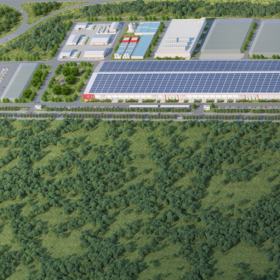
SEG Solar starts building 3 GW solar ingot, wafer factory in Indonesia
U.S-headquartered SEG Solar is constructing a 3 GW ingot and wafer factory in Indonesia. The new production is located at its existing cell manufacturing facility, completing an end-to-end solar manufacturing chain for the company.
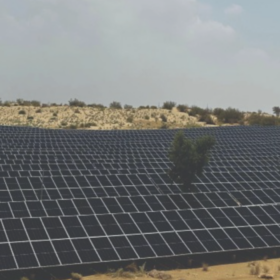
India’s SJVN nears completion of 1 GW utility-scale solar project
India’s Satluj Jal Vidyut Nigam (SJVN) has brought more than 830 MW of a 1 GW solar project in Rajasthan into commercial operation, with full commissioning expected soon.

The impact of laser-assisted firing on TOPCon solar cell performance
UNSW and Jolywood studied the thermal stability of laser-assisted fired TOPCon solar cells during module fabrication and high-temperature stress, identifying hydrogen-related defect dynamics as the key factor behind degradation and recovery. They found lamination causes temporary efficiency losses that self-recover under light exposure, while optimized LAF can restore degraded contacts, providing practical guidance for reliable module manufacturing and testing.

Sparc hits production milestone at hydrogen pilot plant in Australia
Fortescue-backed startup Sparc Hydrogen has begun producing green hydrogen directly from water using concentrated solar at what it describes as a “first-of-its-kind” pilot plant in South Australia.
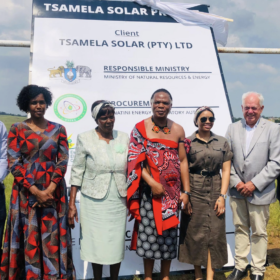
Eswatini starts 20 MW solar project
Eswatini has launched a 20 MW solar project, the first in a series of five expected to add 75 MW of new capacity.
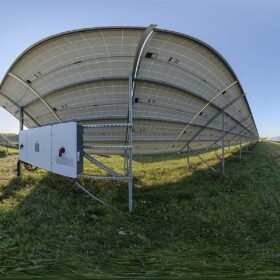
Wood Mackenzie predicts 2-year decline in global solar inverter demand
Wood Mackenzie’s latest analysis expects market uncertainty in China, Europe and the U.S. to cause two consecutive years of contraction in the global solar inverter market, forecasting a fall to 577 GWac this year and 523 GWac in 2026.
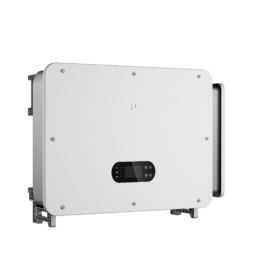
GoodWe launches new hybrid inverters for C&I solar
The Chinese manufacturer has launched a new series of three-phase hybrid inverters ranging from 80 kW to 100 kW. They new products feature eight MPPTs with up to 42 A input current.
