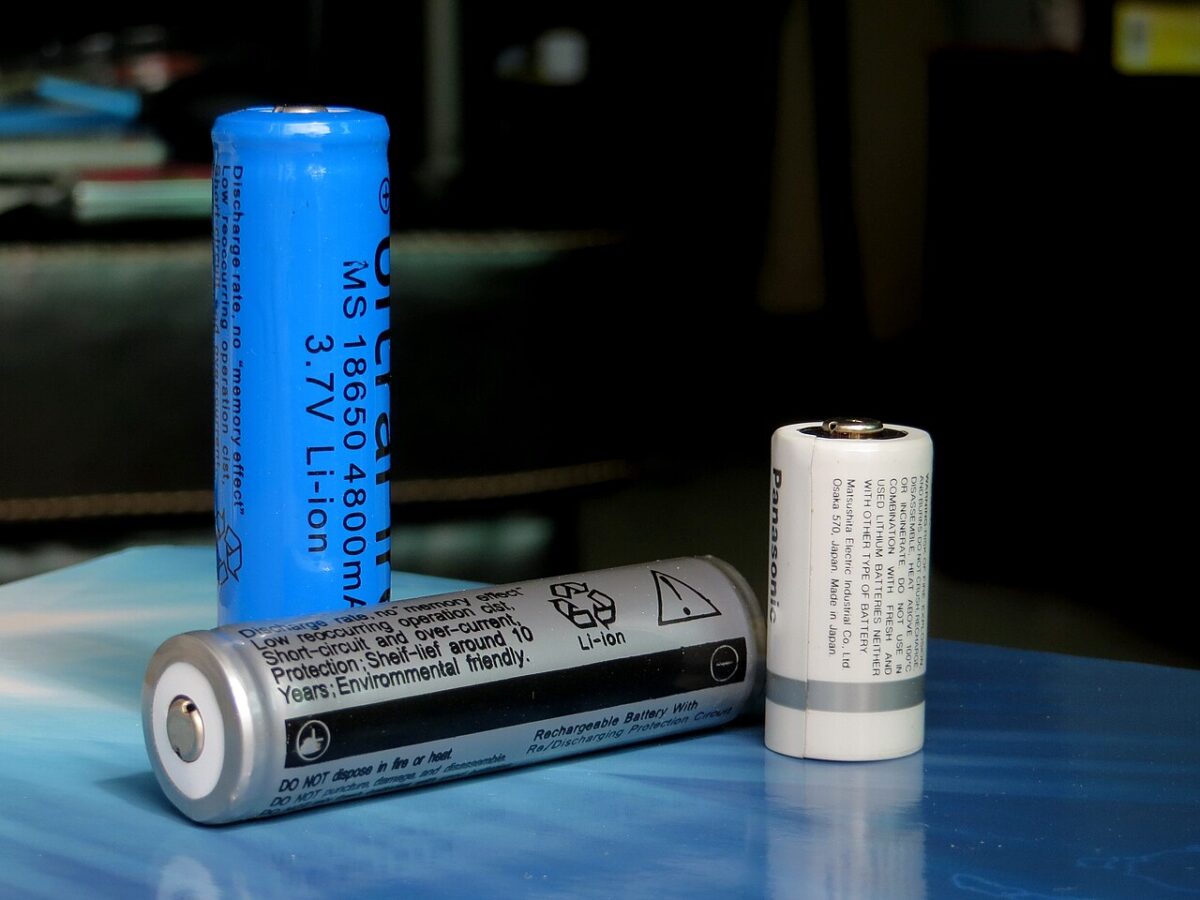





A new materials study from Japan shows that targeted scandium substitution in layered sodium manganese oxide can mitigate the lattice strain responsible for rapid capacity fade in sodium-ion battery cathodes.
The research focuses on layered sodium manganese oxide (Na₂⁄₃MnO₂), a high-capacity cathode material widely studied as a lower-cost alternative to lithium-ion chemistries due to sodium’s abundance. While Na₂⁄₃MnO₂ offers strong initial performance, it has been limited by rapid capacity fading during repeated charge-discharge cycles.
The study, led by Prof. Shinichi Komaba of Tokyo University of Science, examines how substituting small amounts of scandium at manganese sites affects two structural variants of the material, known as P2 and P′2 polytypes. Capacity loss in these cathodes is primarily driven by Jahn-Teller distortion associated with manganese oxidation-state changes during cycling, which induces structural strain and crystallinity loss over time.
According to the researchers, scandium doping selectively improves the cycling stability of the P′2 polytype, which exhibits cooperative, long-range Jahn-Teller distortion. Structural analysis showed that scandium-modified P′2 Na₂⁄₃[Mn₁₋ₓScₓ]O₂ maintained its crystal framework during cycling, reduced particle size, and suppressed side reactions with liquid electrolytes by forming a more stable cathode-electrolyte interface.
In half-cell testing, the P′2 material with 8% scandium content delivered the strongest performance, retaining structural integrity and capacity over extended cycling. The same doping strategy did not improve the stability of the P2 polytype, indicating that the effect depends on the presence of cooperative lattice distortion rather than simple metal substitution. Doping with other cations, including ytterbium and aluminum, did not produce comparable results.
The team also reported improved moisture resistance and additional gains from pre-cycling treatment. In coin-type full-cell tests, the 8% scandium-doped P′2 cathode retained about 60% of its capacity after 300 cycles.
The paper, “Unique Impacts of Scandium Doping on Electrode Performance of P′2- and P2-type Na₂⁄₃MnO₂,” was recently published in Advanced Materials. It details the mechanism by which scandium stabilizes the distorted lattice without suppressing the electrochemical activity of manganese. The findings suggest a pathway to longer-life sodium-ion batteries, though the authors note that scandium’s cost could limit large-scale deployment, according to the scientists.
The study was conducted by researchers at Tokyo University of Science and supported by funding from Japan’s Ministry of Education, Culture, Sports, Science and Technology, the Japan Science and Technology Agency, and the Japan Society for the Promotion of Science.
This content is protected by copyright and may not be reused. If you want to cooperate with us and would like to reuse some of our content, please contact: editors@pv-magazine.com.

I find this study really impressive just a small amount of scandium significantly improves the stability of sodium-ion batteries, offering a promising path for lower-cost, longer-lasting energy storage.