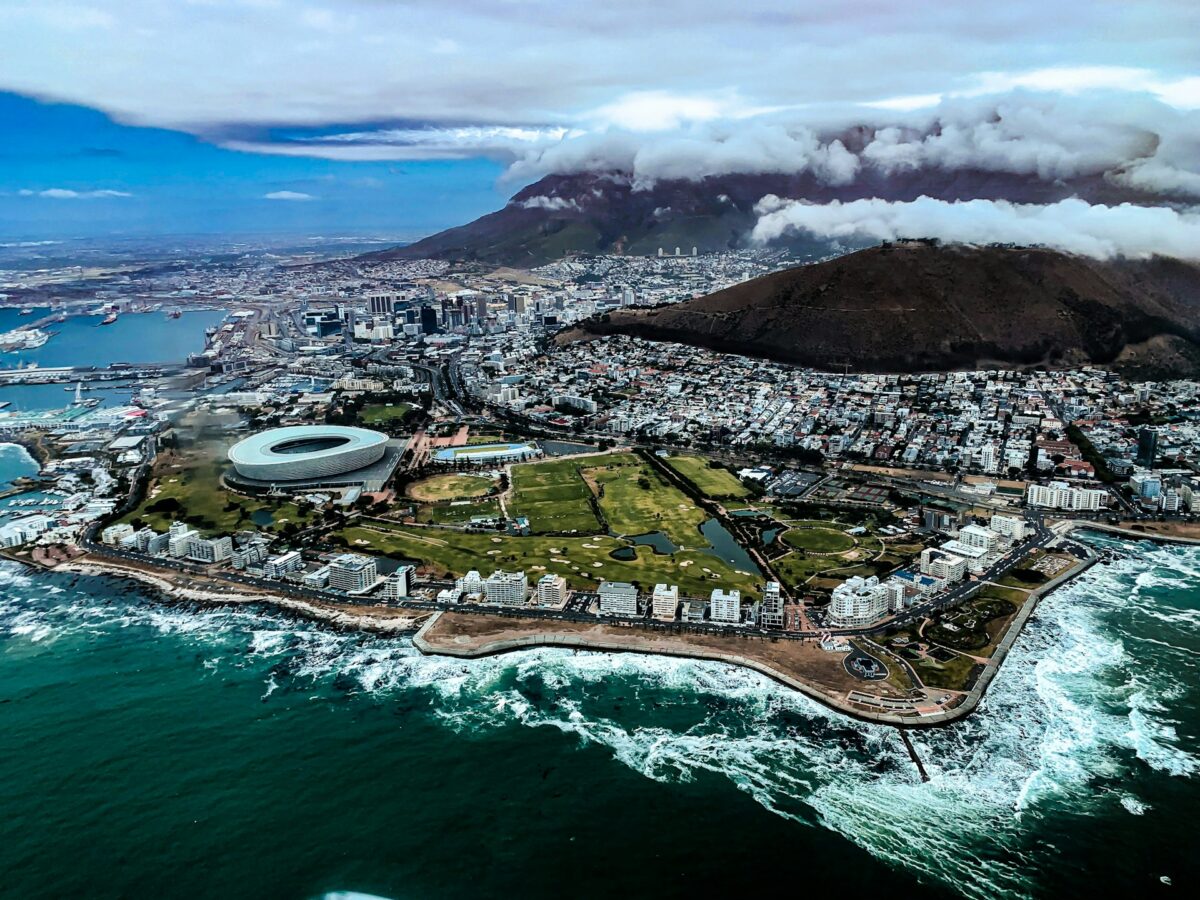





Research from the University of Cambridge has developed a framework identifying forms of off-gridding in South Africa.
In the research paper “Towards a framework of ‘off-gridding’: Conceptualising the practices and processes of urban energy transitions in South Africa,” available in the journal Geoforum, corresponding author Joanna Watterson uses interview data and field observations from high-, middle- and low-income neighbourhoods in Cape Town and Johannesburg to define the reasons households are independent from the grid.
Watterson says there are three categories of off-gridding in South Africa which are “inextricably linked to state processes that enable, constrain, incentivize and/or prohibit off-gridding.”
The first category, secession, refers to when end-users leave the grid altogether and relates to the highest-income households. Watterson found secession most often takes the form of solar home systems with large battery storage and is the rarest form of off-gridding due to its high costs, accounting for around 1% of all households.
This form of off-gridding “reflects a form of survival-based secession of end-users in response to a failing grid and the perceived secession of the state from the post-apartheid democratic model”, Watterson says in the research paper, and is the form of off-gridding the state is the most averse to, as municipalities have concerns around subsidizing basic services for low-income consumers if too many consumers secede.
The second form of off-gridding, marginalization, defines when end-users are forced to leave the grid due to failure or unaffordability, or when they are prevented from connection due to insufficient supply or opportunity. This categorization tends to relate to the lowest-income households who are predominantly located in peripheral townships or informal settlements and are often reliant on self-help forms of energy.
Watterson says this category encompasses a small but significant portion of the population, estimated at between 4% to 5.5% of all households, and “illustrates the enduring legacy of apartheid-era urban exclusion.”
The third off-gridding category, known as supplementation, refers to when alternative energy sources compensate for a lack of electricity provision from the grid that households may or may not be connected to or able to pay for.
The research paper says this is the most common form of off-gridding and materializes across income groups and spaces differently. While middle- and high-income households are more likely to feature inverters, generators, solar home systems and battery storage, lower-income households are more likely to supplement more precarious and hazardous energy sources, such as firewood, paraffin, or informal connections to the electricity network. In some cases, lower-income households may have access to privately-provided energy infrastructures, such as solar minigrids.
Watterson says this third off-gridding category “signals a rearticulation of South Africa’s post-apartheid vision of an inclusive public grid as a cornerstone of rights-based citizenship.” She then adds that the overall off-gridding framework “reveals a departure from South Africa’s vision of democracy at both national and urban scales, with implications for citizenship, urban inequality, and a just energy transition.”
“Off-gridding makes visible the ways decentralised energy transitions can reproduce existing inequalities and have profound consequences for just transitions,” Watterson writes. Her analysis adds that as municipalities enable or incentivize some forms of hybrid or supplementary grid practices, such as grid-tied solar home systems, while constraining others, such as the private provision of solar mini-grids in informal settlements in order to maintain the political and financial centrality of the grid, they “risk entrenching historic urban inequalities and jeopardise materialising a truly just energy transition.”
Watterson’s conclusion also indicates that the off-gridding framework can contribute to debates on urban infrastructure and just transitions beyond South Africa, particularly in Southern and post-colonial cities.
“The framework contributes a tool for critically analysing the implications of decentralised energy transitions for urban dwellers, particularly in contexts of inequality, amid network liberalisation and decarbonisation and global agendas towards just transitions,” the paper concludes. “Highlighting the practices and processes central to these transitions is important because they reveal the potential to redress or reproduce urban inequality, and therefore the limitations of just transition frameworks when applied or governed unequally.”
This content is protected by copyright and may not be reused. If you want to cooperate with us and would like to reuse some of our content, please contact: editors@pv-magazine.com.



By submitting this form you agree to pv magazine using your data for the purposes of publishing your comment.
Your personal data will only be disclosed or otherwise transmitted to third parties for the purposes of spam filtering or if this is necessary for technical maintenance of the website. Any other transfer to third parties will not take place unless this is justified on the basis of applicable data protection regulations or if pv magazine is legally obliged to do so.
You may revoke this consent at any time with effect for the future, in which case your personal data will be deleted immediately. Otherwise, your data will be deleted if pv magazine has processed your request or the purpose of data storage is fulfilled.
Further information on data privacy can be found in our Data Protection Policy.