Palestine launches program for local authority solar projects

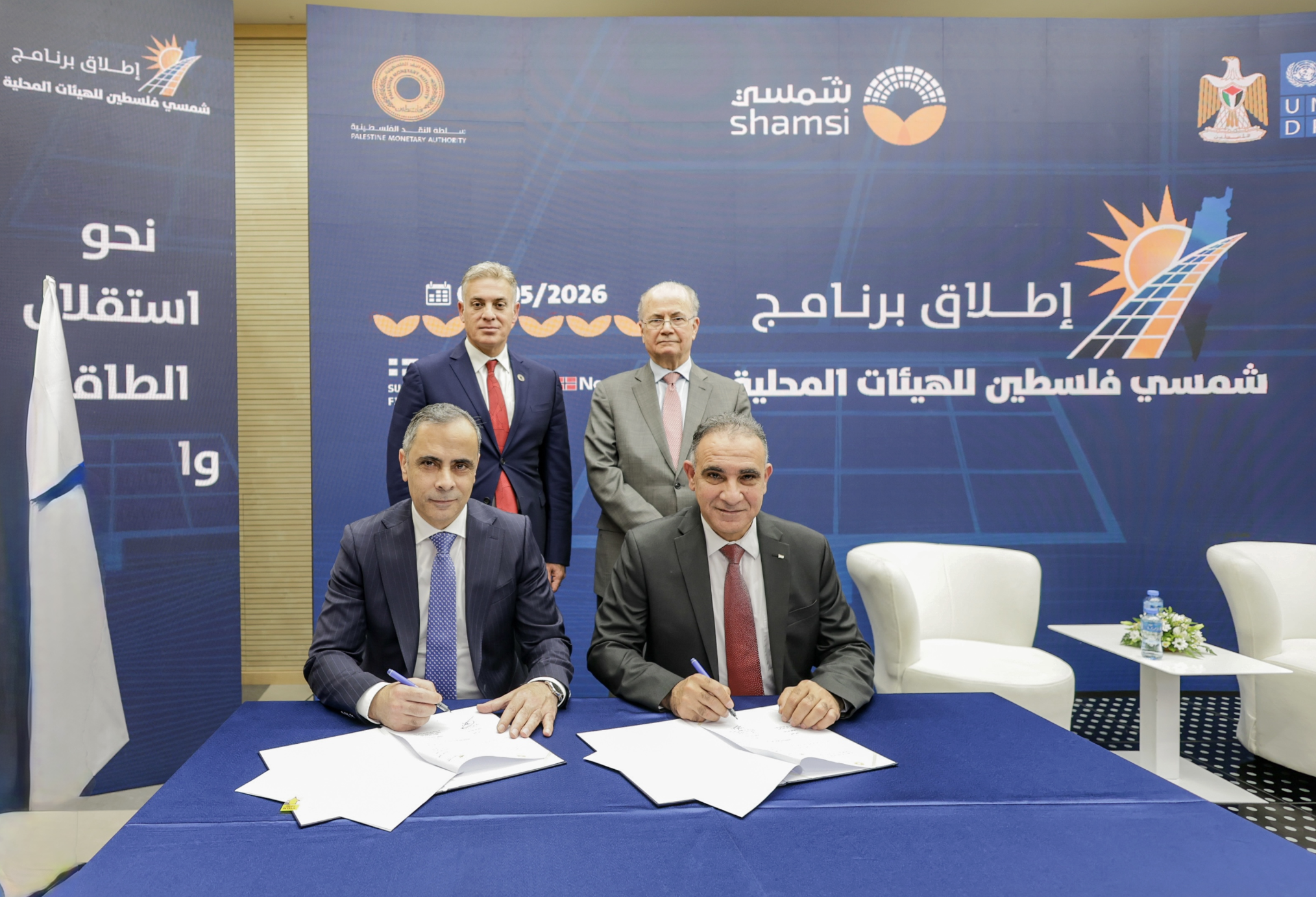
The Palestine Monetary Authority (PMA) has announced a program that will finance solar energy projects for local authorities in Palestine.
The Shamsi Palestine program will finance solar projects through an integrated financing model combining loans and grants. PMA, an independent public institution with headquarters in Palestine, has contributed $20 million to its launch, while donor countries Austria, Finland and Norway contribute a further $5 million combined.
The solar projects are to be implemented through local banks, under financing terms including a repayment period of up to seven years, which a statement from PMA says will enable local authorities to install solar that enhances their financial sustainability and reduces the burden of energy bills.
The United Nations Development Programme is set to act as Shamsi Palestine’s technical and development partner.
The program’s launch was attended by Palestine’s Prime Minister, Dr. Mohammed Mustafa, who said the program will contribute to reforming public finances, increasing investment in the renewable energy sector and building a more independent national economic capacity.
President Mustafa also called on international parties to act urgently and accelerate recovery and reconstruction efforts of the Gaza Strip. “Gaza is suffering, lacking services and infrastructure. The suffering of our people in the Strip has been prolonged, and recovery and reconstruction efforts have been delayed,” the President said. “This is a difficult reality that cannot be ignored.”
Head of the Palestinian Energy and Natural Resources Authority, Engineer Ayman Ismail, added that Shamsi Palestine represents a significant step towards enhancing energy security in Palestine by expanding reliance on solar energy, reducing dependence on imported energy, lowering electricity costs and improving supply reliability.
Palestine’s cumulative solar capacity stood at 308 MW at the end of 2025, according to figures published by the International Renewable Energy Agency (IRENA), a 5 MW increase on the 303 MW recorded at the end of 2024.
This content is protected by copyright and may not be reused. If you want to cooperate with us and would like to reuse some of our content, please contact: [email protected].

Please login to comment