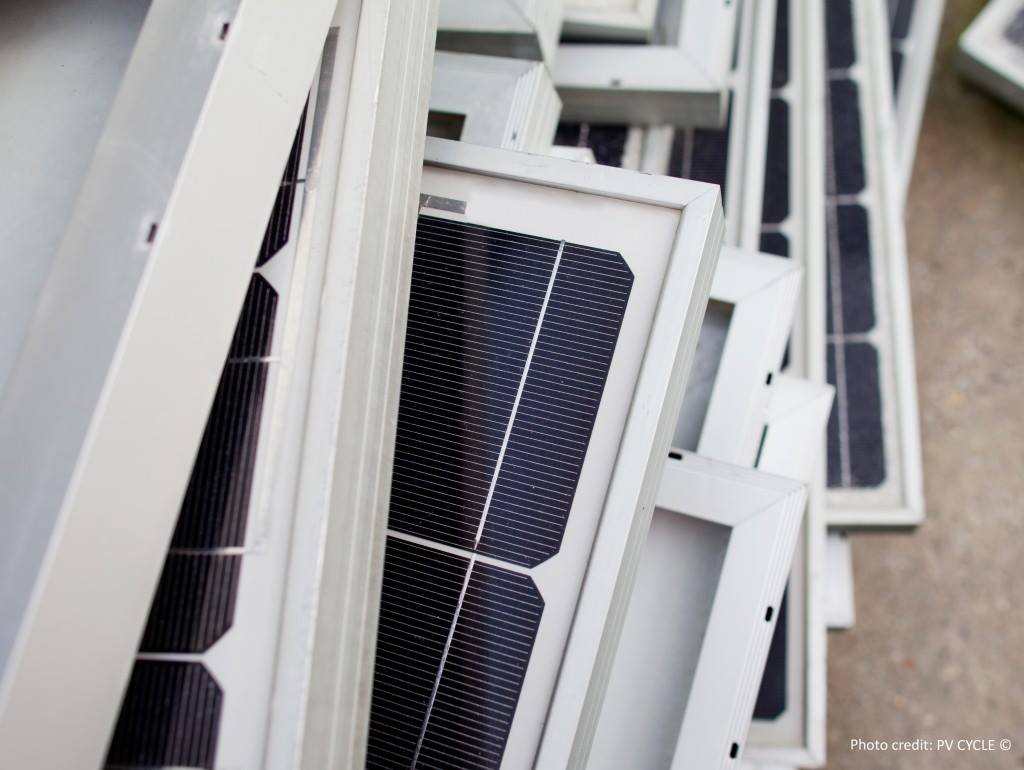





A research team from Italy has proposed a method for upcycling silicon (Si) from end-of-life (EoL) PV panels by developing a Pd/Si catalytic system. In this configuration, palladium (Pd) nanoparticles are supported on recovered silicon, where Pd drives catalytic activity while the silicon (Si) acts as a stabilizing, reusable support. The system is targeted at cross-coupling reactions widely used in pharmaceuticals and fine chemicals.
“This study presents a strategy for managing the rapidly increasing global EoL solar panel waste stream, achieving performances comparable to established Pd-based heterogeneous catalysts,” the group said. “This work paves the way for the broader use of silicon derived from EoL photovoltaic as a versatile heterogeneous support for a wide range of metal-based catalytic systems, thereby expanding the possibilities for their application across diverse catalytic processes.”
To prepare the Pd/Si systems, the researchers first removed the front glass of discarded PV modules by heating to soften the ethylene-vinyl acetate (EVA) encapsulant, leaving EVA, silicon cells and backsheet layers intact. The material was cut into small pieces and treated with tetrahydrofuran (THF) at 60 C to swell the EVA and separate the silicon cells. The recovered cells were then purified via a two-step chemical leaching process: sodium hydroxide (NaOH) was used to dissolve the aluminum back contact, followed by nitric acid (HNO₃) to remove silver finger contacts.
After washing and heat treatment at 500 C, the purified silicon was ball-milled into a fine powder with 86 wt% purity. For catalyst preparation, the powder was suspended in diethylene glycol, a palladium precursor (H₂PdCl₄) was added, and the pH was adjusted with NaOH. The mixture was heated at 130 C under argon to reduce palladium and form Pd nanoparticles on the silicon surface, producing the final Pd/Si catalyst. The recovered-silicon catalyst, named Pd/Si_EoLPV, was compared with a reference catalyst prepared using commercial metallurgical-grade silicon powder, Pd/Si.MP-AES.
“We have decided to evaluate the utility and efficiency of this catalytic system in a widely useful benchmark Mizoroki–Heck reaction. We have decided to compare its behavior with that of traditional catalysts, such as Pd/C, focusing on catalytic activity, palladium leaching, and recyclability,” the scientists said. “We have also evaluated the utility of the catalyst by using it to prepare industrially relevant products, natural compounds, and intermediates for active pharmaceutical ingredients (APIs), underscoring its potential as a sustainable and promising catalyst for possible applications.”
The analysis showed that Pd/Si_EoLPV delivered performance comparable to that of the catalyst based on commercial silicon powder. The recycled material remained stable over six consecutive reaction cycles, with Pd leaching below 3 ppm. These results correspond to a turnover number (TON) of 5,820 and a turnover frequency (TOF) of 582 h⁻¹. TON describes the number of catalytic cycles before deactivation, while TOF indicates reaction rate per hour.
On a gram scale, the catalyst was used across five recycling cycles, yielding a total of 48.5 mmol of product with an isolated yield of 97% and an E-factor of 9. In addition, the Pd/Si catalyst was applied to the synthesis of 22 substrates from various iodoarenes and olefins, including intermediates relevant to rilpivirine, Lp-PLA2 inhibitors, and methyl-2-ferulates.
The new recycling process was presented in “Upcycling silicon from End-of-Life photovoltaic panels to a heterogeneous catalyst for the Mizoroki–Heck cross-coupling,” published in Green Chemistry. Researchers from Italy’s Mediterranea University of Reggio Calabria, University of Perugia, and the Italian National Agency for New Technologies, Energy and Sustainable Economic Development (ENEA) have contributed to the study.
This content is protected by copyright and may not be reused. If you want to cooperate with us and would like to reuse some of our content, please contact: editors@pv-magazine.com.

By submitting this form you agree to pv magazine using your data for the purposes of publishing your comment.
Your personal data will only be disclosed or otherwise transmitted to third parties for the purposes of spam filtering or if this is necessary for technical maintenance of the website. Any other transfer to third parties will not take place unless this is justified on the basis of applicable data protection regulations or if pv magazine is legally obliged to do so.
You may revoke this consent at any time with effect for the future, in which case your personal data will be deleted immediately. Otherwise, your data will be deleted if pv magazine has processed your request or the purpose of data storage is fulfilled.
Further information on data privacy can be found in our Data Protection Policy.