Sandra Enkhardt

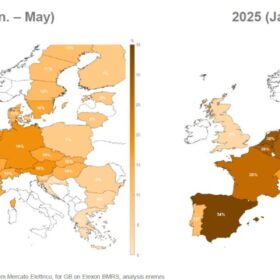
Negative price hours rise in Europe
Around 28% of potential solar power generation in Germany occurred during periods of negative electricity prices from January to May, according to Enervis. The share is expected to rise as battery storage deployment continues to lag behind renewable energy growth.
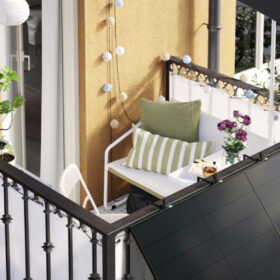
German battery storage hits 22.1 GWh in H1
Germany’s battery storage capacity is rapidly expanding, nearing 2 million installations by the end of the first half of 2025.

Germany deploys 7.1 GW of solar in H1
Germany added 905 MW of new photovoltaic capacity in June, according to the Federal Network Agency (Bundesnetzagentur), bringing year-to-date solar deployments to more than 7.1 GW.
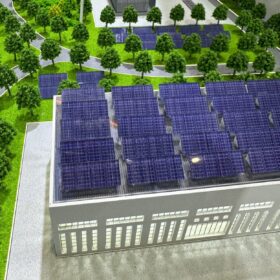
Germany concludes rooftop PV tender with average price of €0.0922/kWh
The German authorities have selected 118 MW projects totaling 255 MW in the nation’s latest rooftop PV tender.
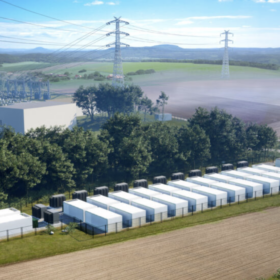
German court upholds grid connection charges for battery projects
Germany’s top court has ruled that distribution network operators may require battery storage projects to pay grid connection fees, calling the charges fair as they help prevent overbuilding and shield consumers from excess system costs.
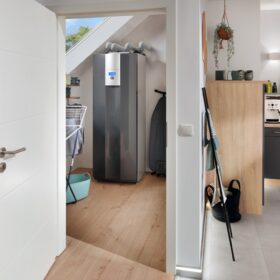
Ait-Group launches residential heat pumps with low propane charge
Germany’s Ait Group has introduced residential ground-source heat pumps using less than 150 grams of propane, based on results from the Fraunhofer ISE LC150 research project. The new systems deliver up to 6 kW of heating with a seasonal coefficient of performance of 5.14.
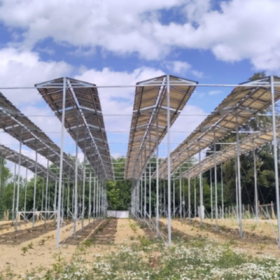
Fraunhofer ISE estimates Germany’s agrivoltaic potential at 500 GW
Fraunhofer Institute for Solar Energy Systems (ISE) says Germany could deploy up to 500 GW of agrivoltaic capacity, based on a nationwide assessment of all agricultural land types and site suitability criteria.
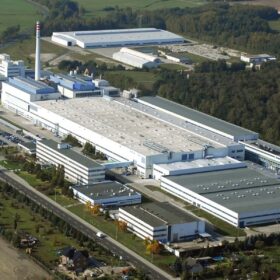
German solar glass maker GMB files for insolvency
German solar glass manufacturer Glasmanufaktur Brandenburg GmbH has filed for insolvency, affecting 247 employees at its Tschernitz facility, according to multiple media reports.

Germany concludes solar-plus-storage tender with average price of €0.0615/kWh
Germany has concluded a new renewables tender for innovative projects, securing 486 MW of capacity at final prices ranging from €0.0500 ($0.0590)/kWh to €0.0639/kWh
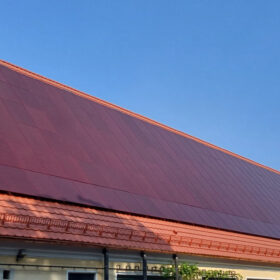
German castle now hosting brick-red PV system
A castle in Bavaria, Germany, has installed a brick-red PV system using colored solar modules from Italy-based FuturaSun. The project was enabled by a recent amendment to Bavaria’s Monument Protection Act, allowing solar on heritage buildings.
