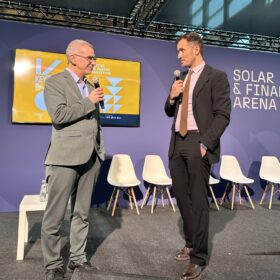
Key takeaways from Italy’s Key Energy trade show
Key – The Energy Transition Expo was held last week in Italy, featuring 1,065 exhibitors and 530 buyers. The event focused on energy-as-a-service and agrivoltaic projects, with operators saying agriPV standardization should be reached by 2030-32. Italian Energy Minister Gilberto Pichetto Fratin told pv magazine that coal and gas are strategic assets, noted that the “PV sector is maturing,” and urged the European Union to coordinate on gas storage and supply chains for modules and storage solutions.
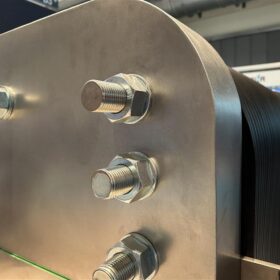
The Hydrogen Stream: BP and Iberdrola near Spain’s largest H₂ project
BP and Iberdrola say their 25 MW green hydrogen project in Spain is nearing commissioning, while Moeve has approved a final investment decision for a 300 MW project in Spain.
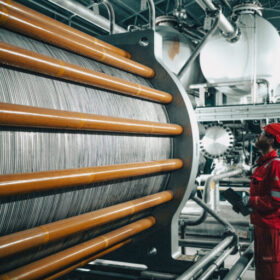
The Hydrogen Stream: ACES 220 MW Utah project nears completion
HydrogenPro says its 220 MW ACES Delta project in Utah is nearing completion, with all electrolyzers operating at full load, while the hub will store hydrogen in salt caverns with energy capacity two to three times that of all US grid-connected batteries combined.
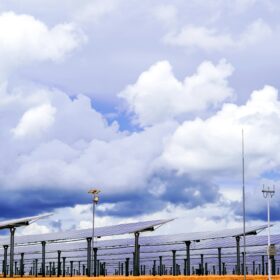
Italy’s new energy provisions could boost gas use, undermine renewables and storage competitiveness
Italy’s new energy decree aims to cut consumer electricity bills, but industry experts warn it could slash solar revenues by over 30%, slow the PPA and battery storage markets, and increase gas-fired generation. The measure also raises regulatory and state aid concerns, potentially making the Italian electricity market riskier for investors.
The Hydrogen Stream: Dutch agribusiness installs 1 MW electrolyzer
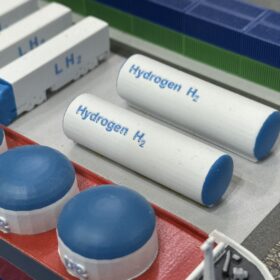
Dutch tulip nursery Rainbow Colors has completed the installation of a 1 MW solid oxide electrolyzer for on-site hydrogen production, while GlobalData says global low-carbon hydrogen capacity could reach up to 65.3 million tonnes per annum (mtpa) by 2030, driven largely by green hydrogen expansion in the Americas.

The Hydrogen Stream: Verna completes first two hydrogen pilot wells in Canada
Vema Hydrogen has completed two pilot hydrogen wells in Quebec, Canada, while Advait Greenergy and InSolare Energy are moving forward on hydrogen projects spanning exploration, electrolyzers, research, and integrated production.

Italy installs 6.4 GW of solar in 2025
The country’s cumulative installed PV capacity reached 43.5 GW at the end of December, according to the latest figures released by Italian grid operator Terna.
The Hydrogen Stream: Repsol, Sunfire advance 200 MW of green H2 in Spain
Repsol and Sunfire are advancing 200 MW of renewable hydrogen projects in Spain, while new collaborations and funding across Europe and India aim to accelerate electrolyzer development and hydrogen infrastructure.

The Hydrogen Stream: EU Commission invites offtakers under Hydrogen Mechanism
The European Commission is advancing market matching for renewable and low-carbon hydrogen by inviting European offtakers to signal supply interest under the Hydrogen Mechanism, while Germany’s electrolysis rollout continues to lag official targets despite new EU-backed funding schemes.

The Hydrogen Stream: Scatec-led 100-MW green project in Egypt to step operations in the coming months
The consortium expects to reach Final Investment Decision (FID) on the full-scale project in the Ain Sokhna Industrial Zone in the coming months, while Brazil’s Federal Court provisionally ordered the suspension of construction activities of Solatio’s project in the State of Piauí.
