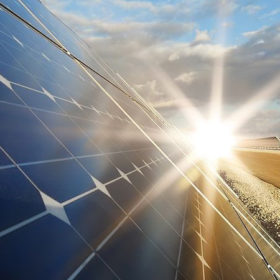
Indian Railways tenders 1 GW of ground-mount solar
Developers have until Sept. 1 to bid for capacity along railway tracks and on company-owned land across a number of Indian states.
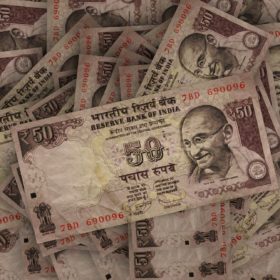
Solarpack reveals details of record-breaking Indian PV project
The Spanish developer, which will sell solar energy at an Indian record low tariff of €0.028/kWh under a 25-year deal has spoken to pv magazine about the specifics of the landmark PV plant.

Record-setting solar auction could open India up to foreign investment
Developers from France and Germany and investors with access to cheap U.S. and U.K. finance were among the winners in a 2 GW procurement round which saw Spanish company Solarpack lodge a record-low price for Indian solar power of $0.031/kWh.

India will consider extending solar import duty on Friday
The Directorate-General of Trade Remedies has called a meeting of concerned parties as it considers whether to extend the duty on solar cells.
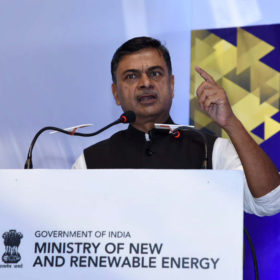
PV imports to face 20-25% customs duty in India
The Indian government’s levy on modules could almost double to 40% within a year. Cells will see a similar rise, from an initial rate of 15%.

Interview: Financing Indian solar projects amid the Covid-19 crisis
Vaibhav Pratap Singh, senior analyst from South Asian thinktank the Council on Energy, Environment and Water, tells pv magazine about the impact of the coronavirus pandemic on the Indian solar sector, green finance and other investment prospects.
India can become electric vehicle manufacturing hub within five years says roads minister
The industry needs to cut a dependence on lithium-ion battery imports from China, according to Nitin Gadkari, who said the government is looking to support research into alternative technologies.
‘Ultra-mega’ 2 GW renewables project approved in India
The state cabinet has approved a 74:26 joint venture proposal by publicly-owned hydropower company THDC India and the Uttar Pradesh New and Renewable Energy Development Agency for the ambitious project.

Mobile solar pumping system offers pay-as-you-go solution for Indian farmers
Researchers have simulated a cart-mounted solar pump which they say would mean farmers in off-grid areas would be able to irrigate fields by paying only for the solar electricity used.
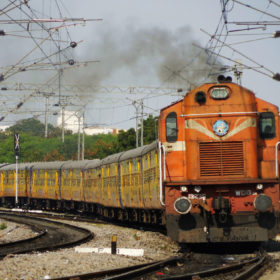
Indian Railways tenders 400 MW of grid-connected solar
Bidders have until September 16 to pitch for generation capacity which can be installed on vacant land owned by the rail company nationwide.
