
Key takeaways from Solar Solutions Amsterdam
The fourteenth edition of Solar Solutions Amsterdam showcased the latest technologies across solar, storage, electric vehicle charging and green HVAC. This year saw energy storage systems dominate the show floor, ahead of the event’s rebrand to Sustainable Solutions Amsterdam from next year onwards, reflecting the Dutch market’s position as a mature market increasingly focused on flexibility and the connectivity of different technologies within a single system.
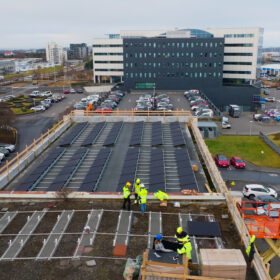
Icelandic utility commissions solar-plus-storage for EV charging
Icelandic utility ON Power has deployed a hybrid solar-plus-storage facility in Reykjavík to support electric vehicle charging infrastructure. The company says it believes such distributed systems will play a growing role in charging infrastructure in the future, even in Iceland’s renewables-dominated power system.

BYD unveils EV batteries that can recharge in 10 minutes
The Chinese electric vehicle maker said the new batteries can charge from 10% to 70% in 5 minutes and from 10% to 97% in 9 minutes. The company also announced a new generation of its Flash Charging Technology.
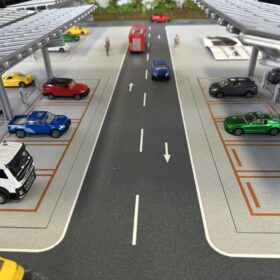
Optimizing solar EV stations for maximum impact
A new report from the International Energy Agency Photovoltaic Power Systems Programme (IEA PVPS) Task 17 outlines how photovoltaic systems can be effectively integrated with electric vehicle charging infrastructure through optimized sizing, intelligent control, and site-specific design.

Standardizing smart energy requirements
A systems approach is essential for smart energy standardization, ensuring interoperability, avoiding overlaps, and addressing complex interactions across the grid, appliances, and infrastructures. The IEC System Committee for Smart Energy (SyC SE) applies system-level thinking, using tools like reference architectures and roadmaps to coordinate standards, support innovation, and tackle emerging areas such as EV integration, digital twins, and zero-emission technologies.
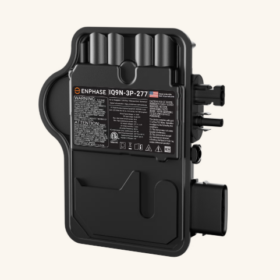
Enphase releases new control software for its IQ8, IQ9 microinverters
The US company said its Power Control software is designed to help installers reduce costs and streamline interconnection. Among its features is the ability to control aggregate system exports through software-based limits.

EU invests €3 billion in decarbonization of buildings, road transport
The ETS2 Frontloading Facility will provide €3 billion ($3.5 billion) to sectors set to be covered by the EU’s new emissions trading system. It will support low- and middle-income households with the deployment of heat pumps and electric vehicles.
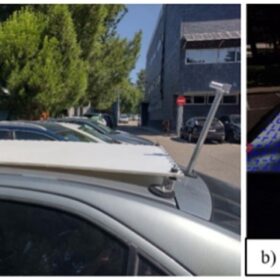
Test tracking algorithms for vehicle-integrated photovoltaics
Researchers in Spain developed a new model incorporating dynamic shading conditions in Madrid to evaluate the yield and test control algorithms for vehicle-integrated PV (VIPV) systems.
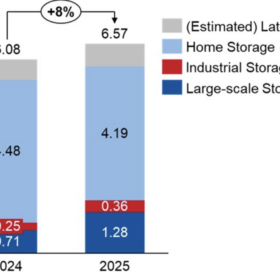
Germany adds 6.57 GWh of battery storage in 2025, total hits 24 GWh
Germany added an estimated 6.57 GWh of stationary battery storage capacity in 2025, an increase of about 8% year on year, lifting total installed capacity to roughly 24 GWh. Growth was driven by industrial and large-scale systems, even as home storage installations declined alongside weaker rooftop solar demand.
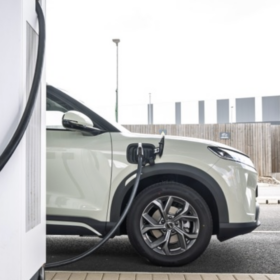
Australia makes gains in electric vehicle uptake
Australia recorded a sharp rise in electric vehicle sales in 2025, with new-car sales data showing nearly 157,000 EVs were purchased nationwide, up 38% from the previous year.
