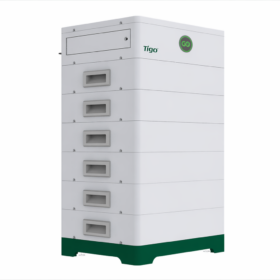
Tigo releases modular battery for residential PV
The US manufacturer has launched a modular residential battery for Europe, scalable from 7.3 kWh to 47.9 kWh with LFP chemistry and IP65 protection. The system offers up to 23.3 kW nominal power, over 6,000 cycles, and a depth of discharge of 90%.
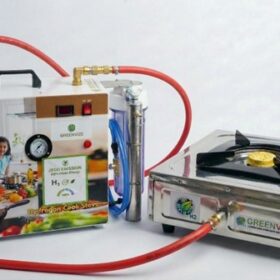
Indian startup launches plug-and-play hydrogen cooking unit
Indian clean-tech startup Greenvize has launched a compact hydrogen-based cooking system designed for residential and commercial kitchens. The system integrates a proton exchange membrane (PEM) electrolyser directly into a cooking unit, enabling on-site hydrogen generation from water without the need for storage or distribution infrastructure.

Conductive smart hydrogels as battery electrolytes: Promising for lithium, sodium, and zinc-ion chemistries
Hydrogels offer promise in batteries as an electrolyte, including lithium and sodium chemistries, due to being inherently more safe.
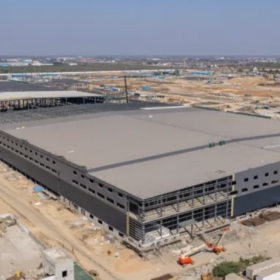
Agratas advances 20 GWh battery plant in western India
Agratas, the global battery business of the Tata Group, has completed the steel frame of its Sanand facility in India, with production expected to begin in 2027.

Swiss startup offers lifetime guarantee for second-life batteries
Switzerland startup Evolium Technologies’ subscription-based business model offers residential battery owners a lifetime guarantee on second life batteries. The startup tests and remotely monitors each battery cell so it can alert customers when a cell is under-performing.
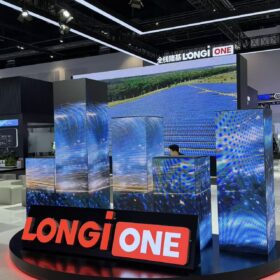
Longi launches integrated solar-plus-storage platform strategy
China-based solar manufacturer Longi is shifting from a multi-vendor system design to a unified solar-plus-storage architecture built around in-house technologies.
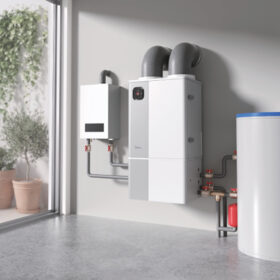
Midea unveils PV-compatible indoor heat pump for space-constrained residential applications
Midea has launched a compact indoor air-source heat pump for retrofit and space-constrained homes. The R290-based system offers up to 4.45 kW output, a coefficient of performance of 4.5 and smart PV-compatible controls.
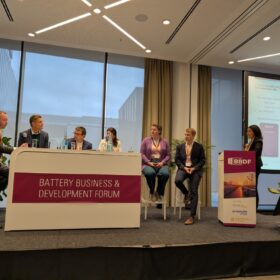
BBDF 2026: How financing standalone vs. co-located projects really works
The “lab” session at Battery Business & Development Forum 2026 made transparent how different stakeholders evaluate and view energy storage projects between standalone and co-located options, and where views diverged.

BBDF: German network agency to release BESS grid fee framework soon
Germany’s Federal Network Agency (Bundesnetzagentur) is set to present a framework for future network fees in May 2026, with industry discussions highlighting how these charges could interact with flexible connection agreements and affect battery energy storage system (BESS) returns.

Can sodium-ion storage drive energy flexibility in France?
France’s Association Environnement Juste has proposed a storage mandate for renewables projects exceeding 10 kWp in order to integrate flexibility at the source. The association argues European sodium-ion batteries could present an economically and environmentally viable solution, capable of stabilizing grids without depending on imported metals.
