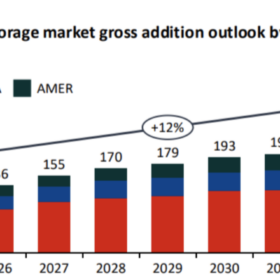
Global BESS capacity tops 250 GW, overtaking pumped hydro for first time
Rystad Energy says it expects global battery energy storage system (BESS) additions to exceed 130 GW/350 GWh in 2026, led by China, the United States, the United Kingdom, Australia, and Germany.
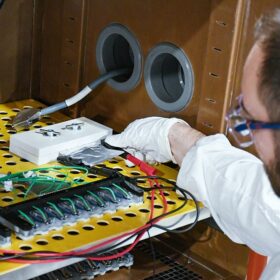
German researchers develop sodium-ion battery based on lignin
German researchers have developed a sodium-ion battery technology using lignin-based hard carbon as the negative electrode. The 1 Ah battery cell prototype showed no significant degradation after 100 charging and discharging cycles.
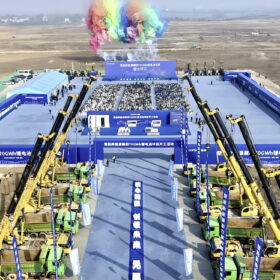
Cornex secures 11.5 GWh of battery orders from Saudi Arabia, Egypt
The Chinese manufacturer will supply 5.5 GWh of energy storage products to Saudi Arabia and another 6 GWh to Egypt, as it works to expand its global footprint.

100 MW Hertz 1 battery enters operation after Estonia–Finland grid incident
The 100 MW/200 MWh battery energy storage project in Kiisa began operation on Feb. 3 as scheduled – just two weeks after a testing fault at the facility caused the most significant disturbance to the regional power grid since Estonia’s desynchronization from the Russian electricity system.

Saudi Arabia could hit net-zero emissions by 2060, with 151 GW of solar
Saudi researchers outlined pathways for Saudi Arabia to reach net-zero power sector emissions by 2060, requiring up to 3.6% of land – mostly for onshore wind – with 151.3 GW of solar PV covering only 0.16% of the country.
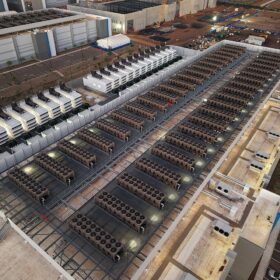
Battery management systems key to deploying batteries in data centers
A new study highlights the critical role of advanced AI-integrated battery management system technologies in monitoring, optimizing, and predicting battery performance for reliable and sustainable data center operations.

Chad’s installed PV capacity hits 110 MW, supplying 37% of electricity
Chad has one of Africa’s highest solar penetration rates, a result of a small power system with just 12% electrification, as large-scale solar and storage projects gather pace around N’Djamena, even as political uncertainty over oil revenues constrains faster deployment.

Senegal’s solar capacity hits 671 MW
Senegal has reached an 84% electrification rate, with 294 MW of residential PV installed, while several large-scale solar-plus-storage projects are under development, despite the start of production at the Sangomar gas field.
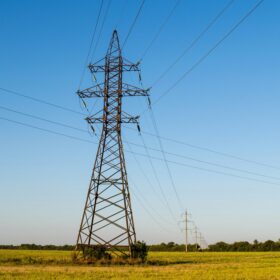
Germany, France, Netherlands curtail 3.9 TWh of renewables in 2025
Analysis by energy advisory service Montel finds Germany, France and the Netherlands all saw record levels of renewables curtailment last year, with the build out of solar in each market contributing to midday generation peaks and consequential price cannibalization.

Key takeaways from Solar Flex Prague
Czechia’s first international conference on solar and flexibility highlighted that the combination of solar with storage and flexibility sources is key to not just Czechia’s, but also Europe’s, secure and competitive electricity system.
