
Thermoacoustic heat pumps on the verge of commercial breakthrough
Dutch startup BlueHeart Energy is testing its thermoacoustic heat pump engine in residential settings, with a limited European launch expected in spring 2027, followed by gradual scaling. The system uses sound waves instead of refrigerants, aiming for quiet, flexible, low-maintenance heating suited especially for retrofits and renewable integration.

German utility deploying 30 MW heat pump for district heating
Enercity has begun constructing a 30 MW wastewater-based heat pump in Hanover as part of its shift away from coal-based district heating, replacing capacity from the Stöcken coal plant alongside biomass, power-to-heat, and waste-heat systems.

How to operate PV-driven residential heat pumps under time-varying tariffs
Researchers in the United Kingdom developed a scheduling model for residential heat pumps that reduces electricity costs while maintaining thermal comfort under dynamic tariffs and uncertain rooftop PV generation. It optimizes when to use grid power, PV energy, and building thermal storage.
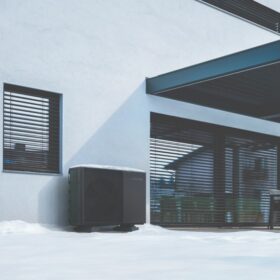
Samsung launches residential air-to-water heat pump reaching SCOP of up to 4.9
The Korean manufacturer said its new heat pump system can achieve a seasonal coefficient of performance of up to 4.9 under low-temperature floor heating conditions, and approximately 3.78 under higher-temperature operation at 55 C.
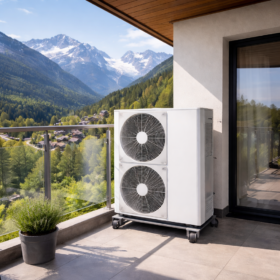
Could global warming improve heat pump efficiency in Alpine regions?
Researchers in Italy analyzed air-to-water heat pump performance in Alpine regions, focusing on how start-up and defrost cycles affect efficiency under current and future climate conditions. Their simulations show that while warmer temperatures slightly reduce defrosting losses and modestly improve efficiency, start-up cycling losses remain significant and continue to limit overall performance gains.

Thermostatic radiator valves can reduce energy consumption in air-source heat pumps by 6-8%
Researchers in the United Kingdom found that thermostatic radiator valves can reduce air-source heat pump space heating energy use by 6–8% without affecting system efficiency when used correctly. TRVs must be applied carefully in well-designed, balanced systems with at least one open flow path, as they mainly serve as a secondary tool for room-level comfort control rather than a replacement for proper heat pump design and low flow temperature operation.

Heat pumps may help boost residential solar in France
The government’s electrification plan, presented last week, includes a goal to double heat pump deployment in France by 2030, potentially benefiting the residential photovoltaic sector.
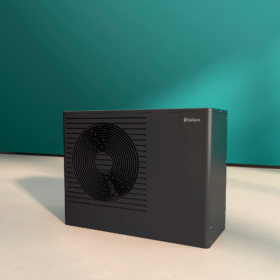
Vaillant launches space-saving residential heat pump
The German manufacturer said that its new air-to-water heat pump system uses propane as a refrigerant and is available in three variants with outputs of 5 kW, 7 kW, and 11 kW. The new product can reportedly achieve a coefficient of performance of up to 4.93.
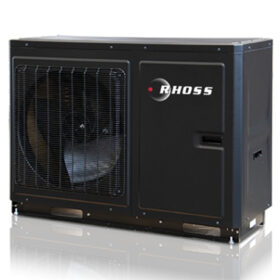
Rhoss unveils propane air-to-water heat pump for residential, small commercial applications
The Italian manufacturer has launched a compact range of propane air-to-water heat pumps for heating, cooling, and domestic hot water in residential and light commercial applications, offering up to 15.5 kW heating capacity, a seasonal coefficient of performance of up to 5.18, and water temperatures up to 80 C.
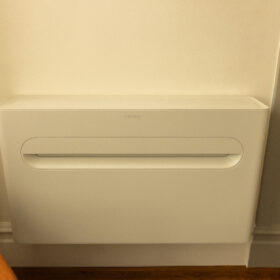
U.S. startup debuts low-cost, plug-and-play indoor heat pump for residential use
San Francisco-based Merino Energy has launched the Merino Mono, a plug-and-play indoor heat pump that can be installed in under an hour and is priced at a flat $3,800 including installation.
