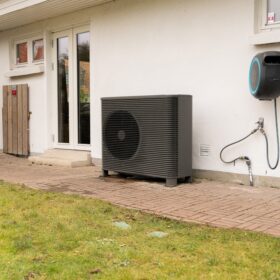
Swedish heat pump maker Aira raises €150 million, plans production capacity expansion
Aira is raising €150 million in equity financing to support increased production capacity in Wroclaw, Poland, as well as further research and development in Sweden.
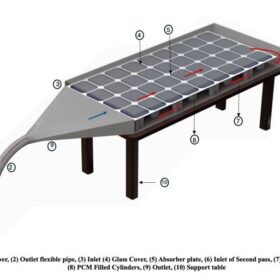
Photovoltaic-thermal solar air heater based on PCM cylinders, air convection
Researchers in Malaysia designed a photovoltaic-thermal system that can be used in solar drying, space heating, rooftop systems, and off-grid thermal applications. It relies on a double-pass cooling technique based on air convection and phase change material that can reportedly increase PV efficiency from 7% to 9% and thermal efficiency by 31.45%.
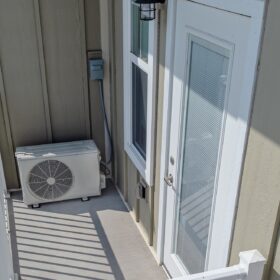
Record UK heat pump installations for H1 driven by grant support
Heat pump deployment accelerates in the United Kingdom as grant scheme provides record support in first half of 2025. UK government has targeted 600,000 heat pump installations per year by 2028.
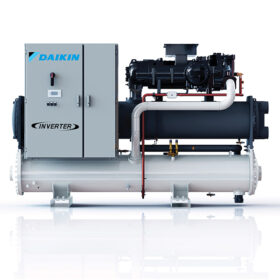
Daikin unveils high-temperature heat pump for industrial applications, district heating
Daikin said its new EWWH-VZ water-cooled inverter chiller and heat pump has cooling and heating capacity ranging from 400 kW to 1,900 kW. The system uses R1234ze as the refrigerant.

New utility software to steer homeowner energy systems, enable load trading
Austrian startup Podero has launched software to enable utilities to roll out new residential services via its home energy device steering and trading solutions.
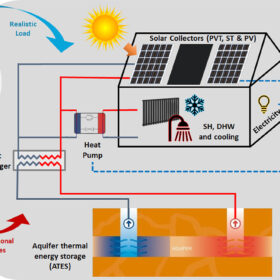
PV-thermal energy with heat pumps, aquifer thermal storage in buildings
Researchers in the Netherlands have simulated a residential energy system combining PV, solar thermal, and PV-thermal panels with aquifer thermal energy storage and a heat pump, achieving a seasonal coefficient of performance of seven across five buildings.

Bradford White releases residential hybrid electric heat pump water heaters
The US-based company says its new AeroTherm G2 uses both electric and heat-pump-based heating. It ranges from 189 L to 303 L in capacity.

German energy provider to build 4 MW air-source heat pump
Hamburger Energiewerke is planning to deploy a 4 MW air-source heat pump that will connect to the local heating network. The system can reportedly generate up to 3.2 kWh of heat from 1 kWh of electricity.

Canadian province extends heat pump rebates to apartments, condos
British Columbia’s rebate scheme for heat pump installations now offers up to CAD 5,000 ($3,638) for the purchase and installation of an electric heat pump in suites within multi-unit residential buildings.
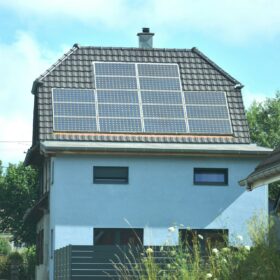
Netherlands moves forward with plans to link residential PV to heating
The Netherlands will require building owners to adopt renewable energy, connect to local heating networks, or install heat pumps under its implementation of the European Energy Performance of Buildings Directive (EPBD IV).
