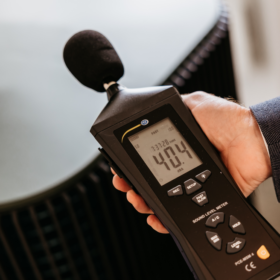
Dutch utility testing ‘silent’ residential heat pumps
Dutch utility Eneco is testing low-noise air-to-water heat pumps from startup Whspr in around 20 homes, aiming to ease installation constraints near property boundaries. The systems reportedly achieve coefficients of performance of up to 5 and show up to 80% noise reduction in laboratory testing.

Samsung releases new all-in-one heat pump for residential use
The South Korean giant said its new EHS All-in-One provides air heating and cooling, floor heating, and hot water from a single outdoor unit. It can supply hot water up to 65 C in below-zero weather.
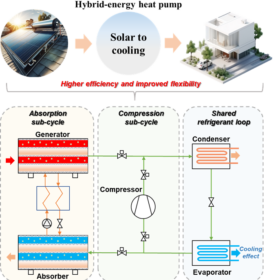
Scientists unveil hybrid-energy heat pump combining absorption and compression cycles
Researchers in Hong Kong have developed a hybrid-energy heat pump that seamlessly combines absorption and compression cycles using crystallization-free ionic liquids, improving efficiency and reliability across varying solar conditions. Simulations in multiple Chinese cities show the system can significantly cut electricity use and cooling costs, making it promising for sustainable building cooling and future commercial scaling.
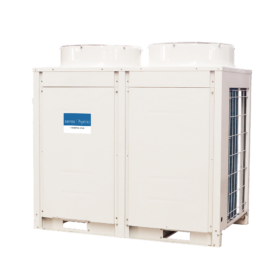
Copeland releases sanitary water heat pumps
US-based Copeland has launched its Sensi Hydro sanitary water heat pump designed to provide energy-efficient hot water for hotels, commercial buildings, and public facilities. The units feature ZW scroll compressors, independent refrigerant circuits, and backup mode to ensure reliable hot water supply.

Greek startup launches direct PV water heating solution
Axinar has launched SolBox, a direct PV water heating system that powers electric resistance accumulators without thermal collectors. It’s designed for homes and businesses, offering real-time monitoring, MPPT optimization, and automatic grid backup.

Quilt launches 3-zone ductless heat pump for residential applications
U.S. startup Quilt has introduced a new three-zone ductless heat pump for residential use, offering independent temperature control across three areas with a single outdoor unit. The system uses R32 (difluoromethane) as the refrigerant and can reportedly achieved a coefficient of performance of 4.2 at 8 C.
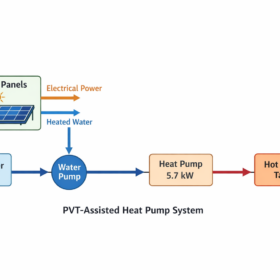
How to improve indirect-expansion PVT-assisted heat pump performance
Scientists in Thailand have simulated an indirect-expansion photovoltaic-thermal-assisted heat pump and measured its performance under various cold water temperatures and tank sizes.
EU countries to pilot subscription model for heat pumps
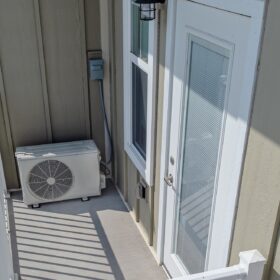
An EU-funded project is introducing a heat pump on subscription model designed to increase the uptake of heat pumps in rented accommodation, with pilot actions planned in Austria, France and Greece.

Clivet releases residential air-to-air heat pump
The Italian manufacturer said its new Fullness heat pump system has a coefficient of performance of 2.8 and a seasonal energy efficiency ratio of 3.79.
South Korea sets 3.5 million heat pump target in national decarbonization push
The South Korean government says it will deploy incentives, legal changes and industry backing to scale heat pump adoption nationwide, aiming to cut emissions from fossil fuel–dependent heating by the mid-2030s.
