
European solar manufacturers urge Italy to revise heterojunction tax rule
Eleven European solar module makers say Italy’s 2026 tax incentive unfairly favors heterojunction (HJT) technology, risks higher costs and limits competition across the PV market.
Pakistan unveils new net metering rules for rooftop PV
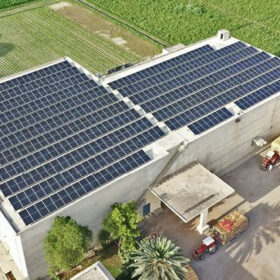
Pakistan’s National Electric Power Regulatory Authority (NEPRA) has initiated a public consultation on proposed revisions to solar net-metering regulations. A key change under consideration is a reduction in the tariff for surplus solar power, which could be cut by half from PKR 26 ($0.093) per kWh to PKR 13 per kWh.
French testing body flags durability risks in TOPCon solar modules
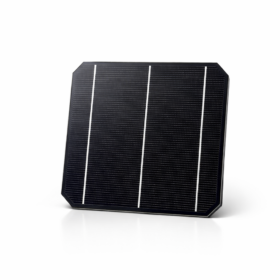
Accelerated testing by French certification body Certisolis finds wide performance divergence and design vulnerabilities in tunnel oxide passivated contact (TOPCon) solar modules that current international standards do not capture.

Albania reviewing solar project proposals totaling 135 MW
Albania’s Ministry of Infrastructure and Energy has received three proposals for utility-scale solar parks totaling 135 MW, each to be developed without subsidies or concessions.

South Africa adds 890 MW of solar to seventh renewables bid window
The South African government has turned unallocated wind project capacity from the country’s seventh renewables procurement exercise into approved solar projects for the second time. The move takes the total amount of solar approved under the bid window to over 3.9 GW.
Tunisia switches on largest solar project to date
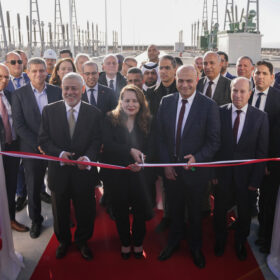
UAE-based Amea Power has completed a 120 MW solar project in Tunisia, the country’s first above 100 MW.
Wood Mackenzie predicts 2-year decline in global solar inverter demand
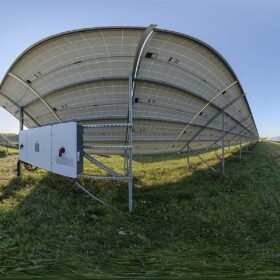
Wood Mackenzie’s latest analysis expects market uncertainty in China, Europe and the U.S. to cause two consecutive years of contraction in the global solar inverter market, forecasting a fall to 577 GWac this year and 523 GWac in 2026.

Canada opens review into anti-dumping duties on Chinese PV modules, laminates
Canada’s International Trade Tribunal is running an interim review of the country’s anti-dumping and countervailing duties on solar modules and laminates from China, following a request to exclude flexible solar panels that affix to curved surfaces.
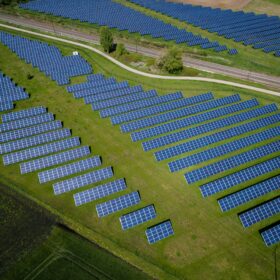
Italy assigns 1.1 GW in PV auction open to projects with ‘non-Chinese’ modules
The procurement exercise, the second solar auction under Italy’s Fer X incentive scheme and first to exclude the use of Chinese solar modules, cells and inverters for projects above 1 MW in size, concluded with a final average price of €0.06637/kWh.

Türkiye publishes rules for floating solar
Türkiye has published a regulatory framework covering the legal basis for developing floating solar plants on reservoirs and dams. The rules establish where floating solar can and cannot be built and how projects can be approved.
