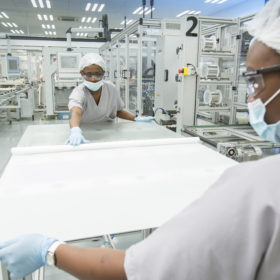
ARTsolar challenges local content compliance in South African solar tenders
A High Court in South Africa ordered the country’s Ministry of Mineral Resources and Energy to deliver full documentation relating to three solar tenders awarded in 2021 and 2022 to local solar manufacturer ARTsolar, after the company questioned if the preferred bidders had followed local content requirements for PV modules set out in the tenders. ARTsolar told pv magazine its legal team is currently reviewing the documentation it has received.
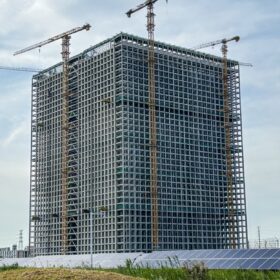
South Africa’s Eskom resorts to grid-scale gravity energy storage
Gravity storage gets a boost from South Africa’s state-owned utility Eskom.
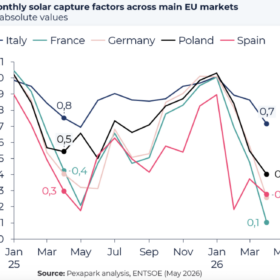
Solar capture factors fall across europe as negative price hours surge in key markets
Latest analysis from Pexapark finds strong solar output and weaker demand caused a drop in solar capture factors in France, Germany, Italy, Poland and Spain. These countries are also experiencing an increase in the share of solar production under negative price hours.
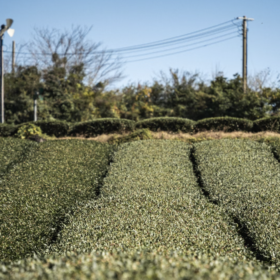
South Korea’s first agrivoltaics law leaves half of farmland off-limits
South Korea’s National Assembly has passed the country’s first dedicated agrivoltaics legislation, enabling dual use of agricultural land for solar power generation, but the law excludes zones covering nearly half of the country’s farmland, according to a Seoul-based nonprofit group focused on energy transition.
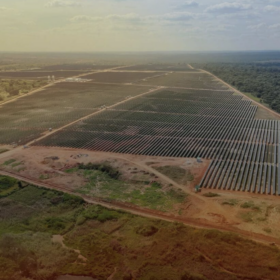
Zambia’s largest solar plant goes online
The 136 MW Itimpi II solar plant is Zambia’s largest operational solar project to date. Elsewhere in the country, an investment agreement has been signed to add 250 MW of solar to the 100 MW Nambala solar power plant.

New Zealand moves to reduce red tape for rooftop solar
The New Zealand government has ordered a review into the installation of residential and small- to medium-scale solar as it seeks to accelerate the rollout of rooftop PV.

Assessment of Nigeria’s agrivoltaic potential identifies northern states as optimal areas
A geospatial assessment of agrivoltaic potential in Nigeria finds greatest opportunity in the country’s northern regions with plentiful cropland, high solar irradiance and low electricity access rates. It calculated that meeting projected mid-century solar demand in the states of Kano, Katsina and Jigawa could be achieved by installing agrivoltaics on less than 1.5% of cropland.
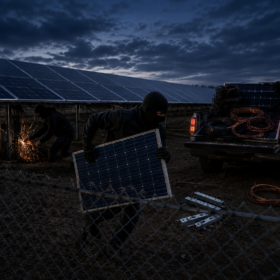
Solar tech theft on the rise in Chile
A survey conducted among member companies of the Chilean Solar Energy Association found a high incidence of nighttime thefts at photovoltaic installations, with the highest concentration in the O’Higgins, Coquimbo, Maule, and Metropolitan regions. Cables and conductors were identified as the most frequently stolen items, while companies have strengthened security measures, including on-site personnel, surveillance cameras, and perimeter fencing.

Egypt installs 800 MW of solar in 2025
Latest analysis from GlobalData expects Egypt’s annual solar additions to reach above 2 GW over the next three years, increasing to above 3.5 GW from 2029 onwards. Cumulative capacity is expected to grow from around 2.9 GW at the end of 2025 to 34.3 GW by the end of 2035.

EU ban on Chinese inverters sparks strong response from Beijing
China strongly criticized the EU’s ban on Chinese inverters in EU-funded solar projects, warning it could damage trade relations, supply chains, and Europe’s energy transition.
