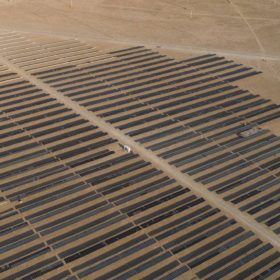
Masdar wants 200GW of renewables capacity
The state-owned UAE clean power developer appears to have quadrupled its previously announced ambition today as it announced its $20 billion renewables portfolio rose from 10.7GW to more than 15GW last year.

Mauritius launches tenders for 140MW of solar-plus-storage
Through two different procurement exercises, the archipelago’s Central Electricity Board seeks to reduce its dependence on fossil fuels.
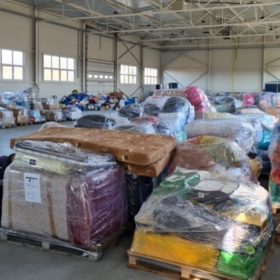
Slovakia’s first solar module factory
Slovak manufacturer Agora Solar is planning to build a 150MW factory in Vranow, in the eastern part of the country. The facility will produce glass-glass panels and may reach a capacity of 500MW by 2024.

Netherlands sets €13bn budget for 2022 SDE+ program, green hydrogen included for first time
Starting from this year, the scheme will also be open to green hydrogen facilities that are directly linked to wind or solar parks, and industrial electrification projects based on hybrid glass furnaces.
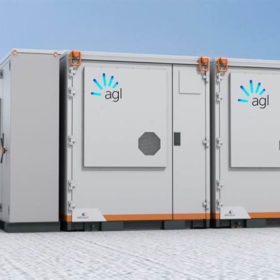
Australian utility gets tick of approval for 2GWh Liddell battery
Australia’s biggest power producer AGL has secured planning approval for a 500MW/2GWh grid-connected utility scale battery to be developed at the site of its coal-fired Liddell power plant in the New South Wales Hunter Valley.
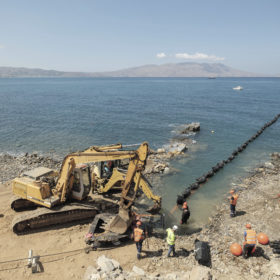
The weekend read: Super-grid forming in the Mediterranean
Electricity generation in the Middle East and Africa could soon support the development of an interconnection between Greece, Cyprus, Israel and Egypt. Ilias Tsagas examines the landscape for this infrastructure mega-project, and the possible benefits for solar.
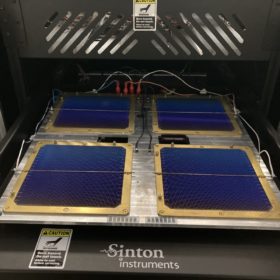
The Solar Tech Check: Toward 50-year modules, and how the numbers add up for HJT
This week sees new technoeconomic analysis published on different aspects/materials for heterojunction: Important to consider as Europe in particular looks to be betting big on this technology for its manufacturing comeback. And a new report from NREL in the United States examines progress in degradation and durability to increase module lifetimes.
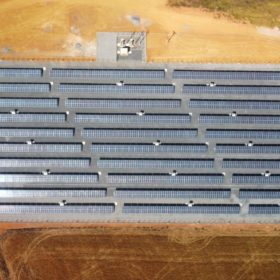
Around 40% of Brazil’s wind, PV capacity is under private PPAs
According to a study by CELA Clean Energy Latin America, there are currently approximately 10.7 GW of solar photovoltaic and wind projects under bilateral PPAs in the Latin American country.
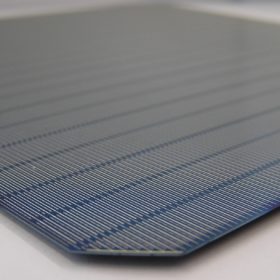
POLO-IBC solar cell with 23.7% efficiency
Scientists in Germany have developed two kinds of solar cells based on n-type doped electron-collecting poly-Si on oxide (POLO) junctions with aluminum-alloyed p+ contacts. Both devices are claimed to be possible upgrades of PERC technologies. The best-performant cell is an IBC device showing a power conversion efficiency of 23.71%, an open-circuit voltage of 711.5mV, a short-circuit current of 41.3mA/cm2, and a fill factor of 80.9%.
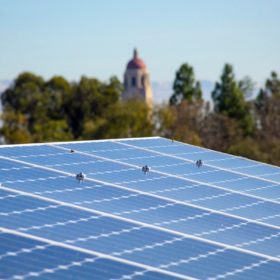
Stanford University now running on 100% renewables
Stanford University is flipping the switch on a 88MW solar array this week, marking a major milestone toward its goal of net zero emissions by 2050.
