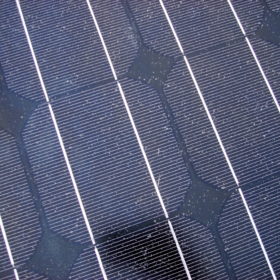
Hunting hidden electricity in crystalline solar cells with new encapsulation technique
Korean researchers claim it is possible to extract more than 10% of ‘hidden electricity’ in crystalline solar cells using a new encapsulation process based on poly‐dimethylsiloxane coatings and a three-dimensional module structure. Compared to EVA films, the new coating is said to avoid cutting off short-wavelength light.
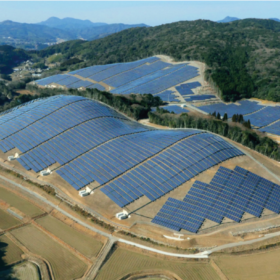
Hanwha Q Cells acquires 1 GW of PV projects in Spain
The projects are located across several Spanish provinces. The seller is Spanish developer RIC Energy.
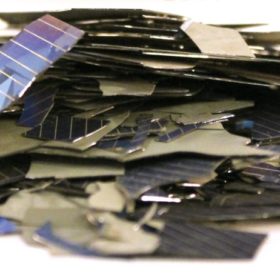
Italian PV panels sent for recycling were instead smuggled to Syria and Africa
Illegally re-badged panels were sold on to Senegal, Burkina Faso, Nigeria, Morocco, Mauritania, Turkey and even Syria. Italian authorities found 60 tons of panels which will be examined.
Coronavirus to have limited impact on Chinese polysilicon industry
Analyst Johannes Bernreuter says most of China’s polysilicon production capacity is in regions away from the center of the coronavirus outbreak. He added, however, 27% of the nation’s 510,000-ton annual polysilicon capacity could be affected.
Coronavirus could cause solar panel price spike
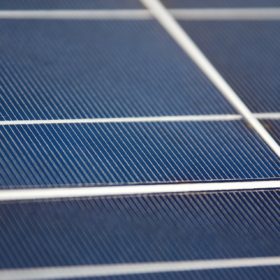
The coronavirus outbreak in China could raise solar module prices in the near term as manufacturers have already begun experiencing wafer and solar glass shortages. Production rates are also being affected by an extended new year holiday introduced by the authorities as a measure to deal with the virus, and the requirement workers from infected areas quarantine themselves for two weeks.

India concludes world’s largest renewables-plus-storage tender at $0.0566595/kWh
Pumped hydro and battery projects, coupled with renewables, offer the world’s lowest peak clean electricity tariff. The tender, which received bids for for 1.62 GW of capacity against the 1.2 GW sought, saw Greenko secure 900 MW of pumped storage capacity and Renew Power 300 MW of battery storage.
Main shareholder of Chinese module maker ET Solar files for bankruptcy
The move, by Taitong Industry Ltd, will come as a fresh blow to the Chinese module manufacturer, which twice failed to go public – in the U.S. and China – and whose project development business suffered a battering in China when Beijing reined in subsidies in 2018.

The weekend read: Ethical strategies for cobalt supply
Since 2016, Amnesty International has denounced cobalt mining in the Democratic Republic of Congo for human rights violations and the use of child labor. This has led LG Chem and other companies to insist on standards for battery cell suppliers, as a step toward improving the situation.

Imec: Perovskite cells can pass the IEC tests in 2020
In 2020, perovskite cells could pass the IEC tests intended for the standardization of solar modules, and in 2022, they could even be mass-produced. In an interview with pv magazine, Tom Aernouts explains the status of work on the new PV technology. He is a research and development manager for thin film photovoltaics at the Belgian research institute Imec.
Tandem cells approaching 30% efficiency
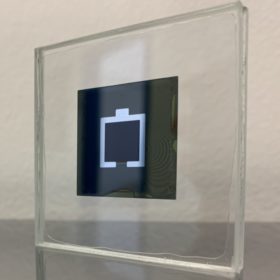
Scientists at the Helmholtz Zentrum Berlin have taken back the world efficiency record for a perovskite/silicon tandem solar cell, achieving 29.15% with a device measuring 1cm². The record has been confirmed by Fraunhofer ISE, and according to HZB, this means that the 30% efficiency mark is within reach.
