The Hydrogen Stream: US government offers $62 million for hydrogen tech
The US Department of Energy has announced $62 million for 20 projects to accelerate hydrogen technology, while international researchers have revealed how hydrogen injection into existing natural gas infrastructure could affect 115 million gas meters in the European Union.
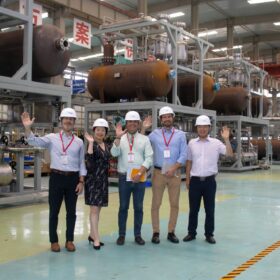
The Hydrogen Stream: Uniper opens hydrogen pilot in Germany
Uniper says it has launched its Hydrogen Pilot Cavern (HPC) Krummhörn plant in Germany with nearly 500,000 cubic meters of green hydrogen storage, while Air Liquide has inaugurated a 20 MW electrolysis plant in Oberhausen, Germany.
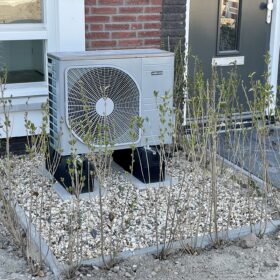
Dutch scientists assess consumers’ willingness to pay for renewable heating
A survey of 1,797 residents was used to determine the willingness to pay for low-carbon residential heating in the Netherlands. On average, respondents were willing to pay a premium of 33% for electricity-based heating. Policy recommendations were also provided as part of the study.
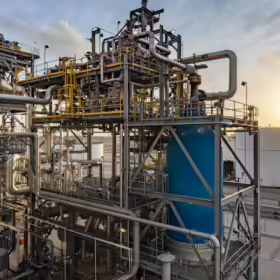
The Hydrogen Stream: Linde invests in blue hydrogen facility in Canada
Linde has signed a long-term deal to supply clean hydrogen in Alberta, Canada, while Hyundai Motor and Pertamina have agreed to jointly develop Indonesia’s hydrogen ecosystem.

The Hydrogen Stream: NEOM starts recruitment campaign for ‘world’s largest’ green hydrogen plant construction
The green hydrogen plant, which is an equal joint venture between ACWA Power, Air Products and NEOM, will produce up to 600 tonnes of carbon-free fuel daily when fully operational at the end of 2026.
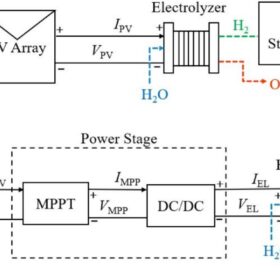
Direct vs. indirect coupling in PV-driven hydrogen generation
Researchers in Spain have made a comparative analysis of annual PV-powered hydrogen production for direct and indirect configurations and have found that indirect systems not only produce more hydrogen but also that they show higher resilience to module power losses.

The Hydrogen Stream: US companies, institutions present hydrogen plans
As the hydrogen project in Appalachia moves on, American Airlines confirms its commitment to hydrogen aircrafts. Meanwhile, a Scottish distillery might soon run on hydrogen for whisky production.

The Hydrogen Stream: MIT shows hydrogen can be made from aluminum, caffeine
Researchers from the Massachusetts Institute of Technology (MIT) claim they can efficiently produce hydrogen from recycled aluminum cans in seawater by combining them with gallium-indium and caffeine.
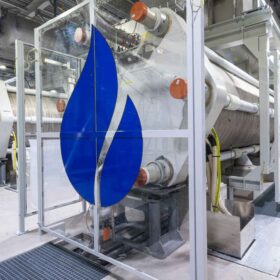
The Hydrogen Stream: RWE starts green hydrogen production in Germany
RWE has commissioned a 14 MW pilot electrolyzer plant in Lingen, Germany, while Thyssenkrupp nucera says market uncertainty has slowed growth momentum, despite a 12% increase in third-quarter order intake.
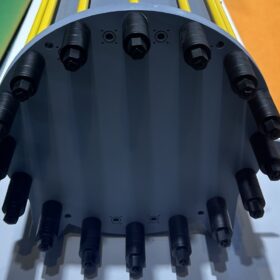
Offgrid PV-driven hydrogen vs. standalone solar-plus-storage
A German research team has compared the economic performance of an offgrid PV-electrolyser-fuel cell system with that of a standalone solar-plus-storage counterpart in a building in Niger. Its analysis showed that decentralized PV-driven hydrogen could achieve considerable lower levelized cost of energy and levelized cost of storage than the PV-battery system, with these values reaching €0.12 ($13.1)/kWh and €0.35/kWh, respectively.
